Category Archives: recipe

Homemade hummus

Small bowl of hummus with a slice of lemon and a salad leaf

The secret to hummus lies in its ingredients.

Jump to hummus recipe

Forget cooked chickpeas in tin or jar. Using dried chickpeas from scratch makes all the difference.

A jar/tin of ready-cooked chickpeas is OK in a hurry BUT the texture will be more mushy.

Why use dried chickpeas from scratch?

  • They keep their shape
  • They have more nutrients than canned
  • They double in size
  • They are cheaper
  • and if you do not use them for hummus, they can be sprouted.

While the dried chickpeas are soaking in water (recipe below), let me tell you about The Bean Book by Rose Elliot. A life-changing cookery book, it introduced me (in the early ’80s) to the magic of beans and other pulses, one of the first crops humans grew. The dried seeds of pea-family plants (or legumes) are nutritional powerhouses.

A vegetarian cookery pioneer, Rose Elliot explains the art of mixing proteins from two different plant foods such as pulses/nuts/seeds/grains to get super-charged protein. Chickpeas (pulse) + sesame tahini (seed) equals protein-rich hummus. The raw garlic and lemon juice adds immune-boosting vitality.

Use organic ingredients if possible too. Farming which works with nature adds to the taste. Enriched with nature’s fertilisers (sun/compost/clover etc), organic soils are teeming with life so have a wider range of minerals/nutrients for the plants. Without chemical fertilisers, crops work a bit harder, producing more flavour compounds. Soluble chemical fertilisers (particularly nitrogen) make non-organic crops grow fast – but sappy. Organic produce has a lower water content. All this adds up to richer, more complex taste. Just a thought.
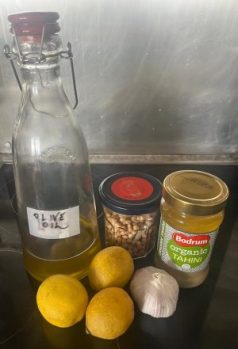
A clear bottle of extra virgin olive oil, dried chickpeas in a jar, jar of tahini (brand: Bodrum organic), 3 lemons and 1 bulb of garlic.
Hummus cast assembled from left clockwise: olive oil, chickpeas, tahini, garlic and lemons.

Hummus Recipe

Ingredients

  • 200g or 1 cup of dried chickpeas (or 400g of cooked chickpeas)
  • 1-3 lemons squeezed (about 4-6 tablespoons of juice)
  • 2-4 cloves of raw garlic, peeled (minced by hand if not using electric blender)
  • 4-6 tablespoons of olive oil
  • 4-6 tablespoons of tahini (ground roasted sesame seeds)
  • Salt and optional cumin to taste.

Cover about 200g of dried chickpeas with plenty of water so they have space to swell (swell. What a word).

Ideally you have access to an electric handblender or food processor. I use a Nutribullet. You could use a potato masher if doing it by hand. If so, ensure the garlic is well-crushed before adding.

The amounts of garlic and lemon juice depends on you. I use lots of both (three lemons and five garlic cloves). Ditto with olive oil and tahini. I have given guidelines so you can adjust accordingly.

Method

Start by soaking about 200g of the dried chickpeas in water overnight (or use boiling water and soak for about an hour until plumped up). Drain then add to a pan with fresh water, and simmer for about 45 minutes. Once cooked (soft enough to munch but not mushy), drain the chickpeas and let them cool down a bit.
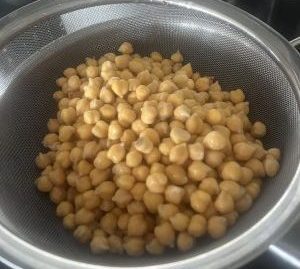
Cooked chickpeas drained in a sieve over a pan
Draining chickpeas

If using a Nutribullet, put the raw garlic in the goblet first with the oil and lemon juice so, when you turn the goblet upside down to whizz it, the blades can crunch down. Then add tahini and cooked chickpeas. Add salt/cumin to taste.
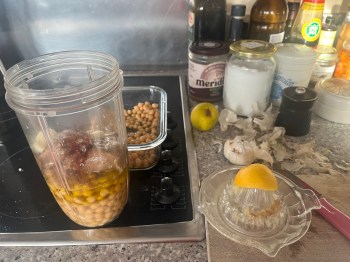
Above is a pic of kitchen chaos. No homemade hummus ever comes out the same, the mystery of homemade.

Blend until its consistency (above image with nutribullet, below, using a hand blender).
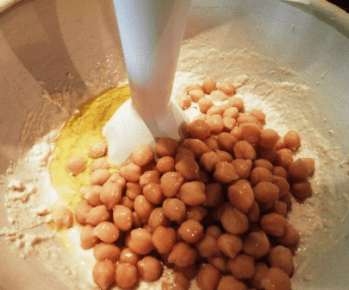
For a smoother hummus, add some chickpea cooking-water, a cautious tablespoon at a time. Or add more olive oil. Blend in two batches to vary texture between smooth and whole chickpeas.

Serve with a whisper of paprika to add colour, and a trickle of olive oil. Store in the fridge for three-five days.

Good luck and let me know how you get on.

P.S. This blog on hummus is dedicated to Unreal, the UK charity for people with depersonalisation and derealisation.
Healthy grain-free fruit cake

Made for a special birthday, this recipe is a KEEPER.

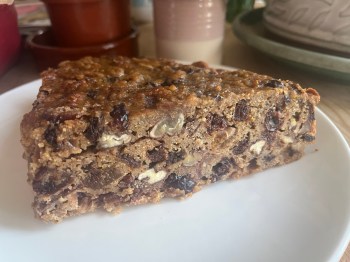
Billed as a quick and healthy Christmas cake, it is grain-free and gluten-free. It is delicious and – thanks to soaking the dried fruit – delectably moist. The five eggs make it very light and nutritious.

It requires careful weighing but apart from that, low on faff.

(And thanks to Tayda for careful weighing.).

Use dried fruit of your choice. I went for dried cranberries and sour cherries, and chopped-up dried apricots and dates. Snip with scissors, as the original recipe suggests. Saves on sticky fingers.

I used cassava flour instead of coconut flour. Cassava flour is white and neutral, and made from a root vegetable. Next time I am going to experiment with buckwheat flour because buckwheat is a plant and so less carbs than root veg. (I love buckwheat – but that is for another post).

I used ground almonds as it is equivalent to almond flour/meal. And chopped pecans (chopped walnuts or hazelnuts etc and/or a mix would also work). I did not have vanilla extract and it was fine without (otherwise add 1 teaspoon).

I did not bother glazing it as suggested – and really did not miss it.

Here is the recipe, slightly simplified for my own use.

Recipe

  • 500 grams mixed dried fruits
  • 75 grams pecans or walnuts
  • 1 orange (zest and juice)
  • 125 grams ground almonds
  • 67 grams coconut flour (or cassava or buckwheat)
  • 1/2 tsp bicarb soda
  • 1/2 tsp salt
  • 1 tsp ground cinnamon (or more!)
  • 5 eggs
  • 50 grams butter or coconut oil, melted (I used butter).

How to

  • Soak the fruit in hot boiled water for 15 mins then drain it well.
  • Line a 20 cm – 23cm cake tin
  • Preheat oven to 150 C
  • Combine the ground almonds, cassava flour, bicarb, salt, and cinnamon in a large mixing bowl.
  • Add grated orange zest and chopped nuts.
  • In a separate (smaller) bowl, whisk together the eggs, melted butter, and the squeezed orange juice from your zested orange.
  • Gradually stir in the above wet mixture INTO the DRY mixture. The cake batter is quite thick.
  • Mix in the soaked fruit with a big spoon so the fruit is well distributed. Thanks to the soaked fruit, the batter will now be less thick.
  • Spoon the cake batter in to the lined baking tin and press down with the back of a spoon to eliminate any pockets of air and level the top
  • Bake the cake for between 60 – 70 minutes, or until the centre feels firm to touch or an inserted skewer comes out dry. If it looks at risk of getting a bit burned, cover the top with parchment paper.

Thank you Monique at Nourish Everyday!

Black Forest Gateau

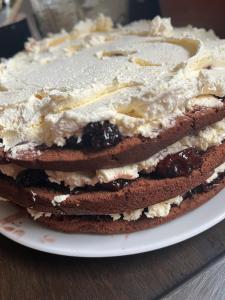
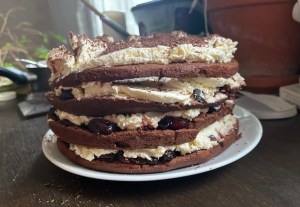
Four layered chocolate sponge cakes filled with whipped cream, and sour cherry filling and topped with whipped cream
A mission. I scoured myriad, confusing recipes looking for the most streamlined yet authentic version.

Eventually I settled on the Hairy Bikers’ recipe which has much to recommend it:

  • One-bowl food processor mix for the sponge cakes (and no beating of egg whites)
  • Two cakes sliced in two thus making four layers
  • Sour cherry jam plus the addition of dried sour cherries was a labour-saving winning filling.

My modifications on the Hairy Bikers:

  • I used 200g (not 160g) of dried sour cherries and they were unsweetened.
  • I added a tin of drained pitted black cherries from Cooks & Co.
  • I cooked the filling for about an hour (not 15 minutes) to reduce it.
  • I did not use cherry brandy. I used 6 Tablespoons of Kirsch but the taste cooked away. I question how crucial it is. The cherries do the real work. It is all about the sour cherries.
  • When it came to decorating the cake, there were no piping, nozzles or rosettes involved. Just a palette knife and lots of whipped double cream.

The most challenging part of this recipe was cutting the two cakes into half horizontally without demolishing them. A long-bladed serrated knife was crucial for the exercise. This Hairy Biker advice was also essential: “Keep the knife parallel to the work surface, to get a good even cut.”

I would add: Make sure Nothing Else is happening as you crouch over the cake, delicately sawing away.

Modified recipe

Ingredients for sponge cakes

  • 225g/8oz butter at room temperature (and extra for greasing)
  • 225g/8oz caster sugar
  • 160g/5½oz self-raising flour (or gluten-free self-raising flour)
  • 65g/2¼oz cocoa powder
  • ½ tsp baking powder
  • 4 eggs at room temperature

Ingredients for filling 

  • 340g/11¾oz jar of morello cherry jam – get a good quality one 
  • 200g/7.05 oz pack of  dried sour cherries 
  • 1 tin of drained black cherries 

Ingredients for decoration

  • 500ml/18fl oz double cream
  • 50g/2oz dark chocolate, coarsely grated.

Instructions

Make the cakes and the filling the night before and assemble all on the day.

CAKES

  • Grease 2 x 20cm/8 in loose-based sandwich tins and line bases with baking parchment.
  • Preheat the oven to 190°C/375F/Gas 5.
  • Put the butter, sugar, flour, cocoa powder, baking powder and eggs into a food processor and blend until smooth and thick. Make sure it is well blended.
  • Divide the mixture between the two cake tins
  • Bake for 20–25 minutes
  • Remove from oven and cool for 5 minutes before turning out on to a wire rack. Take off paper. Leave cakes to cool.
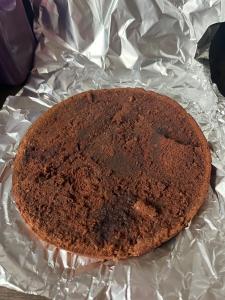
  • When the cakes are cold, cut them in half, horizontally, with a long-bladed serrated knife.
  • Wrap individually in tin foil and store in cool place.


FILLING
Put the jam in a saucepan with the dried sour cherries and drained can of black cherries. Simmer gently until liquid is reduced, maybe about 1 hour. Do not let it burn.

The cake and filling can be made the day before.

ASSEMBLING CAKE

Whip the cream with an electric hand-whisk until firm.

Cover the three cake layers with cherry filling and whipped cream and sandwich together.

Top with the three filled layers with the fourth cake layer and cover with cream and sprinkle with grated dark bitter chocolate.

The blog author holding the assembled four layered black ofrest gateau


Feta cheese dip

Dear future self, I am recording this tasty, healthy recipe for posterity.
Whip (using blender/food processor/Nutribullet):

  • Bunch of watercress
  • 3 spring onions (roughly chopped)
  • 3 cloves of garlic
  • 1 packet of feta cheese
  • Lemon juice (half or whole lemon)
  • A generous glug-glug of oIive oil.

I used organic ingredients. In the mythical land of Winkler, the polluters pay which makes pesticide-sprayed food grown with chemical fertilisers far more expensive than organic.

However back on planet Earth, the polluter gets a free pass and we have to pay extra for organic.

My A.I. assistant has kindly listed the benefits (which I corrected for English spelling).

  1. Reduced Pesticide Exposure: Organic farming avoids the use of synthetic pesticides, which may reduce the risk of consuming pesticide residues.
  2. Environmental Conservation: Organic farming practices prioritise the use of natural fertilisers and crop rotation to maintain soil health and biodiversity.
  3. Animal Welfare: Organic livestock is raised without the use of antibiotics or growth hormones, potentially promoting better animal welfare.
  4. Nutritional Benefits: Some studies suggest that organic produce may contain higher levels of certain nutrients and antioxidants.

Signing off from human me.

Mince pie trifle

Tart, textured, light and fresh, this turned out to be a winner.

(Gosh, food blogs are so glossy these days. Real Food Lover does not fit that category as my pic above demonstrates).

I am here to record recipes to remember.

So here are the layers from bottom to top:

  • Mince pies (in this case, four gluten-free ones) crushed with back of a spoon with added sultanas
  • The juice from a tin of fruit cocktail (see below) in a small saucepan with 3 generous teaspoons of marmalade, a few teaspoons of sugar, lemon juice and a teaspoon of sherry boiled and bubbling until the liquid reduced; then spooned over the crushed mince pies
  • Small tin of fruit cocktail in their own juices with no added sweetness, drained
  • Plus fresh blueberries (I used frozen) for essential tartness
  • Custard (I used 400g shop-bought because ease and time were of the essence)
  • 500g double cream, whipped (NutriBullet was great for this) was the final layer. Chill in fridge.

    The time it took (A.I. suggested I add this bit and an intro. Ha. Ironic laugh): in total, it took about 30 mins to prepare, the longest bit was condensing the liquid.

    The end result was a pudding of different textures (light and crunchy from pie and fruit) and tastes (sweetness from pie and custard offset by bitter-tartness from marmalade and blueberries).

    Delicious – and easy to make. Thus, it is a keeper.


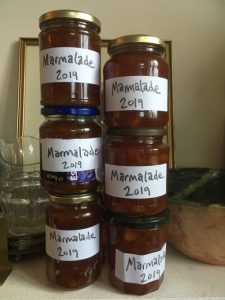
Marmalade 2019

Labelled home-made marmalade jars

Winter’s Seville oranges season is over so this is for next winter’s marmalade (by which time the world will no longer be possessed by divide-and-rule politics and the UK has reversed extreme poverty described by the UN Special Rapporteur). 

This ratio of oranges to sugar works well. Not too sweet. Excellent jelly-like consistency. A keeper.

3lbs Seville oranges 
3lbs 12oz sugar
4pts water
1 pt water for pectin
2 lemons for pectin

My trusted slightly-edited marmalade recipe, which I owe to the late Katie Stewart, the Times cookery writer, is below. Beg or borrow a preserving pan.* Otherwise, use a pan deep enough for the marmalade to boil safely, and wide enough to allow a large surface to evaporate.

Top Katie Tips

  • Place a saucer or two in freezer or fridge to encourage hot marmalade to cool quickly when testing it has set
  • Put sugar (already weighed) in a pan in low oven to warm which will speed up boiling time
  • Clean jars thoroughly with hot water and dry them in oven.

Five stages of making marmalade

Stage 1 Clean oranges and simmer to soften

  • Scrub Seville oranges and remove stalks (organic oranges are worth it because better farming creates more taste and health)
  • Use your largest pan or two smaller ones with lids 
  • Fill with 4 pints of water and simmer oranges for about an hour until peel is soft (orangey aroma will fill room)
  • Drain cooked oranges and reserve cooking water – a precious liquid that becomes marmalade. 

So far, this process can be done earlier, or the day before.

Stage 2 Extracting pith and pips for pectin

Pectin, extracted from the insides of the fruit, is the setting agent.

  • Cut cooked-and-cooled oranges in half.
  • Scoop-out their insides – the pitch-and-the pips – with a spoon 
  • Add pith-and-pips to a large-enough pan with the additional 1 pint of water and 2 lemons cut in half.
  • Simmer for ten minutes then drain and reserve.

This pectin-rich liquid will be used in Stage 4.

Stage 3 Slicing peel
Flatten softened peel, and cut up peel of oranges (and the 2 lemons) with a small sharp knife as thinly/thickly as you like.

Stage 4 Rolling boiling 
Take the warmed sugar from the oven. It should be in a preserving pan or largest pans (see above*)

Add the precious orange water (Stage 1), drained pectin-juice (Stage 2), and cut-up peel (Stage 3) in with sugar into preserving pan.

Start boiling.

It takes about 20-30 minutes to get the whole pan boiling and it is after that, you must watch like a hawk for the (ta-da) rolling boil.

Overboiling at this stage can stop the marmalade setting. So timing the rolling boil is important. After 15 minutes of a rolling boil, take the pan off the heat.

A rolling boil is when the marmalade is not just bubbling but is a fast-boiling glucky furious whirl. 

Marmalade looking jewel-like in the light

Test for a set
Drop a spot of hot jam on one of those icy-cold plates
Let droplet cool, tilting plate to encourage cooling, then push droplet gently with your finger. You are looking for tell-tale wrinkles and jelly-like character. (The opposite to the lead in a romantic movie).

If the droplet is runny, boil again for a few minutes then test again. And so on until the test droplets are unequivocally set.

Stage 5 Marmalade in jars
Let jam cool in pan until not-too-hot yet not too-set for pouring.
Next, is the sticky bit so spread newspaper over kitchen surfaces, and use a ladle or a jug to pour the warm marmalade carefully into clean jars.

Recipes often say use waxed discs to keep out condensation and mould but, cutting-corners-cook that I am, I have not done so for years, with no adverse effects. 

Wipe jars from stickiness and proudly label.

Homemade limoncello

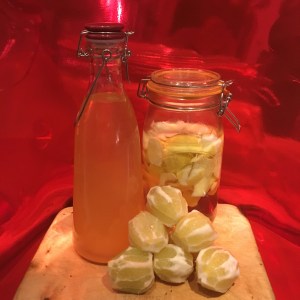
Peeled organic lemons assemble in front of last batch of homemade Limoncello

Or, more accurately, vodka plus loads of lemons.

Limoncello is an Italian lemon liqueur made by infusing a clear spirit (such as vodka) with lemon zest, then adding sugar.

I am partial to making DIY liqueurs.

So I was intrigued to read about home-made limoncello in Appetite Magazine, which I picked up in Newcastle (a fave city, not to mention home of middle daughter, Sarah – one of her projects is Girl Kind).

The recipe did not mention what to do with the lemons after removing their zest. I could not countenance wasting them! 

*So I blitzed the peeled lemons (pips and all, being more domestic slattern than goddess) with my trusty wand blender,  adding their strained lemony goodness to the concoction. The white fibrous pitch can be bitter so I removed as much as possible before whizzing (see pic above). 

Alternatively, squeeze the peeled lemons for lemon juice, adding to the potion at the point when you add the boiled sugar and water.

Use organic lemons if possible because organic lemons are juicier and, (the domestic slattern in me again), do not require washing/scrubbing before use in order to remove traces of chemicals. A recent report from Pesticide Action Network UK found 100% of soft citrus fruit had pesticide residues.

Ingredients1 litre of vodka

8 – 10 lemons

675g sugar

1 litre of water

Method
Peel lemons with a potato peeler, adding the zest (or thin peel) to a litre of vodka.

Leave for 10 days – 1 month in a dark place to infuse the vodka with a citrus flavour.

Strain and consider adding fresh new zest.

Add 675g of sugar to a litre of water in a pan and bring it to the boil, simmering for 15 minutes. Add the cooled sugary water to the infused vodka. 

For added lemony-ness, add the juice from the peeled lemons to the concoction.

*Or whizz the peeled lemons as I did for additional fresh tangy fruitiness.

Cool and bottle.

Here is a pic of my late mum, Fay, aged 93 at Carluccio’s. My mother died in January 2017 the same year as Carluccio’s founder, celebrity chef, Antonio Carluccio

Fay once told Antonio that his restaurants were not the same since he sold the brand. How did he respond, I asked? He shrugged, she said, non-commitally.

Fay would always finish a meal at an Italian restaurant with a limoncello (or two). The pic below was taken at Carluccio’s in 2016, livening up a hospital appointment at Chelsea & Westminster.

Fay Winkler at Carluccio’s 2016

Claudia Roden’s cholent


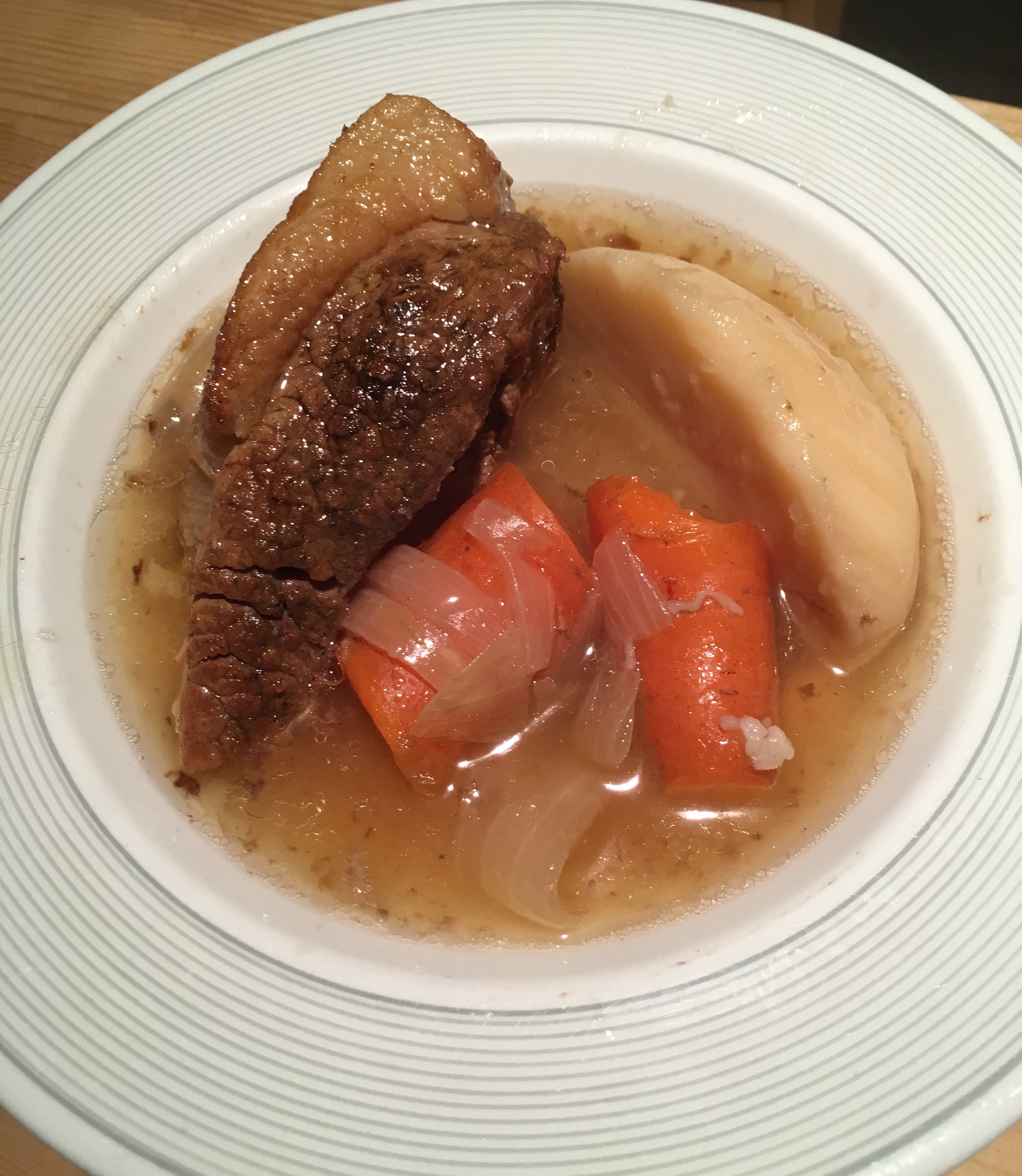
Cholent

From my late mother’s The Book of Jewish Food by Claudia Roden, the cookbook writer and cultural anthropologist

Claudia Roden’s recipe is based on one by Shmulik and his wife Carmela, of  Shmulik Cohen Restaurant, which has neither changed its location or menu since it was founded in 1936 by Shmulik’s grandfather.

1kg (2lb) fatty beef – brisket, breast or rib

2 large onion sliced

Marrow bones

1kg (2lb) peeled potatoes, whole if small, halved if big

100g (4oz) pearl barley (optional)

250g haricot or butter beans, soaked for one hour (or already cooked)

Adjust seasoning with salt and pepper and add whole peeled garlic cloves and a peck of dried chilli.

In a large pot or casserole with a tightly fitted lid, brown the meat (in its own fat or in a tablespoon of oil). Remove it, and fry onions till soft. Return the meat to the pot, add the marrow bones, potatoes, barley and beans around it, seasoning with salt and pepper.

Cover with water and bring to the boil. Remove the scum with a large metal spoon, then put the lid on and leave in the lowest oven (225F, 110C, gas 1/4) overnight.

Kefir soft cheese 

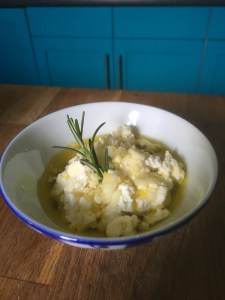
White soft cheese with olive oil and a sprig of rosemary
Kefir cheese is a mind-blowing taste-tastic discovery.

The freshest cheese I have ever tasted. And I brought it into being! 

I am in awe I can make cheese. And such a digestible and delicious one at that.

A soft cheese, it is dreamily delicious with olive oil, chopped fresh garlic and a tiny sprinkle of salt. Or try Annie’s recipe with pureed herbs. (Thank you, I will).

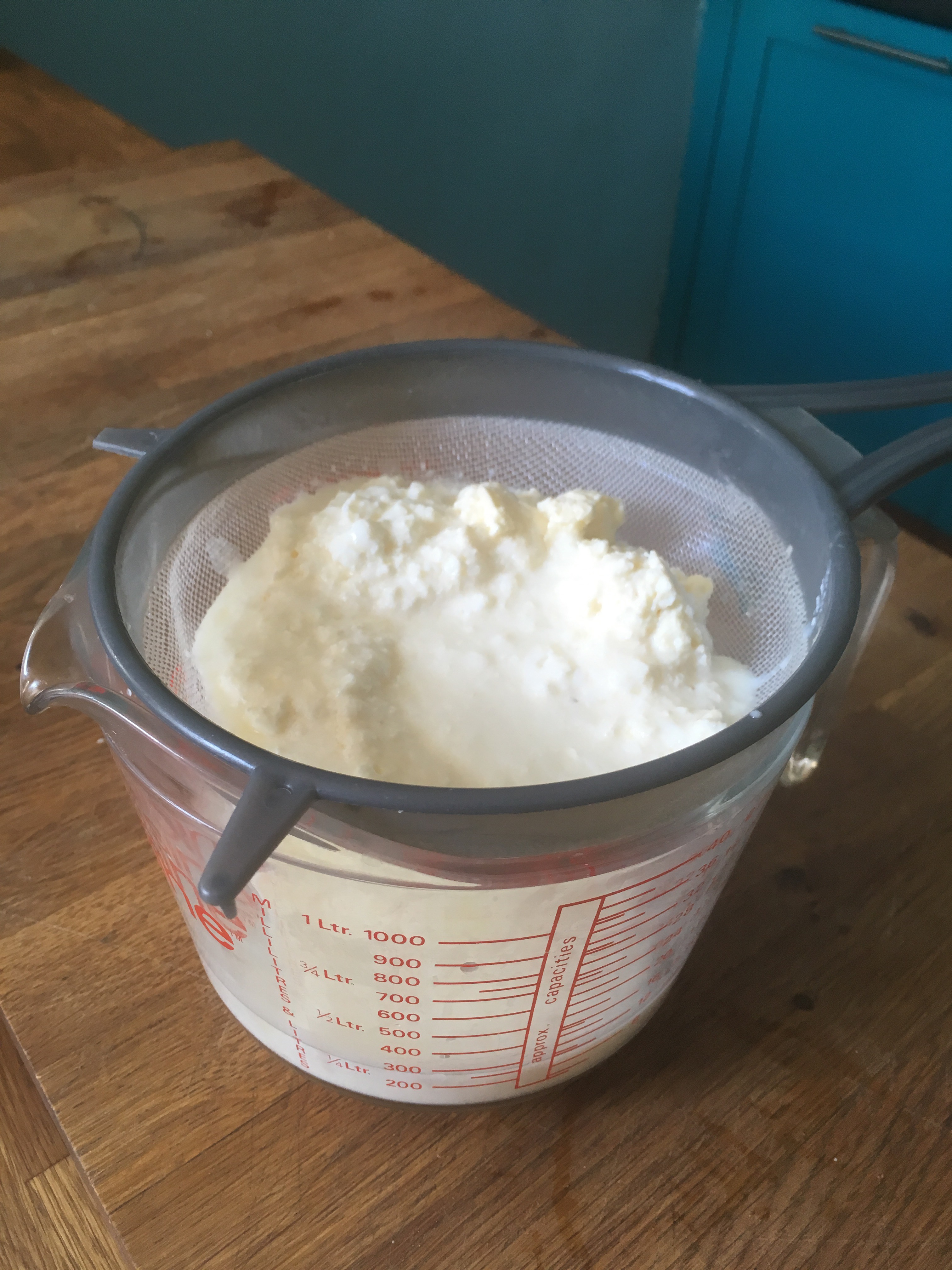
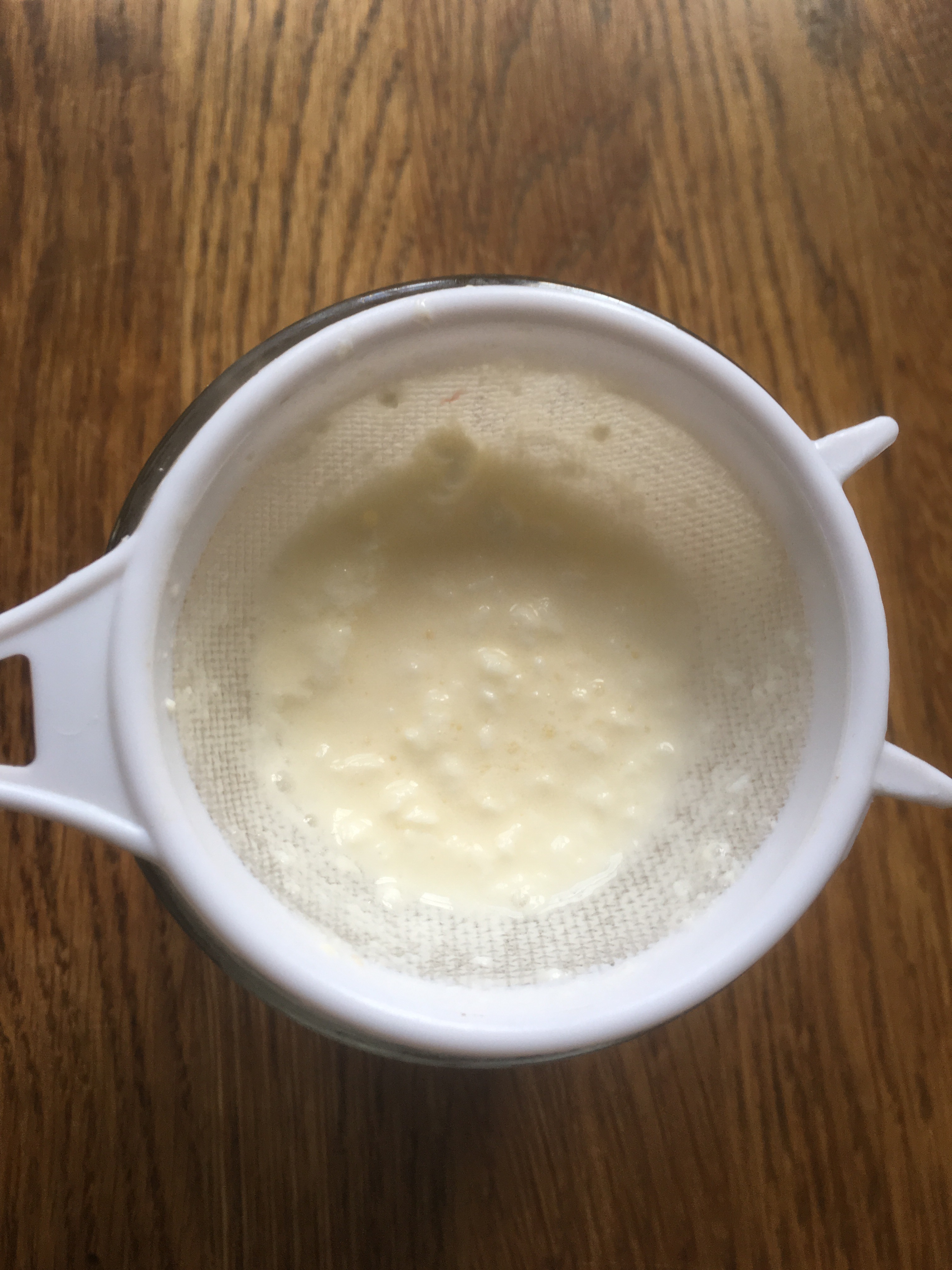
Kefir grains in strainer
Here is the daily kefir milk and kefir cheese routine:

  • Strain the fermented milk in a non-metallic sieve or muslin cloth
  • Keep grains* for the next batch, and, if plentiful, for cheese**
  • Drink the fermented milk (or use in a smoothie)
  • Place the strained grains in a clean jar and, leaving room at the top for expansion, cover with fresh, room-temperature whole milk (preferably organic for added nutrients and taste plus care for dairy cows, wildlife and the soil)
  • Cover with breathable cover or do kefir the anaerobic way  ***
  • Let jar sit at room temperature (or airing cupboard) away from direct sunlight for 24 hours approx. Non-cold is key to encouraging those kefir grains to do their fermentation thing
  • Repeat!

**Strain the grains for cheese through a muslin. My casual method: Let the grains sit a few hours in the strainer – plastic/non-metallic it has to be.

** *Oxygen in or out (anaerobic) for fermentation? Following my previous blog on milk kefir, I had a big discussion with friends on Facebook as to which method was best. It turns out both methods get results.

I sling a tea-towel over the fermenting milk. Am no longer obsessed with the perfect cover/elastic band although it was that detail that gave me confidence when I began kefir-making.

*By the way, kefir grains are not actually grains. They are SCOBYs or Symbiotic Communities of Bacteria and Yeast.

“Ayyyy, my scobys.” Like the Fonz

The SCOBYs, my new best friends, feed on the fresh milk, thus fermenting it, making it digestible and delicious.  Check out the beneficial health effects of kefir and buy grains here too. Or ask a kefir-making friend for grains.

Having generated sufficient kefir grains to eat as soft cheese feels like my reward for tending them.

Ayyyyy. Thanks, SCOBYs.


Kefir – the details that count

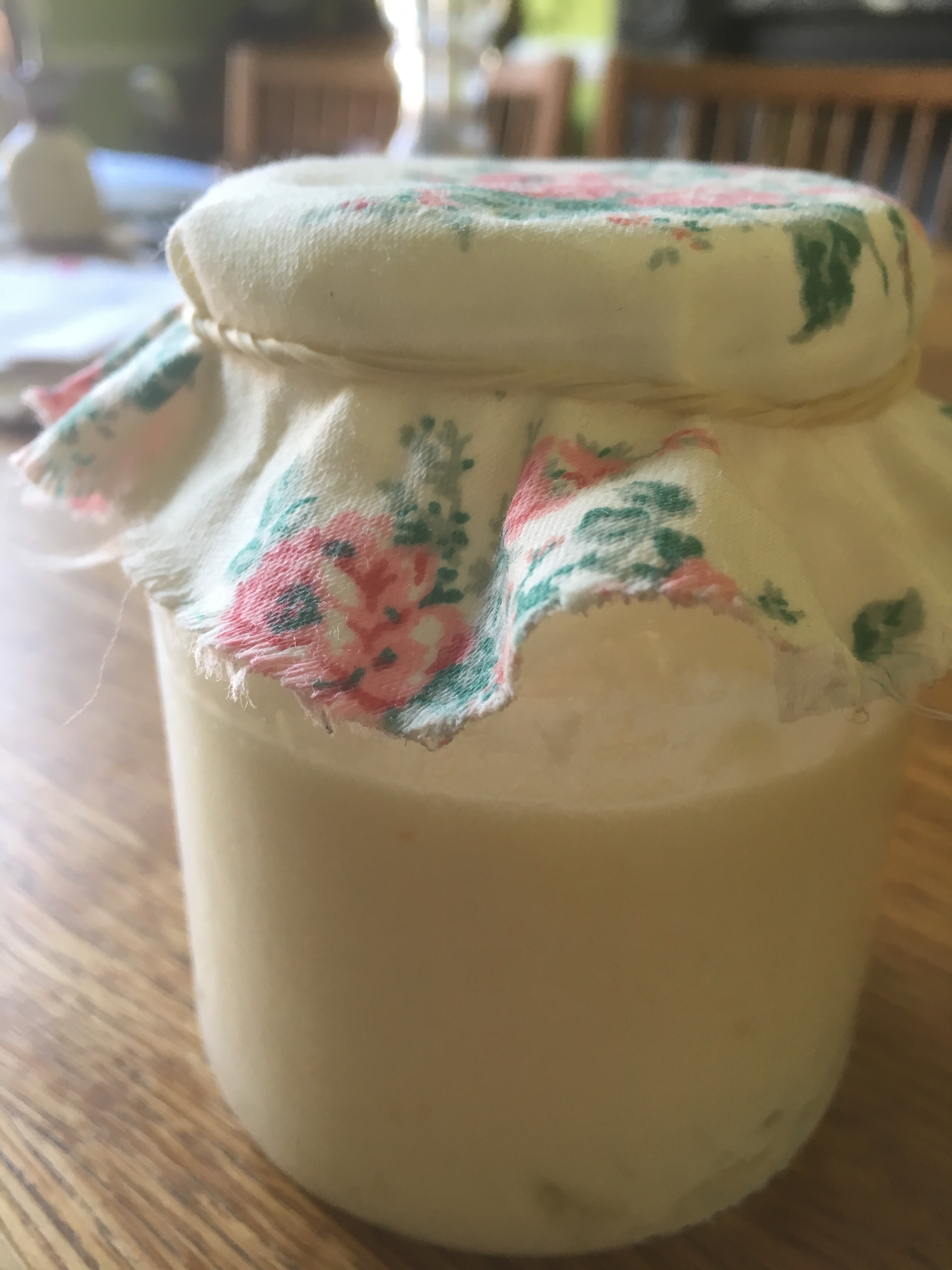
Jar of kefir milk with pretty floral cloth cover

This is my third attempt at making kefir. Worth the effort because although the shop-bought organic one is delectable (especially Riazhenka baked milk) I am less enamoured of its plastic container and price. (And availability since it was featured on BBC’s Trust Me, I’m A Doctor and everyone went mad for kefir).

Enter a blog post on kefir by Penny’s Plate, a Bristol-based nutrionist. My third kefir adventure had begun.

Penny kindly offered me some kefir grains, and dropped them off at our local healthy food shop.

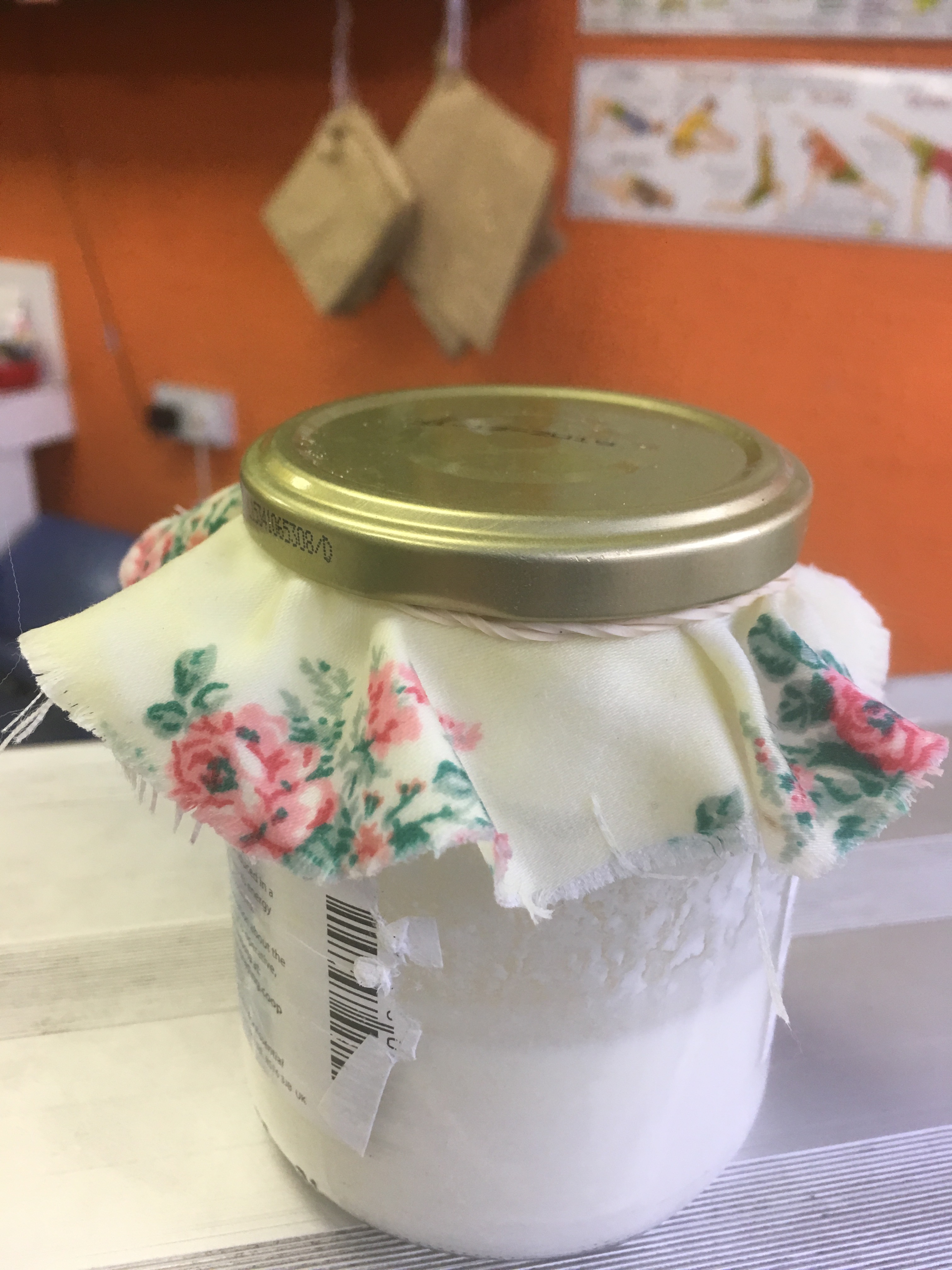
A jar of kefir with floral cloth cover
It gets better. When I picked up the grains at Harvest Bristol Cooperative, I was delighted to find them in a jar with a darling fabric cover (see pic above) secured with an elastic band (the metal lid was while it was being transported).

This has made everything possible. I have hitherto never achieved such a natty arrangement.

The other good thing was the size of the jar. Up-to-now, I had made a pint  and got overwhelmed by the amount.

If you don’t like the tangy taste of kefir, add it to a banana smoothie.

Why kefir? This fermented food certainly feels soothing. Apparently it helps line the gut – and a healthy gut lining enables the absorption of nutrients. According to kefir enthusiasts, it is better than yogurt because its healthy probiotic bacteria actually colonise the gut.

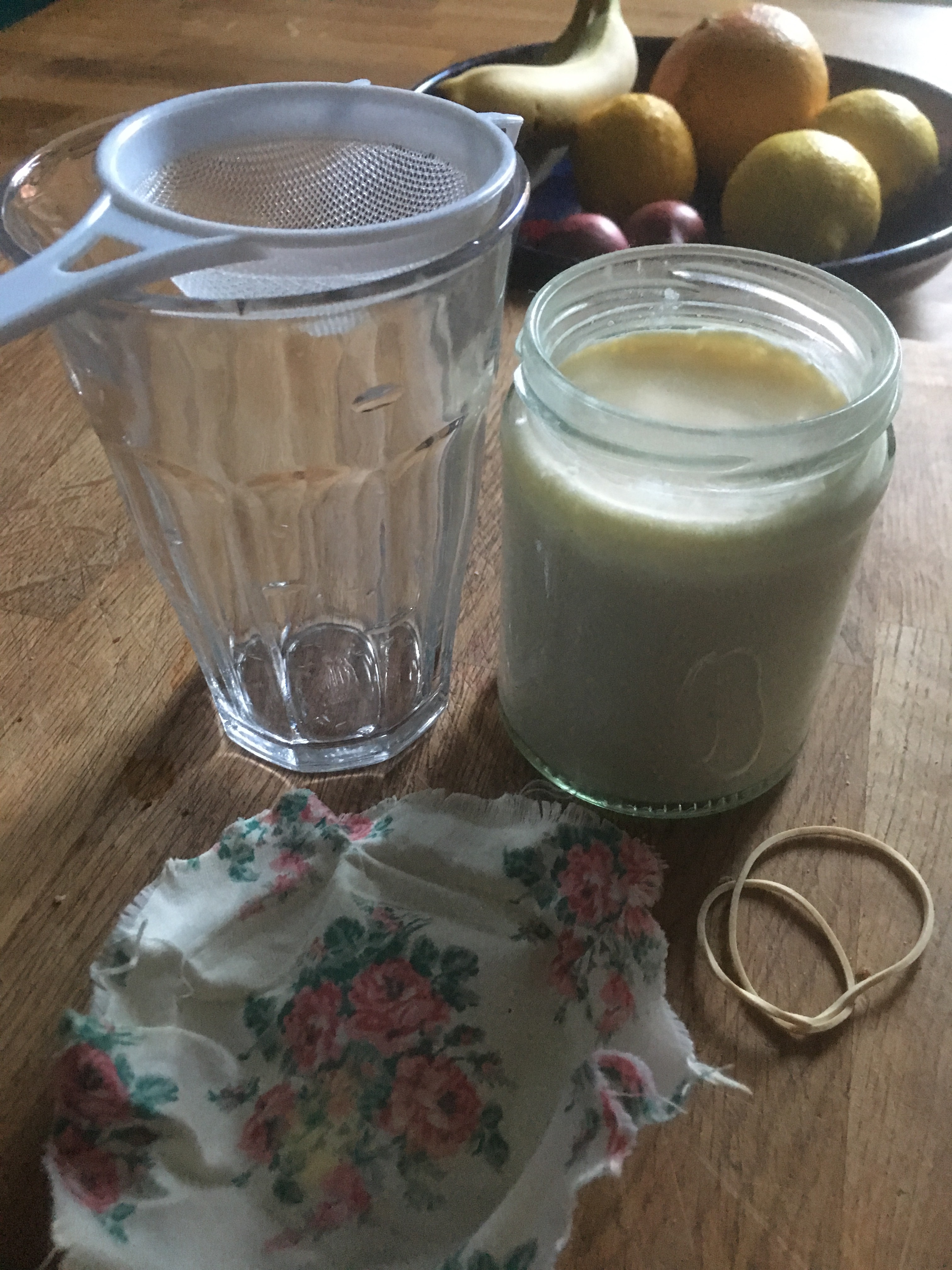
Kefir milk in a jar and plastic strainer over a second and clean jar. Cover and elastic band beside on kitchen worktop

Newbie kefir tips 

Find someone making kefir and beg them for grains. When they arrive, put in a clean jar and top with fresh milk. Don’t fill to the top. Cover with a breathable lid and leave to ferment for 24 hours away from direct sunlight.

milk kefir grains in plastic tea strainer

Strain through a plastic (not metal) sieve and drink (or store in the fridge). Start again with the strained kefir, a clean jar and fresh milk. Store unused kefir grains in the fridge covered in a little milk. The cold slows down activity.

It is good to have a kefir buddy. Tasting Penny’s kefir gave me an idea what I was aiming for. I asked questions, was reassured by her replies. I felt like a new breastfeeding mother unsure of this natural yet unknown activity.

Start small with less than half a pint of milk in a jar. Don’t fill it to the top but leave room in the jar for kefir to breathe.

Get a fabric lid cover cut in a circle to fit generously over a jar with an elastic band to secure it. The cover needs to be breathable and clean. You could use a paper towel. Don’t forget the runner band.

Successful kefir is down to the freshness and quality of the original ingredients – so choose organic milk if you can, and as fresh as possible.

As for all great achievements, you have to get a bit obsessed. You have to fuss over your kefir, check it, swirl it, send anxious texts to your kefir buddy, look up kefir sites (one of my favourites), and hurry back home to check it is not feeling abandoned.
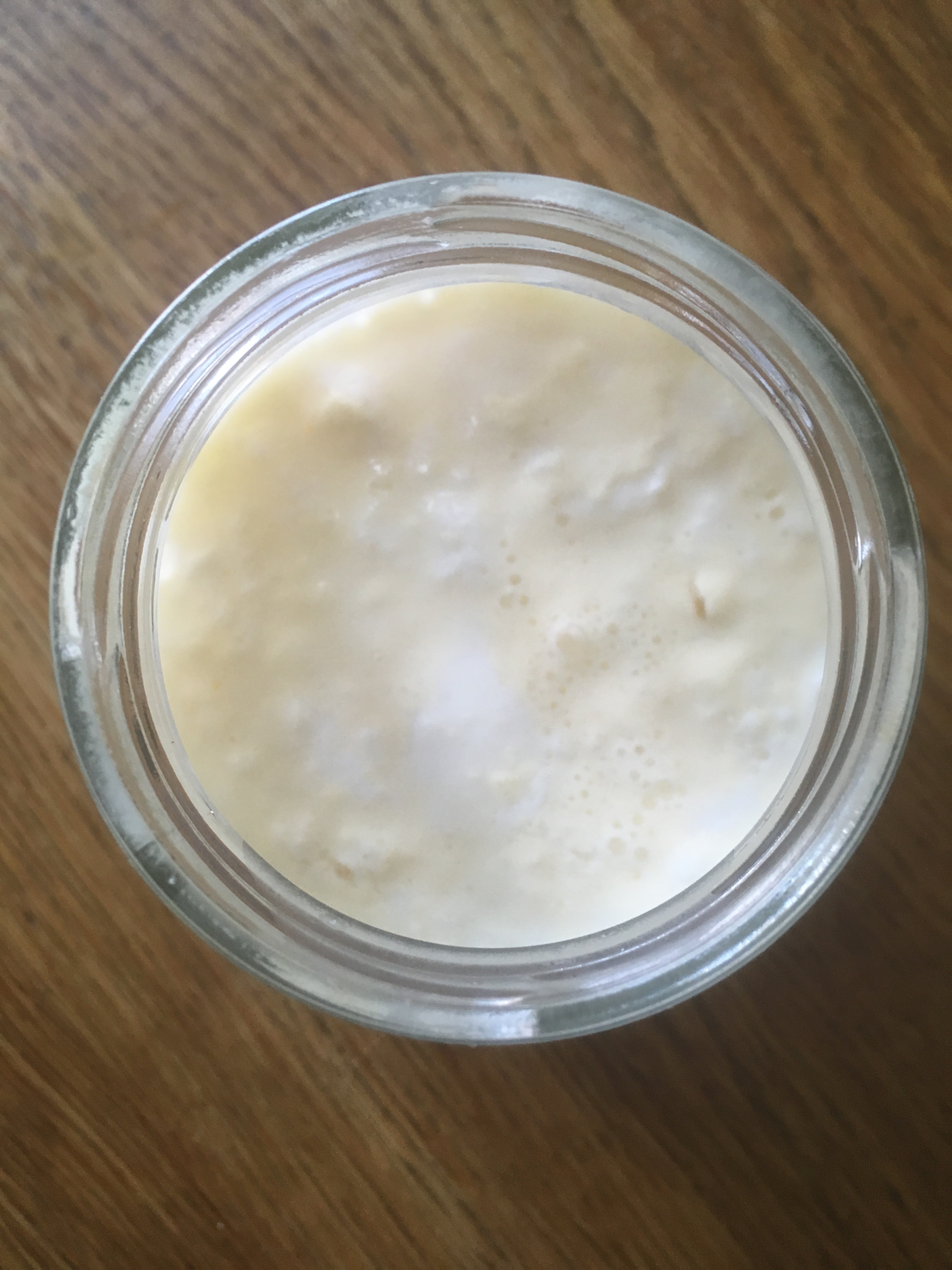
From above inside of kefir milk jar

Kefir grains are not really grains. These grain lookalikes are actually clumps of good bacteria and yeast formed from feeding on the milk. And when recipes say “refresh” the grains, it means give them fresh milk (not water as I have mistakenly done!). 

A large jar of translucent ginger beer

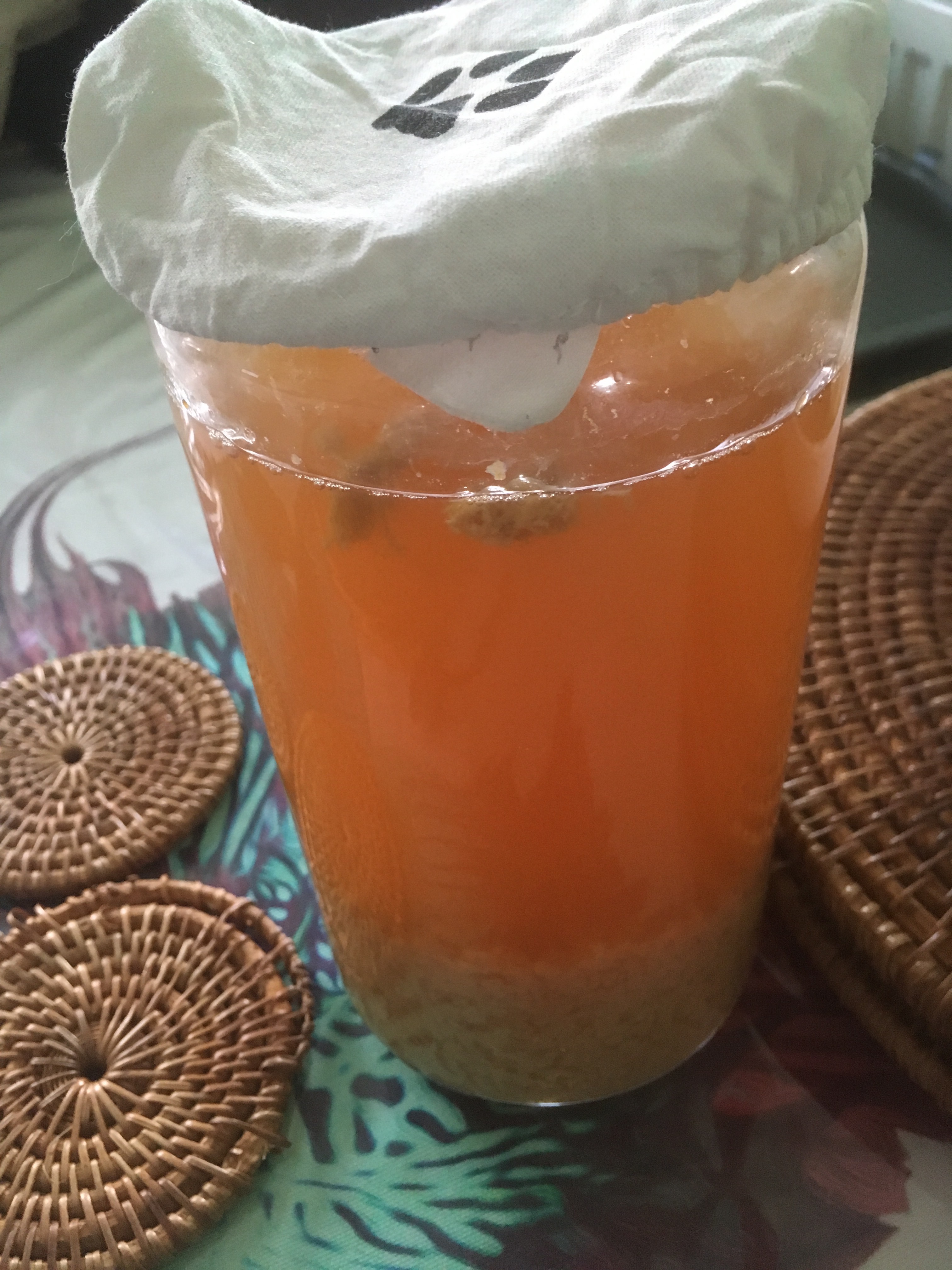
Jane of World Jungle’s ginger kefir

You can make vegan kefir. Like kefir ginger beer. This is how ginger beer used to be made. The real thing.

Use room temperature milk. I had what the French call a mauvais quart d’heure when I thought I had murdered my grains with icy milk. I think they just slowed down. They seem to be recovering nicely now. Thank you for asking.

Young man with three cows

Kees Frederiks owner and farmer of Stroud Micro Dairy, Stroud News and Journal

The lucky people of Stroud can now get kefir made from raw milk. Check out the Stroud Micro Dairy which is situated on Oakbrook Farm, farmland secured by the Biodynamic Land Trust so it will be sustainable farmland for generations to come.

PS I am now communications manager for the Biodynamic Land Trust.

Do you make kefir? Any newbie tips?