Tag Archives: Bristol

In Bristol’s green heart, we trust

Gus-Hoyt

Green party councillor, Gus Hoyt, says Bristol’s mayoral Cabinet has a “green heart at its core”. (Image credit Bristol 24-7)

Previously city councillors had voted for their leader. But the Coalition government gave ten of England’s biggest cities the option to vote for its own. Last May, Bristol people voted in a referendum to elect their own mayor, the only city to do so. In November, independent candidate, George Ferguson, became the city’s first “directly-elected” mayor.

Does a directly-elected mayor give more power to the people because they (rather than councillors) are voting? Or does the new role give too much power to one person, the mayor? But that’s another story.

Last November, Gus Hoyt, Bristol North’s first Green party councillor, got a late-night call from newly-elected mayor, George Ferguson, inviting him to join the new mayoral “rainbow” cabinet.  Gus Hoyt explains in his blog why he accepted.

It’s a question because the Green Party is opposed to the cuts – yet the Bristol mayoral cabinet is pledged to cut £35 million. The intention of the cabinet is to minimise hardship, says George Ferguson. “I’m trying to minimise the effect on services,” he says.

Personally, I don’t get this cuts business. For a start, the UK is one of the most powerful countries in the world. To my mind, Austerity Britain is a marketing slogan to cover up the reality which is: “Stop giving money to the poor, so the rich can get richer.” But I digress.

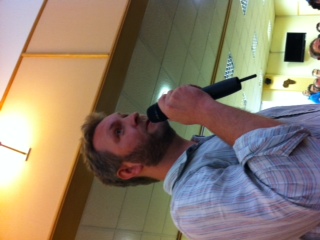
Last night at a Bristol Friends of the Earth meeting, guest speaker, Gus Hoyt – focusing on food and energy – described the positive things the cabinet hopes to achieve.

Green Bristol food vision

  • Make it easier for local food producers to sell their produce, building connections with local supply chains
  • Establish a “nuts-and-bolts” food market at Bristol Temple Meads railway station new enterprise zone – if successful it could be replicated in areas of deprivation
  • Aim to declare Bristol a zero waste city hopefully working with green-friendly Labour MP for Bristol East, Kerry McCarthy, who introduced a food waste bill in parliament
  • One fruit tree to be planted for each Bristol child born so apples and nuts can be harvested at will, and children can learn where food comes from (it really does grow on trees.)
  • Edible beds in public spaces and food production in parks so food can be picked for free
  • Turn Bristol into a food capital. The city already hosts several food festivals – let’s host more
  • Enable more schoolchildren to learn how to grow food to eat and how to cook it.

At this point Gus Hoyt referred to the horsemeat scandal, and how we must bust the myth that affordable food has to be rubbish. When people cook from scratch, food can be healthy, fresh – and affordable.

At this point, let me invoke my mother invoking her mother:

“The secret of good cooking is quality ingredients. The first step to learning how to cook is knowing how to choose quality raw materials.”

My grandparents lived in poverty in the East End – but they knew how to cook. The UK media delights in making healthy food a class issue, as it sneers at middle class obsessions about organic food. Hello?! The true class issue is companies producing rubbish food and spending millions on marketing it to poor people.

Back to last night’s meeting. There was a discussion about the Blue Finger, a stretch of local land perfect for growing food. At the start of the 20th century, Bristol was ringed with market gardens which fed Bristol. Now we buy tasteless produce in supermarkets trucked in from far away.

And should the negative effects of climate change and fuel shortages take hold, making Bristol more self-sufficient in food makes a lot of sense. And more pleasant and healthy, too.

At the Friends of the Earth meeting, Phil Haughton of Better Food Company said that plenty of local farmers would be happy to lease/sell a field the land: what is missing, he said, are entrepreneurs. Meanwhile Joy Carey, author of Who Feeds Bristol, said to make Bristol food-secure, eight main things need to happen including composting, growing, learning to cook and supporting small shops and producers.

Involves all of us

Bristol Food Policy Council (the first in the UK) is developing a food plan with those eight components. Bristol, be proud.

Green Bristol energy vision

  • Bristol to become the go-to-city for renewable energy 
  • Make Bristol a truly solar city
  • Bristol can be “a living university ” for green institutions
  • Aim for Bristol to become the European Green Capital
  • Invite aeronautical businesses to use their expertise to create tidal technology (rather than bomber ‘planes) –  a kind of “swords into ploughshares” idea
  • Secure £10 million to make council houses more energy-saving
  • Work with institutions such as the NHS and universities to make energy more affordable with ‘Energy Partnerships’
  • Wind turbines at Avonmouth are due to open in December
  • Bristol to be 100 % “fracking” and nuclear-free.

So, dear reader, does this gladden your heart? It did mine.

La Pirogue – stolen fish and refugees


“Y’a plus de personnes ici, y’a plus de poissons.”

“No more people here, no more fish,” says one of the characters in La Pirogue, the Senegalese film directed by Moussa Touré, selected for Un Certain Regard, Cannes 2012.

Here’s a clip from La Pirogue.

Illegal fishing on a fierce industrial scale is robbing West African coastal countries of its fish, often the only protein source for millions of people.

Instead of being used for local, sustainable fishing, the painted pirogue is used to transport desperate people on a perilous sea journey. The film is dedicated to the thousands of Africans who have died crossing the Atlantic to Europe.

If they had their fish, they would not risk crossing the ocean in a wooden boat.

Much of this stolen fish ends up in Europe, says the Environmental Justice Foundation in its recent report, Exposing Pirate Fishing: The Fight Against Illegal Fishing in West Africa and the EU.

Everything is connected. The would-be migrants who try to enter Fortress Europe are suffering from the illegal trade in seafood sold to Europe.

La Pirogue opened the Afrika Eye Film Festival on the 9 November 2012. I was helping the sixth Afrika Eye Film Festival with its social media, and saw a connection for another client, Charles Redfern’s sustainable canned fish brand, Fish4Ever.

He in turn saw a link with the Environmental Justice Foundation (EJF) and sponsored their stall at La Pirogue’s screening.

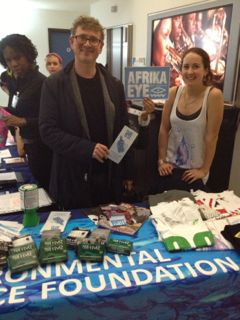
Here is Charles Redfern and Kate, a marine scientist, who ran the EJF information stall at the Afrika Eye Film Festival, at the Watershed, Bristol.

Charles has family links to Sierra Leone, also ravaged by illegal fishing.  In 2011, he raised £9k to help the EJF buy Sierra Leone a new monitoring boat. This boat featured in an Al Jazeeera video investigation as it chased two South Korean trawlers fishing illegally.

David Dravie-John from Sierra Leone, and Charles, connected at the opening night. David Dravie-John wanted to interview Charles on his Bristol-based radio on Ujima 98 FM, but as Charles is Reading-based, I agreed to be interviewed instead.

Positive change starts with awareness. I have to communicate the problem because it’s part of finding the solution.

The Zimbabwean film maker, Afrika Eye Film Festival co-founder, and director of Robert Mugabe – What Happened, Simon Bright, says in my interview for Bristol247, “Film has the power to transform political events”.

…”so that the beautiful African pirogues will never again serve to transport human misery,” as a blogger wrote.

Fish4Ever’s ethical sourcing policy refuses to buy from long distance foreign fleets fishing in the coastal waters of developing countries.


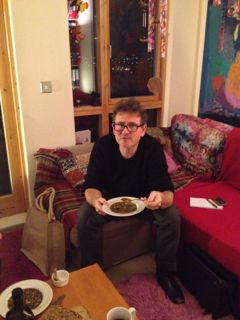
And here’s a picture of Charles eating lentil soup I made with Fish4Ever anchovies, + cut-up sweated small cubes of fennel, leek and swede (a veg trio inspired by healthy-food-on-a-budget Square Food Foundation’s chef Barny Haughton).

Delicious sustainable fish, and food security for poor countries.

Have I helped join up the dots?

Organic nourishment from Neal’s Yard Remedies


As an organic fanatic, I apply the same quest for uncontaminated naturalness to skincare products as to food.

I don’t want to rub parabens (preservative linked to cancer) into my skin.

I don’t want my unctions laced with Sodium Lauryl Sulphate (chemical used in paint stripper linked to skin irritation and allergies), thank you very much.

About half of what you put on your body goes in your body.

Thanks to campaigning, the European Commission is considering a restricted ban on parabens.

However, worrying evidence already exists. Which is why organic standards have already banned parabens.

This is what I like about organic standards: they are based, o so sensibly, on the Precautionary Principle.

Does this ingredient pose a potential health risk?

Is this risk necessary? If not, then…

– don’t take it!

Thanks to the Precautionary principle, organic standards have already banned, as I said, parabens, and Sodium Laurel Sulphate. (And many more).

Factory-made chemicals with potential health risks are cheap to produce – they are in the small print on the packaging. The beneficial ingredients are in bigger lettering, shouted on the packaging, sounding as if they make up most of the product.

Organic skincare products avoid ingredients with health risks and have more active ingredients than non-organic products.

I am always happy to promote products that are as honest as they can get.

I work in PR but I’m also a campaigner. And luckily (could it be any other way?) I do both.

I have been working with Neal’s Yard Remedies, a campaigning (my favourite type) brand.

Please check out its up-to-minute information resource: NYR Natural Health News now edited by previous-Ecologist editor and investigative journalist and author, Pat Thomas.

This blog describes Neal’s Yard Remedies’ eco-factory at Peacemarsh, Dorset.

Neal’s Yard Remedies was founded 30 years ago by pioneering Romy Fraser.

Determined the company would not fall to greenwashing corporates, she sold it in 2006 to environmental campaigner, Peter Kindersley of Sheepdrove Organic Farm (which supplies Neal’s Yard Remedies with organic herbs). The organic products are now all 100% Soil Association certified.

Mini-digression: Romy Fraser makes soaps for Neal’s Yard Remedies, and runs courses on Trill Farm, her must-visit organic farm in Devon – with Daphne Lambert (for the-most-nutritious food education – and food).

Last month, we had a great evening at Neal’s Yard Remedies store in Bristol for Organic September.

We invited Bristol bloggers interested in organic products for babies.

Lovely people and what a great supportive blogging community. And yielding such fresh honest responses to the evening, such as from Tigerlilly Quinn’s night out, ShipShape’s review , Purple Ella, Knitty Mummy, and Circus Queen (moon cups and all!),

Brilliant to meet people previously only-met online. Despite being a social media maniac, I believe: Nothing. Beats. Real. Life.

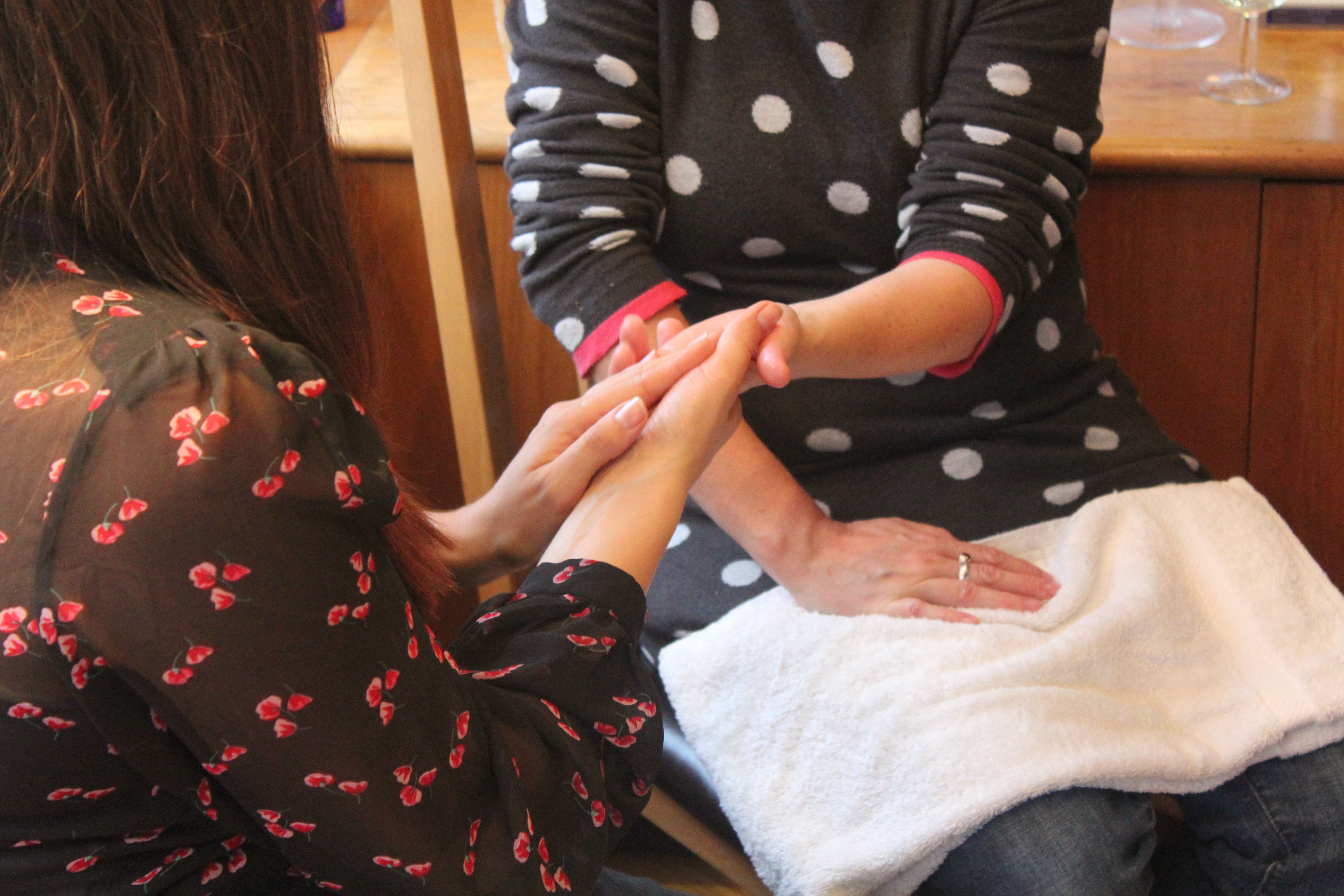
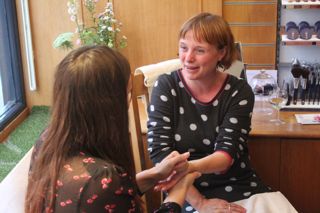
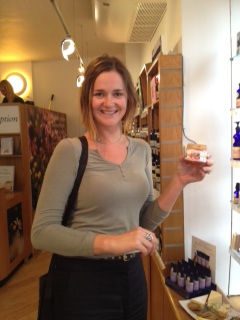
Max from Neal’s Yard Remedies in Bristol gives Bristol blogger, Purple Ella, a hand massage.

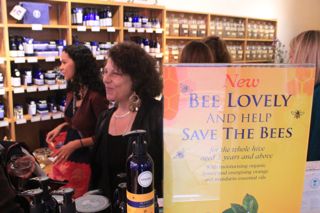
Fantastic to have support from Neal’s Yard Remedies HQ in Covent Garden. Nicola Nolan gave a great talk about the company, and its Bee Lovely campaign to ban the lethal bee-harming and totally unnecessary neonicotinoid pesticides – please sign the petition.

Also, from Covent Garden, Jane Killingsworth.

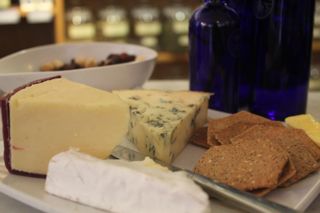
Organic cheeses provided by Sheepdrove Organic Farm – its Butcher’s shop is just across the Whiteladies road.

The best of organic Mediterranean produce from artisan farms and cooperatives – breads sticks, dip-in spreads, olives. Thank you, Organico. (My fuzzy pic)

Me bee-hind the Bee Lovely campaign and Bee Lovely organic products stand.


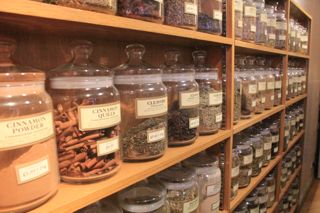
Neal’s Yard Remedies is like an old-fashioned apothecary – rows of healing herbs and spices.

Thank you to all the Bristol bloggers and Tweeters.

Thank you, Nadia Hillman, for above fab photos – do credit her if you use them!

I took this one of Nadia!

Marine Ecocide trial sets legal precedent

Ecocide is the destruction of nature, and the Ecocide Act seeks to bring those responsible for this destruction to account.

Drafted by barrister and campaigner, Polly Higgins, the Ecocide Act is not law. Not yet.

Writing post-Rio, Polly Higgins says the Ecocide Act is “a fully-worked piece of legislation which is ready to be implemented. All we need do is mobilise people to say that this must happen.”

In this spirit, the Bristol Law School organised the Marine Ecocide Trial in the presence of Polly Higgins (seated in pic below).

It was cool to meet Polly Higgins – we chatted (as one does!) about vested interests lobbying politicians. Polly Higgins said, worryingly, political lobbying is regulated by voluntary guidelines only, and only since last year.

Now to declare my vested interests: Charles Redfern, the MD and founder of Fish4Ever, the world’s first sustainable canned fish brand, is one of my clients. I only promote causes and companies I believe in. My involvement in the Marine Ecocide Trial was passionate and, mostly, voluntary (as is writing this blog).

The Marine Ecocide trial took place on the first floor of Bordeaux Quay restaurant on 15 June 2012 during Bristol’s Big Green week.

Real barristers cross-examined expert witnesses in front of judge and jury as if the Ecocide Act were law.

Although not a “real” trial, the Marine Ecocide trial is nonetheless of huge relevance to future trials. As Bristol Law School principal lecturer in law and organiser, Benjamin Pontin, says:

“Documentation and arguments used at this trial will be used as legal precedents in future ecocide trials.”

The Bristol Law School is soon to launch a website dedicated to the Marine Ecocide Trial – watch this space.

The previous Ecocide trial at the Supreme Court – which found Tar Sands bosses guilty of ecocide – had actors as expert witnesses. In contrast, the Marine Ecocide trial used real expert witnesses.

In the Bristol trial, the UK Secretary of State for the Environment, Caroline Spelman, was charged for implementing policies that “are causing damage to and destruction of UK fishing ecosystems…”

The government pleaded not guilty and did not appear. Instead Graham Watson the Liberal Democrat Member of the European Parliament  appeared as a defence witness. So did Jeremy Percy, the chief executive of the Under Tens Fishermen’s Association.

The defence focused on showing that Caroline Spelman was not in control of UK fisheries policy, because it was devolved nations and the EU also being responsible.

The Walrus and the Carpenter

The words of Lewis Carroll’s poem, about the Walrus gobbling up the oysters, came to mind as I listened to the so-called concerns of the defence:

‘”I weep for you,” the Walrus said. “I deeply sympathise”.

With sobs and tears, he sorted out those of the largest size, holding his pocket handkerchief before his streaming eyes. “”

Marine Ecocide prosecution

Jonathon Porritt appeared as an expert witness for the prosecution, swearing his oath on Gaia. He talked about the “systematic abuse of science” for political ends.

He also said that fish stocks don’t necessarily replenish once overfishing has been halted. In other words, overfishing can lead to extinction.

Another expert witness, was marine lawyer, Tom Appleby. When questioned by the prosecution about whether the UK government can legally hand out fish quotas, he said: “I do not believe Defra has this power to give out property rights.”

Dr Jean-Luc Solandt from the Marine Conservation Society gave the history of UK fishing and a factual but searing account of the damage done to the sea bed by scallop dredgers and beam trawlers.

Charles Redfern, MD and founder of Fish4Ever, the world’s first sustainable canned fish brand, was an expert witness for the prosecution.

He said that consumer awareness of the plight of the fish was a double-edged sword because now people care more about sustainability, it is possible for unauthenticated sustainability claims to be made.

Think how many times you see “Dolphin-friendly” on canned fish. Charles Redfern says you might as well label chocolate as “dolphin-friendly”; that is how meaningless the term is.

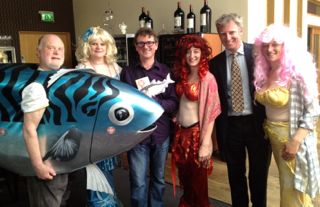
Time to present the Fish4Ever mermaids pretending to be sworn in


Imilia Lucas

Jane Victoria Powell

with costumes made by

fellow mermaid, Melanie Small.

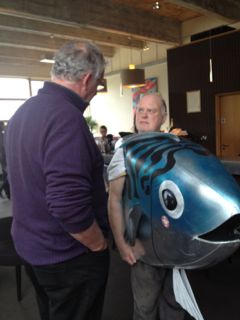
Here is the Greenpeace fish talking to fisherman, Jeremy Percy – please check out Greenpeace’s new campaign to be Be a Fisherman’s Friend.

(Yes, fishers do seem to be mostly male.).

Results of Marine Ecocide Trial

In response to the jury’s failure to deliver an unanimous verdict in the time available, the judge acquitted the Secretary of State and ordered the prosecution to pay court costs.

I am not MEANT to know how the jury of sixth-formers voted but I do know so I am now going to tell you.

The jury at first voted 7 to 5 in favour of finding the Secretary of State Caroline Spellman guilty of ecocide.

The jury went away to try to reach an unanimous verdict. It returned a verdict even closer to a guilty charge, voting 8 to 4 in favour of finding the Secretary of State guilty.

However, the jury could not deliberate further because, unlike a real trial, we only had a day, and the day was ending.

So the defence jumped in and asked for the Secretary of State to be acquitted and costs to be awarded to the prosecution, and, wrongly – in my biased pro-fish opinion – the judge agreed.

As I could not be a mermaid that day, here is a picture of me

on Bias Lane (in Devon). Apologies for the diversion.

Whatever the outcome of the trial, it raises awareness of the Eradicating Ecocide campaign to make ecocide an international crime.

As Polly Higgins wrote recently:

“Big ideas always start out in the margins before they spread into the mainstream. Earth law and in particular the law of Ecocide is just that – a big idea worth spreading.”

No Tesco in Stokes Croft fundraising party – Chance to win a Banksy!

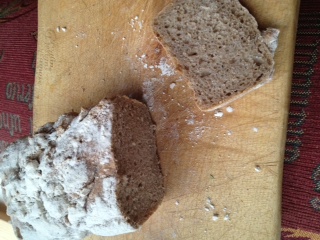
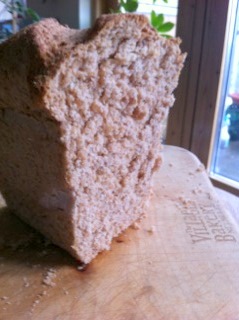
Here (above left) is breakfast, a sourdough loaf from the Stokes Croft pop-up bakery (above right), just across the road from the famously-unwanted Tesco.

“A year ago these streets were the scene of riots following the bitterly opposed opening of a Tesco store. Twelve months on, Stokes Croft, Bristol’s most bohemian neighbourhood, is booming,” wrote Stephen Morris in the Guardian earlier this week.

In a debate in parliament on 17 January 2012, Stephen Williams MP said:

“I am probably the only Member in the Chamber who has experienced a riot in his constituency caused by the opening of a branch of Tesco. It took place over the Easter and royal wedding bank holidays in April last year. I certainly do not condone the antics of those constituents, but I very much share their frustration. Large businesses do not work with the grain of local opinion.”

Here’s some background, briefly: Our No Tesco in Stokes Croft campaign, began February 2010 after Tesco arrived in Stokes Croft by stealth.

Against all odds, we took our legal battle as far we could – to judicial review.

We lost – our court costs are £2,126.50.

We are having a fundraising party on Friday 13 April at 7.30 pm with music, poetry and street theatre at 35 Jamaica Street, Bristol BS2 8JP. Join the group on Facebook.


Buy a limited-edition bone china “I Paid The Fine” mug produced by The People’s Republic of Stokes Croft, and be part of social history.

Twelve of the 250 mugs will be accompanied by one of the original Banksy posters donated by the graffiti artist as a “commemorative souvenir poster.”

Every campaign, whether you win or lose, is worth its weight in gold for it raises awareness of the issues.

I will be part of a round-table discussion – The High Street Fights Back – at the Natural Product Show this Sunday with campaigning journalist and author, Joanna Blythman.

This month, Tesco withdrew its planning application from Herne in Kent after huge local protest.

Thus, I, like my fellow campaigners, remain

relentlessly optimistic.

STOP PRESS 23 April 2012: Last Mug Sold!

Peaceful No Tesco Tea Party


Well, the No Tesco Tea Party has to be one of the most fun, friendly, heart-filled

musical protests I have ever been on.

Here’s a delightful news item from ITV: over a minute of dancing protest.

But it was also possibly the most stressful because – post-riot – it wasn’t just a matter of ringing up our local bobby.

Instead, we were invited to respectful, professional meetings with Silver and Bronze commanders, who supported our right for a peaceful protest but were thinking worst-case scenarios, and asking: how would we deal with them?

I realised the police, like the medical profession, are (bless ’em) fear-driven.

So, for a few weeks leading up to the No Tesco Tea Party I felt the weight of responsibility. Dreamed of police on horseback bursting through my front door. Worried about upsetting local charities such as Relate and the Salvation Army who’d been damaged in the riots. Angsted about offending rock throwers, too.

(Rock throwing is not my style but anyone caught-up in those two crazy riot nights might need support so please contact BristolArresteeSupport@Riseup.net, mentioned in June’s edition of The Autonomist.

And anyone with unanswered questions about the Stokes Croft disturbances, please sign the petition asking Bristol City Council for a public inquiry.)

Our protest took place in front of Tesco in Stokes Croft. I was glad to talk with Tesco managers because this campaign is not against supermarket employees.

It’s against supermarkets destroying communities in their single-minded drive for market shares.

The truth is I am a communicator.

I find enemy positions deeply unhelpful. I would rather build bridges.

Listen, we are all victims of the same soulless system that puts profit before people. So let’s find our common humanity and work together for a better world.

When Monday 13 June dawned – bright sunshine after Sunday’s torrential rain – I felt confident. Our protest would be – as all our protests have always been – peaceful.

And it was.

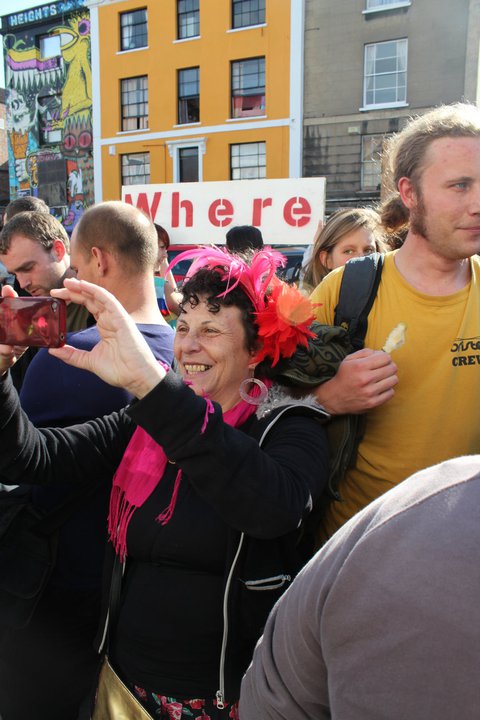
I was moved by the joy and the dancing

and the homemade cakes

and cucumber sandwiches (note Princess Diana tea-tray)


and anti-Tesco knitting protestor.

I was moved by Mark who did not agree with our campaign but became a volunteer peace marshall because he supported our right to a peaceful protest.

For goodness sake, there is disagreement even when you are on “the same side”. So, shaking hands with Richard whom I had met online when our political views clashed made me happy: this is what community is all about.

The No Tesco in Mill Road campaigners had come all the way from Cambridge to join our protest. Thank you!

Our Tea Party protest was to create awareness for our appeal for a judicial review.

Our appeal was heard on Wednesday 15 June in Cardiff.

And we won.

Thanks to People’s Republic of Stokes Croft, Jake and peace marshalls

and People’s Supermarket for donating free food.

O and here’s one of me, thanks to Nadia of GRO-FUN.

Tesco re-opens and elderflower cordial

After being “trashed” in the early hours of Good Friday 22 April, Tesco re-opened on the 24 May following a neighbourhood meeting the night before.

Monday 23 May 6.30pm: St Paul’s Unlimited neighbourhood meeting.

This excellent Guardian feature gives some background to the intensity of emotion present.

People with complaints against the police (“Why was extreme force used? Why was my arm broken by thugs in police uniform and three dogs attacked me?” asked one man).

The police was represented by Chief Superintendent, John Stratford, who listened well. Clearly, he was not a riot-type with batons and adrenaline-pumping, lashing-out fear.

Someone in the audience who’d been a policeman for 30 years – now an artist with a studio in Stokes Croft – said he was holding a riot shield in the St Paul’s 1981 riot. And scared.

A woman describing herself as a “lone voice” showed support for Tesco. Sadly, she mixed-up the riot with the campaign to stop Tesco opening. Not true.


As Ashley ward’s first Green Party councillor, Gus Hoyt, (pictured) has said the media has framed the debate: Against the riot = For Tesco. It’s more bigger-picture than that and why he is calling for independent public inquiry.

At the meeting, I heard about a move to make it harder for squatters to squat legally.

Harder for people with no home – and no hope of a home – to make a temporary home in one lying empty.

Homes lying empty, as I learnt at the meeting, so they can increase in value for their owner. Such as Westmoreland House.  “A death trap” someone called it.

One of the Bristol City Council representatives told us the council had asked the government for retail classification A1 to be changed. Currently the same classification applies to both a supermarket chain and a one-off local shop.

Eric Pickles, the Conservative minister, replied with no. “…Not its role to restrict competition.”

Ha. It’s supermarkets that restrict competition. They buy cheap, sell cheap. They only need to take a small percentage of a local shop’s business to sink it.

The profit a small shop makes is tiny.

But is economic power the only measure of success? Local independent shops create community. They support wholesalers and the local economy.

Money spent locally is worth more locally than when it is spent in a supermarket because it is recycled locally.

However, it does not take long for local shops to wither. Look at Tesco on Golden Hill. A row of small shops closed and Tesco’s promises broken: not to open on a Sunday; not to have a cafe.

Head of Property Communications, Michael Kissman, arrived late at the neighbourhood meeting.

Pity. He did not hear the majority of the Stokes Croft audience eloquently voice  love for their local community – without a Tesco, thank you.

(One said: “We don’t want Tesco. And we don’t want the police protecting Tesco.”)

However Tesco’s Michael Kissman did hear people after the meeting asking him for Tesco’s support for impoverished local groups.

And at least I got an answer to my question: Where did the figure of 3,000 people, that Tesco claimed walked through Tesco, Cheltenham Road in Stokes Croft store in its first weeks of trading, come from?

Answering my question via the chair, Tesco’s Michael Kissman, said these 3,000 customers were, in fact: “3,000 transactions”. O.

No mention was made at the neighbourhood meeting of Tesco reopening the following morning. But open it did at 7 am on the 24 May.

Lot of media interest, I gave three interviews that day, including to Radio Bristol (1:40 mins in, after Michael Kissman, who was given the final word.)

Tesco claimed 400 customers came on its first day of opening but hmmnnnnn.

Looked pretty empty when I took the pic at 3pm.

Tesco can afford to stay half-empty (like the Tesco five minutes away in the Gloucester Road), playing the waiting game while local shops close.

On a more positive note, there may be another chance to review the planning process concerning Tesco’s traffic impact on Cheltenham Road. The  No Tesco in Stokes Croft campaign has won the right to appeal against the decision to not grant a Judicial Review (the rejection came coincidentally after Good Friday).

We plan a fluffy good-humoured self-contained lawful protest in front of Tesco’s before we set off on Wednesday 15 June for the 2 pm hearing in Cardiff .

And the Stokes Croft People’s Supermarket readies itself in the wings.

I’ll drink a glass of homemade foraged elderflower cordial to that.

Homemade elderflower cordial

A revelation. I did not realise how easy it is to make.

You soak the elderflower blossom in water with sugar for two days, covered with a lid. Then strain through muslin or a sieve. Then pour into clean bottles.

Second revelation: how the scent fills a room. Light fresh notes, as I snip the blossoms off their stems into a vat of hot sugared water.

Elderflower blossom is plentiful now.

Mike picked a plastic bag-full.

We added two pots of organic pear preserve  – as the Elemental Sanctuary’s Carole Fofana advised. I have some brown muscavado sugar. About 500g.

We estimate six pints of water. Mounds of elderflower blossom take up most of the room in the pan. I reckon our version has more blossom and less sugar than most recipes (hence its deliciousness).

The only technical bit is straining it through a sieve covered with muslin (organic muslin £2 from Born).

For more precision, see the Self-Sufficient-ish elderflower cordial recipe.

Lemon juice will preserve it but requires more sugar to sweeten the taste. We do not use lemons (or citric acid) or lots of sugar, and the cordial is not too sweet and has the heady taste of nature.

Third revelation:  homemade elderflower cordial tastes amazing.

I am drinking some now.

It tastes how elderflower blossom smells. And somehow feels substantial – nourishing.

Elderflowers are nutrient-rich and immune-boosting.

Not nutrients added artificially, or over-processed thus inneffective.

I often dream of going into a bar and ordering a health-giving revitalising drink.

Homemade elderflower cordial is that dream-drink: it has natural vitality.

(To think Coca-Cola had the cheek to call itself: The Real Thing).

I glimpse the satisfaction of foraging. It’s unmediated.

Nothing between me and something growing on a tree.

Tesco disturbed in Stokes Croft

I have been campaigning since February 2010 for No Tesco in Stokes Croft so imagine my mixed feelings when I woke up on Good Friday to hear the newly-opened supermarket had been “trashed”.

Alerted by friends in Stokes Croft, my first response was to gather information, with a Twitter search leading to several eye-witness accounts.

This blog by Neurobonkers.com described the dramatic effect of 160 riot police turning up on the streets – the tone bemused rather than partisan.

While giving a sense of folly on both sides, this blog by Oli Connor also questions the role of riot police in aggravating tension.

Jonathan Taphouse tells the story behind his photographs in the Guardian, and some turning-point moments.

Twitter helped me spot churnalism in action -the newspapers that repeated almost verbatim the police’s (understandly one-sided) press release, while this blog sums up the spin.

I was obsessed with gathering information and analysing its angles – media studies in action.

I wanted to piece it all together: what happened on the 21 April?

A volatile situation from the word go: a warm April night at the start of a bank holiday in a busy social area of the city.

Riot police turn up at 9 pm, some on horseback, some with dogs, and – according to Green councillor candidate, Gus Hoyt, on his way home – at least three with guns, one directing traffic with the gun, its holster strapped to his leg (Gus asked, “Is it real?” and “Of course it is, mate, where have you been living?” said the armed policeman).

The police raided Telepathic Heights, the squat opposite the newly-opened supermarket in Stokes Croft, looking for alleged petrol bombs.

(Surely a house squatted is better than left empty?).

This video includes interviews with squatters and eye-witness onlookers. As one pointed out, if you were conducting a drugs raid, you would send in uniformed police, and explain the situation to the neighbours.

But nothing was explained. The police operation seemed disproportionate and unnecessary military. I feel sorry for local police because this operation counters their good work in the community.

The drama was dramatically-lit by the searchlight from the police helicopter – its noise drew locals on to the streets to see what was happening.

Some reacted with the same fear-fight knee-jerk response that must affect the police; threatened, tribal, flooded with adrenaline.

Some of my fellow No Tesco campaigning friends who lived on a nearby street (which ended up kettled by riot police) tried to stop onlookers from grabbing stones from a skip and building barricades.

How quickly a scene turns raw. A push, a shove, a bottle thrown. The police have methods to deal with affray and are allowed to use force.

This video that shows Stokes Croft locals trying to quell the fight reaction from people feeling threatened.

“Stay calm and film everything. Do not instigate,” repeats a strong voice. Wise words.

The police left an empty police van outside Tesco and departed. That’s when a group of people spontaneously starting dismantling Tesco and smashing its windows. As one blogger reported: “The Tesco store – the very one the police operation had supposedly been set up to protect – had its front trashed.”

I am scared by violence and abhore it. I believe the ends do not justify the means. The means – the way we do things – is vital. We must create a peaceful society by enacting it.

Yet history tells us (the 1831 Bristol riots for vote reform, votes for women, the poll tax) that sometimes it takes violence from the voiceless to be heard. And damn it, violence is news – look at the media coverage that that night got.

Some violence is misplaced fighter-energy. I was in Stokes Croft in the early hours of 29 April, a week after the Tesco riot.

Eye-witnesses present on both nights told me that the police were calmer and less-reactive the second time, despite opportunistic bottle-throwing.

Stokes Croft had become – in a week – a magnet for fight-action. As I walked towards the epicentre, guided by the police helicopter’s beam, several masked and hooded lads passed me.

“Put the bin down, Bin Man!” shouted one of my fellow campaigners. The youth carrying the wheelie recycling bin put it down and we clapped to reinforce good behaviour.

Considering how hard-won the battle was for recycling, I would hate recycled bottles to come into disrepute as potential weapons.

Talking about recycling: Tesco has asked councils to remove their bins from Tesco car parks, depriving local councils of recycling revenue.

Tesco – which recently made profits of £3.8 billion – is taking the bins in-house.

A Tesco may be a convenient, clean shop but it also a powerful multinational that puts profit before everything. It may be staffed by good people but its policies are destroying small farms and the land, small businesses and local communities – while, according to UK Uncut, evading tax.

“If you don’t like Tesco, don’t shop there. Then they will close down,” some say.

But it is not that simple.

Tesco can afford to run its shops at a loss while local businesses start to fail. It’s hard to boycott Tesco if there are only a few food shops left.

In our unofficial role as peacekeepers last Friday we walked round the back of Tesco to see if the security guards were alright. On that surreal night of unexpected scenes at every street corner, we chatted through the steel fence. There was banter and good wishes expressed – this battle was not personal.

We walked round to Cheltenham Road.

Road block: riot van, riot police, police dogs, tension but also a kind of calm because there was no bottle throwing or police charging. The police helicopter whirred overhead. I heard a policeman explain to a girl expressing annoyance at the intrusion that he was normally on the beat and not a riot police.

I reported on Twitter (and had corroborated by another Tweeter): a tearful girl was helped by a policeman after being hurt by another. I wrote: “It’s not all black and white in Stokes Croft.”

Every side has its goodies and baddies.

The grey, nuanced bits are the compelling drama of a riot: the untamed rawness of chaos.

I wish I could channel that elemental energy into good cause and creativity.

Last Wednesday (between the two nights of disturbances), I was interviewed for the Politics Show about whether Tesco should reopen.

My answer: Tesco should never have opened in the first place. A council duped (the original planning permission was achieved anonymously) and so flawed that campaigners mounted a judicial review.

A local woman walking past joined us. She said she liked Tesco and shopped there and resented the rioters for setting a bad example to her son.

We chatted. We were both upset by the smashing of the Salvation Army and other local shops caught in the crossfire.

She said: you should open a shop to rival Tesco’s and sell fruit and veg wholesale.

I said that’s what we want to do: set up a food co-op and sell affordable healthy food with volunteers doing four hours a month.

(Nor is Tesco cheaper than local shops anyway, according to our survey).

She said: I’d volunteer every day for such a shop.

Stokes Croft Tesco opens and butter bean salad


It’s hard to be happy about the 41st Tesco opening in Bristol (figure according to Tesco’s store locator).

93% of 500 locals surveyed had said No to Tesco’s in Stokes Croft. After over a year’s campaigning, it was bitter to see Bristol City Council bow to Tesco pressure last December.

Still, we are making the best of it.

On Friday 16 April, Tesco opened in Stokes Croft.

Friendly activists gave a Bristol-style welcome. They put a comfy sofa and lampshade outside on the pavement. Someone played a guitar.

Another strode into Tesco’s with a wad of Monopoly money. When he was not allowed to spend it, he tried to bribe a security guard with it.

A woman passer-by who also objected to Tesco’s monopoly, took up the Monopoly money-action.

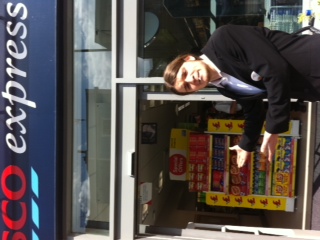
On Saturday, a performer (see pic above) invited us in to ‘his’ Tesco, while outside on the pavement, stalls served free food, and promoted Picton Street’s local independent shops, in the street behind the dreaded Tesco.

Picton Street is a marvel, and includes the Bristolian Cafe, Yogasara yoga studio, vintage dress shops, an art gallery, Radford Mill organic farm shop and Licata, the family-owned Italian delicatessen.

Licata often has great bargains in olive oil and tins of beans. I am crazy about beans as they are a wonderful source of health. Licata has many variety of tinned beans, which to me = fast food.

I owe everything I know about beans to vegetarian hero, Rose Elliot. The Bean Book changed my eating habits for life.

The following recipe comes from there. Please consult The Bean Book for measurements, nutritional facts and top inventive recipes using dried beans and pulses.

Here is my sloppy fast-food version.

Gently fry sliced fresh mushrooms in (olive) oil so they are still succulent. Add a tin of drained butter beans and warm with the mushrooms. Add lemon juice squeezed from two lemons and chopped fresh herbs such as parsley or coriander. You can’t have too many fresh herbs so over-estimate. Mix it all in the frying pan, with salt to taste, and serve still warm with brown rice, or cold as a salad.

I used organic ingredients from Better Food organic supermarket, a 20-minute walk away from Tesco’s, and land cress as the fresh herb.

Rose Elliot’s recipe fries fresh cut-up garlic with the mushrooms and adds cumin spice, with coriander as the fresh herb.

PS I met a neighbour on Saturday who said she had to buy something at Tesco’s in Stokes Croft, and I am haunted by her anxious look.

So, just so you know: If it makes life easier to shop there, then do. Life’s too short for guilt and sacrifice.

I am not against people who use Tesco. I am against Tesco.

Bread – what’s left unsaid


Look, if you are not in the mood for cooking (a state I know) then make sure basics, such as bread, are doing you good.

Bread gets messed-around with. This sticky label, from the 2009 Real Food Festival, lists ingredients that might be found on bread – but are never listed.

The label said:

~~~~~~~~~~~~~~~

“!!!WARNING!!!

This ‘bread’ may be made using the following:

Amylase, hemicellulase, phospholipase, peptidase, xylanase, protease, oxidase and other enzymes, some of animal or GM origin.

The law says bakers don’t need to declare them.

DISCLAIMER

These stickers are only for use in your own home. The Real Bread Campaign, Sustain and The Real Food Festival take no responsibility for any consequences, legal or otherwise, of you using them elsewhere such as wrappers of factory bread, supermarket shelves or advertising posters.”

~~~~~~~~~~~~~~~~

As Michael Pollan says: if they are more than five ingredients on a label, avoid.

The long list of enzymes above are “processing aids”. In other words they are used to make the bread rise faster, look nicer, last longer.

But because these processing aids are not classified as food ingredients then – by law – they do not need to be listed on the label.

Whaaat? You eat them but they are not food ingredients?

It reminds me of adulterated food sold to the Victorian poor

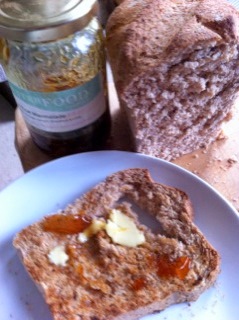
My real bread came from the Better Food Company in St Werburgh’s, Bristol where I also got marmalade made by their chef (as good as homemade…hey, it’s January, time for marmalade-making again) and organic butter from Nature’s Genius in Fishponds, Bristol.

Yes, the bread cost more than supermarket bread but I got more food for my cash. My grandmother would say money spent on un-nutritious food is money wasted. And I agree. Do you?