Category Archives: vegetarian

Easy-to-make spelt loaf

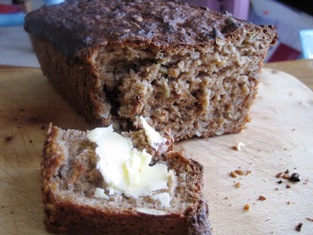
This is the most delicious bread I have baked in my life, ever – and the fastest.

Spelt bread has three great things going for it:

1. Wheat-sensitive types like myself find spelt easier-to-digest

2. Because it is spelt, you can get away with no-kneading because, as Rose Prince says in her recipe for white spelt, “Spelt, an ancient wheat grain, reacts quickly to yeast”.

3. It tastes fantastic – the crust was seed-crunchy and the inside was moist and held together.

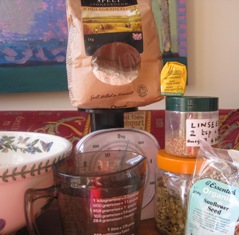
My leading characters:

Thank you to Julia for real-time baking advice, the recipe and the loaf we ate

while watching Life In The Fast Lane, about the 1990s M11 road protest.

Julia says you have to use real yeast to make it taste so good, and I did.

See Yeast ** further down for more info including using dried yeast.

Ingredients

1lb 2oz/ 500g spelt flour

½ tsp sea salt

2oz/ 50g pumpkin seeds

2oz/ 50g sunflower seeds

2oz/ 50g linseeds or sesame seeds

17floz/ 500ml warm water

15-20g fresh yeast with 1 teaspoon of honey

a slosh of olive oil (or any oil)

Method after Julia

Add the fresh yeast and honey (1 teaspoon) to the warm water and leave it somewhere warm for 10 minutes to activate the yeast. Feel it gently fizz in your face as you peer into the jug – smells like beer brewing.

Mix the ingredients above – flour + salt + seeds + oil (and anything else such as chilli for a devilish spicyness) – in a large mixing bowl, adding the yeast/water last.

Grease two loaf tins with oil and scatter seeds to line.

Size of tins? One 2lb tin and one 1lb tin did the job for me but you can improvise.

Pour in the mixture and leave it to rise in the tins

– about 30 minutes rising-time.

If you leave it longer, dough-mixture might collapse.

Bake in an oven pre-heated to Gas Mark 6 / 200C / 400F  for 30 minutes.

Turn out and eat as soon as it cools.

(The recipe does tell you to return the loaf to oven for 5 minutes after removing it from tin but this did not seem necessary).

Yeast

It’s exciting – a living organism.

If using dried yeast see Xanthe Clay‘s recipe – which is even faster as there is no need to wait for dough-mixture to rise in the tin (although dried yeast does have additives).

How much fresh yeast to use? Rose Prince says use 7g (1/4oz) of fresh yeast for making a white spelt loaf. Julia says use about 15g.

By mistake I used 42g. Read on.

My yeast story

In my ignorance I used the entire packet of organic fresh yeast instead of a third as Julia recommended.
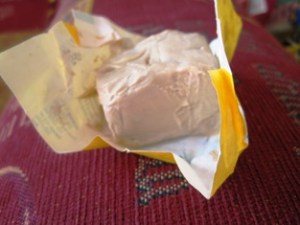
It got very dramatic as the dough-mixture rose and rose and spilled over the loaf tin.

Domestic-slut that I am

I scooped the spilled mixture and slopped it into another greased loaf tin.

And let the mixture(s) rise again.

They behaved quite well this time, rising just-so – see pic below.
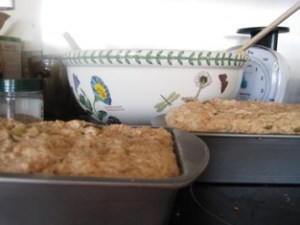
The bread was delicious and non-yeasty – maybe because the wholemeal spelt flour was strong enough to take the accidental extra yeast.

The moral of the tale?

You can make mistakes while cooking…

So to recap.

This spelt bread does not need kneading

making it fast to bake

Plus so damn delicious it’s also fast to partake.

Claudia Roden’s homemade falafel

The paparazzi caught me last Sunday buying herbs from the glorious Sweet Mart in Easton.

Easton in Bristol has three mosques, several churches, one synagogue and one Sikh temple

– in other words my sort of town.

Sweet Mart do mail order.

I was buying the herbs to make falafel for a family meal on Easter Monday.

I had spotted the recipe in my mum’s Claudia Roden international Jewish cookery book – I was very taken with it because it uses herbs, and butter beans instead of the traditional chick peas.

Here is my version of the wonderful Claudia Roden‘s recipe

Soak 500g of butter beans overnight and cook for a good hour.

Drain the beans (Claudia says pat them dry too)

Blend the drained beans in a food processor until they become a smooth puree.

Add chopped up onion and garlic, (Claudia says use 8 spring onions instead of onion) and ground spices such as chilli, ground cumin and coriander

(Claudia says 2 tsp of cumin and 2 tsp of ground coriander)

Add washed and drained herbs – I used fresh coriander, mint and fennel (see armfuls above).

Leave the paste for an hour or so to settle.

Then roll into balls

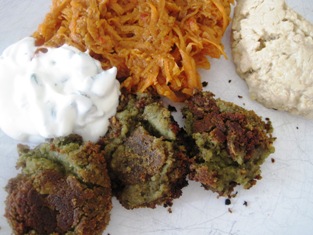
Deep fry and serve with homemade hummus, yogurt with garlic and mint, and grated carrot salad.

My falafel did not turn into hard crispy little balls. I think because

a) I used lots of herbs so they go too wet b) I hate deep-frying so did not use enough oil.

Despite not being crisp, they were

…DELICIOUS

(and even better cold at midnight).

Do you eat real bread?

I took the above picture of real bread at Wholefoods Market, London last weekend.

Daringly I took it AFTER being told by a Wholefoods Market employer that it was “not company policy” to allow photographs.

Even though I was about to blog about the store’s amazing real bread made by a genuine master baker who makes his own yeast.

Bread was on  my mind.

A few days before, a press release from the Real Bread Campaign had arrived in my email inbox.

A nine-month investigation by the Real Bread Campaign found that – despite those tempting bread-baking smells in supermarkets – only one, Marks & Spencer, produces real bread.

Real bread is made with basic ingredients such as flour, yeast and water.

Real bread does not use weird substances designed to make bread seem like real bread but are actually potentially toxic ‘processing aids’ that do not even need to be declared on the label.

I must confess.

A bit of me was like ‘so what?’.

I mean I was hardly surprised to hear supermarkets sell pretend bread.

However my inner jaded-real food campaigner was put to shame when the Real Bread Campaign’s report was published in the Daily Mail.

I was staying at my mum’s; she is a daily Daily Mail reader.

“I knew it,” she said, pacing up and down the kitchen, brandishing the paper.

“I knew that smell of baking loaves was fake,” she said.

The report vindicated her suspicion that there was no real baking going on.

Unlike at Wholefood Market which may charge inflated Kensington prices on some items (such as hummus) and not wish me to take photos but

does bake the

most

amazing

real bread.

Find real bread here and tell me:

Do you eat real bread?

Last meal at the No Tesco squat?

Stephan rang me from the No Tesco in Stokes Croft squat.

I had just taken a picture of this Tesco bag blowing randomly on a branch in a car park in Portishead.

Stephan said tonight’s Sunday communal meal may be its last.

Last Tuesday, a repossession order was granted to Tescos plc – the ‘conscious squatters’ lost their court appeal to keep the site for the community.

I call them ‘conscious squatters’ because they look after the old Jesters comedy venue site with its bar and stage and share it consciously, hence the squat’s screening of Food Inc, last night’s Cosmic Cabaret and its regular Sunday night communal meal.

They have been occupying the premises ever since we locals heard Tesco has a planning application on the site. Even though there are 6 Tescos within a mile [see comment below] and 31 in Bristol.

I would much rather have this cosy communal space the squatters have created than another soulless supermarket.

Yet any minute now, eviction papers could be served. The squatters then have 48 hours to leave.

Here is Stephan’s Project Flowers at the squat. Note the framed flower drawings.

“Flowers represent positivity,” Stephan explains. “In a way we are all like flowers.”

He created the project so everyone could take part in it.

Food is like that – something we can all take part in.

Tonight the squat served the most amazing vegan meal for over 50 people in return for donations only.

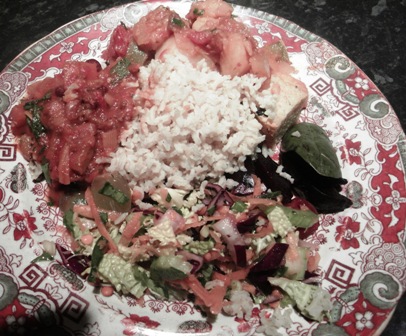
My plate of varied inventive coleslaw (raw cabbage, slivers of kiwi, finely cut celery, herbs, seeds, and cardamon), vegan chilli stew, potato curry, beetroot and spinach leaves and a mound of brown rice. Followed by homemade fruit crumble and dairy-free custard.

The funny thing tonight turned out to be networking-central. I caught up with five different lots of friends from different parts of my life (including dance, work, family and food).

The No Tesco in Stokes Croft squat is creating community.

It is budding, at the beginning of its spring growth, fertile with plans including a food coop to make local healthy food affordable for all.

It would be no joke if the squatters in the old Jesters comedy club were evicted.

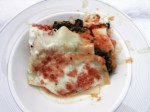
Butternut squash and spinach lasagne

Snowed-in.  Good excuse to make Butternut and spinach lasagne.

Christmas has had me confused: am I vegan or carnivore?  This light vegetably vegetarian dish is a compromise.

And..it does NOT require a white sauce!

As I had been planning to make the dish for a week, I had the main ingredients:

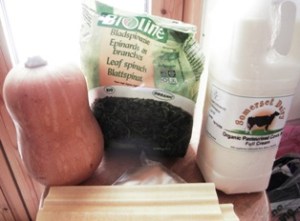
In my pic, lined up for their photoshoot, from left to right:

1 organic butternut squash, 1 packet of frozen organic spinach, 1 organic milk and 3 sheets of lasagne pasta. You need mozzarella for topping.

I got the recipe from a free promotional recipe booklet from Olive Magazine two years ago (when I had advised Hardeep Singh Kholi on going organic).

Here is the beautiful butternut squash cut in half.

I used the whole squash for the recipe and produced just over the 500g required.

I cut the squash into manageable pieces with a small sharp knife, peeled the skin using a potato peeler and scooped out the seeds.

Love the way the butternut squash is so orange.

You fry 1 onion in a large frying pan then add the 500g cut-up squash. I cut-them up smaller when I realised they had to fry.

The recipe said fry until tender and slightly brown round edges but I put the lid on – answered a few emails – and in 15 minutes it had gone very soft indeed, but not brown.

Then add 100 mls of milk (or plant milk, vegan-me).

The BEST things about this recipe are:

  • no need for a white sauce
  • 500g of squash and 150g of (frozen) spinach makes it LIGHT and vegetably.

So you cook the 3 lasagne sheets in boiling water for 3 minutes then drain.

Then layer: one sheet of pasta, followed by half of the cooked squash and half the warmed spinach.

Another sheet of lasagne pasta, then rest of squash and spinach.

Finish with the third lasagne sheet and tear a 125g ball of mozzarella over it.

(I used Buffalo Mozzarella from Laverstoke Farm, the organic farm ‘university’ owned and run by ex-racing car driver, Jody Scheckter. 20% off in Better Food organic supermarket just before New Year).

Put the dish under a heated grill until it bubbles and browns.

I photographed it against the snow.

No food-stylist, I! Look at the food splashes…not very stylish.

But definitely delicious.

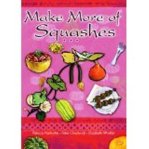
For more squash recipes, including recipes for carnivores and vegetarians, nutritional information and how to grow squash from seed, see the book I co-authored, Make More of Squash. Aad on the right of this post offers 20% discount…

Interested in reviewing a copy? Email me at elisabeth.winkler   AT yahoo.co.uk

Beetroot soup and a good deed gone wrong

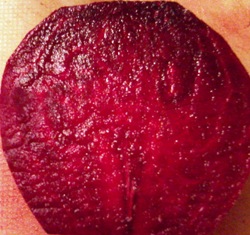
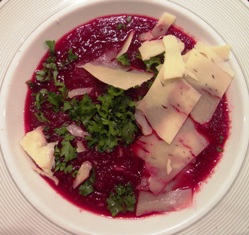
Last night’s cut raw organic beetroot.

Its insides look so mysterious.

I was making beetroot soup (again). Simplifying it.

Cut up two large peeled/scrubbed organic beetroot and place in a large pan with two peeled onions, sliced. Cover with water and bring to the boil, then simmer with a lid for 30 minutes.

I blend with an electric hand blender, my favourite kitchen power tool.

Mine was £20 second-hand, or try Freecycle for a free one, or Just for the love of it for swops.

While blending the beets (bought from Better Food), I travelled back in time:

– to fifteen years ago, and I was trying to be helpful in someone else’s kitchen.

I was in charge of the chocolate mousse.

I poured it into the mixer and pressed the button to mix.

Mayem. Chocolate mousse on every kitchen surface in spattering distance.

I had forgotten to out the lid on the mixer.

So now I practice conscious blending.

Schadenfreude means the pleasure you get from someone’s else’s pain.

I wonder if there is a word to describe the ouch you feel when you end up

causing even more ouch to the very person you are trying to help?

Served with home-grown parsley, plant from St Werburgh’s City Farm, and Yeo Valley organic cheddar shavings.

Hemp porridge knowledge

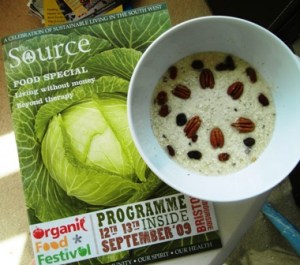
Hemp porridge and The Source (small)

I went to Shambala festival and got turned on by hemp. Every morning I would emerge from my tent to tramp across a field for hemp porridge breakfast.

Its creator, Eddie Callen, told me how he makes it: mixes it 50/50 with oats, by grinding 1/4 of the oats with all the hemp seeds, from Yorkshire Hemp. Once emulsified with the seed oil, the rest of the oats grind-in easily. Then water, hot or cold, to make the porridge, and a host of sprinkles: nuts, goji berries, agave syrup, cranberries, for taste and nutrition.

(I used pecan nuts and sultanas for my hemp breakfast back-home, see pic above).

A fount of hemp-knowledge, Eddie told me how hemp can grow abundantly in the UK without pesticides and fertilisers.

Hemp plants are so productive too: omega 3-rich seeds, and textiles, rope and paper. More sustainable than paper from trees – and cheaper.

We want hemp! ‘Tis the the earth’s most sustainable material.

Although hemp belongs to the same plant family as cannabis it has NONE of its mind-altering properties. It got a bad rap all the same and got outlawed in the 1930s but now it’s legal to grow although most UK hemp ends up as animal bedding.

Hemp-evangelist Eddie Callen was cheffing for the Community Medical Herbalists.

I had gone to see one, John E. Smith, for some remedies and it was he had told me about Eddie’s hemp-prowess.

Festivals are like that – it’s green networking city. I bumped into colleagues, past and present, as well as the legendary Simon Fairlie, editor of The Land. Its summer issue focuses on the  enclosures of Britain’s commons – historical events I have long been fascinated by as I see the roots of our present-day ills in the past.

People’s right to grow food or forage was taken away by force or legal stealth from approx from 1300s to end-18th century. Just as indigeneous people are deprived of their land today.

O I am in the mood for digression. Last night I saw Winstanley, an amazing film. Set in 1647, shot in black and white, British weather featured strongly, with only a camp fire and thatched tents to protect the Diggers from the incessant dripping rain. (As a recent camper, I identified).

Gerrard Winstanley wrote: the earth was “a Common Treasury for all”. He tried to reclaim the top of a hill in Surrey with his fellow Diggers but was beaten by the establishment.

I read about Gerrard (am on first name-terms as he is new hero) in the Land and talking about magazines, note my pic above and the latest issue of The Source.

I am SO proud to be writing for The Source, the southwest’s great green magazine.

In this issue, The Source reviews the new Transition book, Local Food, and asks:

What will we eat when the oil runs out?

The answer is green, local, organic, healthy food…and hey – this means the freshest tastes too. Talk about win-win-win-win solutions.

The Source also carries the programme for The Organic Food Festival, taking place THIS weekend in Bristol.

Organic is farming for a green future.

I am with the Shambala witches on this one.

Da witches have no Plan B (2)

Good intentions at Buddhafield

Bahji seller, Buddhafield

Buddhafield Festival boasted fast food: the best onion bhajis I have ever tasted.

Nutritious – made with gram (chick pea) flour, spices of fennel, ajwain and mustard seed, and – here is the miracle – ungreasy. Generous and sustaining, only £1.

The maker was Fish, another fascinating character; makes shamanic drums from deer skin.

Here was another fast food staple from the cafe near the Dance Tent.

Soup with momo dumpling

Stuffed with chunks of fresh vegetables including sweet potato and leeks, with olives for taste and butter beans for protein, and for an extra £1 a beautiful delicate stuffed Tibetan dumpling called a momo, bringing this princely dish to £5.

There was a fire outside the cafe. On the Friday night, I had a good chat with a lovely young woman from Sheffield.

The next night we bumped into each other again. One thing led to another until she said:

She said: “You remind me of someone  know – you have similar energy….Moira”

What? My mate from Somerset who moved to Wales.

Then it all fell into place. Her parents had come to my ante natal classes over 20 years ago. “Omigod!” I said, “I knew you as a baby!” and I could remember her baby dark eyebrows and eyes there in her young woman’s face.

I take issue with that old saying: “The path to Hell is paved with good intentions”

The organisers of Buddhafield set good intentions for the festival. And much good manifested, I am sure, as a result.

Setting an intention can guide you like a compass.

On day one of the festival, a kind stranger lent us his spare sleeping bag.

When we could not find him to return it, I randomly asked his ex-tent’s neighbour:

“You don’t need a sleeping bag, do you?”

“I have not got one! Thank you!” he said.

May that sleeping bag go on to give night-warmth to whomsoever shall needeth it.

Harvest supper with Grofun

Grofun - 12.7.09

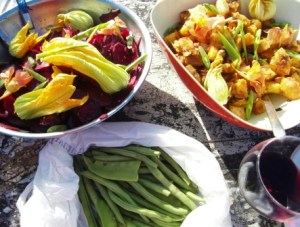
Sunday 6pm. Everything in the picture was grown on our community allotment: the beetroot, turned into slivered (use a potato peeler) salad, and the spiced Mumbai potatoes, both decorated with courgette flowers, and the green beans in their bag – all on the table in the evening sun, waiting to be eaten.

We have GROFUN, Growing Real Organic Food in Urban Neighbourhoods, to thank for this miracle.

Nadia Hillman, GROFUN’s 33 year-old Bristol-based founder, was on BBC’s Gardening World at Easter helping Birmingham set up a similar scheme.

Is your garden overgrown? Would you like help getting it fit to grow organic vegetables?

GROFUN volunteers pitch in and in return for their impressive labour they get reciprocal gardening-help either in their own garden or at the community allotment in St Werburgh’s, Bristol.

We are learning how to grow. And everyone involved gets invited to the harvest meals.

“The best thing for me is the connecting of people” says Nadia.

We sat around the fire into the evening. Mel played a haunting song on the guitar.

It sounds a moment of peace. And it was.

The Organic Food Festival 2009

Lido couscous cropped again

We met last night to discuss the Organic Food Festival 12-13 September 2009 in association with the Soil Association.

First my starter (above) which made me think: my favourite dishes are mush-tastic. I eat lots of grains and pulses, and, let’s face it, they blob.

Please don’t reject my love because of their apparent lack of finesse.

Nourishing, healthy and economical, grains and pulses lend themselves to many tastes.

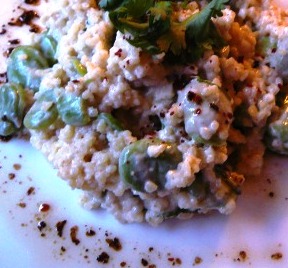
I ate the above starter (£6.50) last night at the Lido (saved and restored to its Victorian-swimming-baths-original thanks to a community campaign).

Couscous with yogurt, fresh broad beans and coriander – delicious, soothing.

Even when eating out I am drawn to mushy grains.

But why be ashamed? Eating for substance is the organic way.

“We are about inner quality, not outer appearance – that is our hallmark.”

So said Patrick Holden, Soil Association director, recently quoted in the Independent apropos the abolition of those wonky EU-rules on wonky veg.

Which brings us back to the Organic Food Festival.

Last night’s dinner was the inauguration of two things:

1) I was in my new role as food editor of The Source.

2) The Source is helping produce the programme for the Organic Food Festival 2009. And that’s what we doing, round a table at the Lido.

Every September, Bristol Harbourside transforms into Europe’s largest organic market place. The Soil Association organic festival used to be free but became so popular it got rammed so, there has been a charge. This year £1 of the £5 entry fee goes to the Soil Association.

My message?

Join us!

The Organic Food Festival in Bristol Harbourside on 12 – 13 September 2009

Taste the future

Organic is more than a product

– it is our sustainable future.