Category Archives: rant

Fish4Ever challenges big brands

As a journalist and food campaigner, I help Fish4Ever with its communications. I cannot work for a cause or company I don’t believe in.

So, I have the privilege of asking nosy questions and learning about the politics of fish.

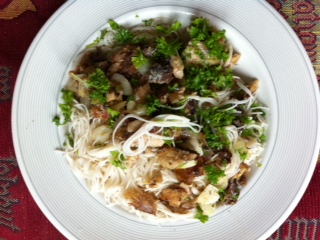
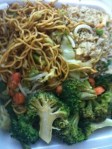
Lunch: a fried-medley of Fish4Ever sardine fillets (Steenberg’s Organic online £1.60) on a bed of organic rice vermicelli.

Medly: I fry sliced shallots/onions, garlic and chilli in the organic oil in which the fish are canned – Fish4Ever uses 100% organic land ingredients.

I add the sardine fillets, mashing them (was that respectful?). I snip-in fresh parsley .

Fish4Ever canned fish is in a class of its own, fished traditionally (70% MSC-certified, the rest artisan) and quickly-conserved for freshness.

I am a real food lover and here’s why: you do good – it tastes good.

Why is it important to look after the fish?

Fishing technology is too effective. Desired species are being hunted to extinction.

Its hunting methods are indiscriminate, killing turtles, sea birds, dolphins.

There are too many factory boats and not enough fish. Regulations to control catches are insufficient and often ignored. Out at sea, where no one is looking, rules can be flouted. Poor countries suffer from foreign piracy on an industrial scale.

Hugh’s Fish Fight on Channel 4 earlier this month focused on changing the fishing methods of the big tuna brands and own-label supermarkets.

The food corporations’ proposed changes are far better than nothing.

However, although the big brands may well promise a “pole and line” range, their primary business remains likely unchanged.

Each Fish4Ever can has a story – including the smallest tuna fishing boats in the world.

This is not an eco-add-on. Fish4Ever’s raison d’être is care of land, sea and people.

That’s what I call an ethical company.

Tesco re-opens and elderflower cordial

After being “trashed” in the early hours of Good Friday 22 April, Tesco re-opened on the 24 May following a neighbourhood meeting the night before.

Monday 23 May 6.30pm: St Paul’s Unlimited neighbourhood meeting.

This excellent Guardian feature gives some background to the intensity of emotion present.

People with complaints against the police (“Why was extreme force used? Why was my arm broken by thugs in police uniform and three dogs attacked me?” asked one man).

The police was represented by Chief Superintendent, John Stratford, who listened well. Clearly, he was not a riot-type with batons and adrenaline-pumping, lashing-out fear.

Someone in the audience who’d been a policeman for 30 years – now an artist with a studio in Stokes Croft – said he was holding a riot shield in the St Paul’s 1981 riot. And scared.

A woman describing herself as a “lone voice” showed support for Tesco. Sadly, she mixed-up the riot with the campaign to stop Tesco opening. Not true.


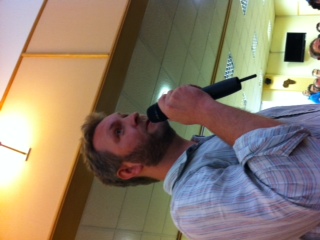
As Ashley ward’s first Green Party councillor, Gus Hoyt, (pictured) has said the media has framed the debate: Against the riot = For Tesco. It’s more bigger-picture than that and why he is calling for independent public inquiry.

At the meeting, I heard about a move to make it harder for squatters to squat legally.

Harder for people with no home – and no hope of a home – to make a temporary home in one lying empty.

Homes lying empty, as I learnt at the meeting, so they can increase in value for their owner. Such as Westmoreland House.  “A death trap” someone called it.

One of the Bristol City Council representatives told us the council had asked the government for retail classification A1 to be changed. Currently the same classification applies to both a supermarket chain and a one-off local shop.

Eric Pickles, the Conservative minister, replied with no. “…Not its role to restrict competition.”

Ha. It’s supermarkets that restrict competition. They buy cheap, sell cheap. They only need to take a small percentage of a local shop’s business to sink it.

The profit a small shop makes is tiny.

But is economic power the only measure of success? Local independent shops create community. They support wholesalers and the local economy.

Money spent locally is worth more locally than when it is spent in a supermarket because it is recycled locally.

However, it does not take long for local shops to wither. Look at Tesco on Golden Hill. A row of small shops closed and Tesco’s promises broken: not to open on a Sunday; not to have a cafe.

Head of Property Communications, Michael Kissman, arrived late at the neighbourhood meeting.

Pity. He did not hear the majority of the Stokes Croft audience eloquently voice  love for their local community – without a Tesco, thank you.

(One said: “We don’t want Tesco. And we don’t want the police protecting Tesco.”)

However Tesco’s Michael Kissman did hear people after the meeting asking him for Tesco’s support for impoverished local groups.

And at least I got an answer to my question: Where did the figure of 3,000 people, that Tesco claimed walked through Tesco, Cheltenham Road in Stokes Croft store in its first weeks of trading, come from?

Answering my question via the chair, Tesco’s Michael Kissman, said these 3,000 customers were, in fact: “3,000 transactions”. O.

No mention was made at the neighbourhood meeting of Tesco reopening the following morning. But open it did at 7 am on the 24 May.

Lot of media interest, I gave three interviews that day, including to Radio Bristol (1:40 mins in, after Michael Kissman, who was given the final word.)

Tesco claimed 400 customers came on its first day of opening but hmmnnnnn.
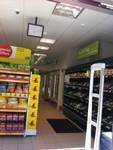
Looked pretty empty when I took the pic at 3pm.

Tesco can afford to stay half-empty (like the Tesco five minutes away in the Gloucester Road), playing the waiting game while local shops close.

On a more positive note, there may be another chance to review the planning process concerning Tesco’s traffic impact on Cheltenham Road. The  No Tesco in Stokes Croft campaign has won the right to appeal against the decision to not grant a Judicial Review (the rejection came coincidentally after Good Friday).

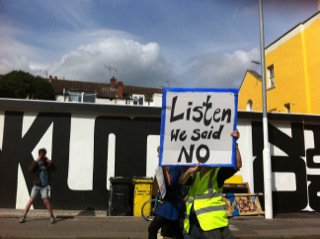
We plan a fluffy good-humoured self-contained lawful protest in front of Tesco’s before we set off on Wednesday 15 June for the 2 pm hearing in Cardiff .

And the Stokes Croft People’s Supermarket readies itself in the wings.

I’ll drink a glass of homemade foraged elderflower cordial to that.

Homemade elderflower cordial

A revelation. I did not realise how easy it is to make.

You soak the elderflower blossom in water with sugar for two days, covered with a lid. Then strain through muslin or a sieve. Then pour into clean bottles.

Second revelation: how the scent fills a room. Light fresh notes, as I snip the blossoms off their stems into a vat of hot sugared water.

Elderflower blossom is plentiful now.

Mike picked a plastic bag-full.

We added two pots of organic pear preserve  – as the Elemental Sanctuary’s Carole Fofana advised. I have some brown muscavado sugar. About 500g.

We estimate six pints of water. Mounds of elderflower blossom take up most of the room in the pan. I reckon our version has more blossom and less sugar than most recipes (hence its deliciousness).

The only technical bit is straining it through a sieve covered with muslin (organic muslin £2 from Born).
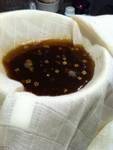
For more precision, see the Self-Sufficient-ish elderflower cordial recipe.

Lemon juice will preserve it but requires more sugar to sweeten the taste. We do not use lemons (or citric acid) or lots of sugar, and the cordial is not too sweet and has the heady taste of nature.

Third revelation:  homemade elderflower cordial tastes amazing.

I am drinking some now.

It tastes how elderflower blossom smells. And somehow feels substantial – nourishing.

Elderflowers are nutrient-rich and immune-boosting.

Not nutrients added artificially, or over-processed thus inneffective.

I often dream of going into a bar and ordering a health-giving revitalising drink.

Homemade elderflower cordial is that dream-drink: it has natural vitality.

(To think Coca-Cola had the cheek to call itself: The Real Thing).

I glimpse the satisfaction of foraging. It’s unmediated.

Nothing between me and something growing on a tree.

Stokes Croft Tesco opens and butter bean salad


It’s hard to be happy about the 41st Tesco opening in Bristol (figure according to Tesco’s store locator).

93% of 500 locals surveyed had said No to Tesco’s in Stokes Croft. After over a year’s campaigning, it was bitter to see Bristol City Council bow to Tesco pressure last December.

Still, we are making the best of it.

On Friday 16 April, Tesco opened in Stokes Croft.

Friendly activists gave a Bristol-style welcome. They put a comfy sofa and lampshade outside on the pavement. Someone played a guitar.

Another strode into Tesco’s with a wad of Monopoly money. When he was not allowed to spend it, he tried to bribe a security guard with it.

A woman passer-by who also objected to Tesco’s monopoly, took up the Monopoly money-action.

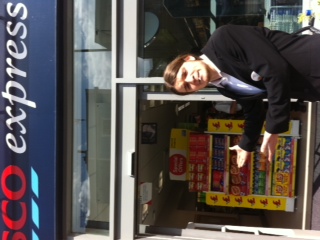
On Saturday, a performer (see pic above) invited us in to ‘his’ Tesco, while outside on the pavement, stalls served free food, and promoted Picton Street’s local independent shops, in the street behind the dreaded Tesco.

Picton Street is a marvel, and includes the Bristolian Cafe, Yogasara yoga studio, vintage dress shops, an art gallery, Radford Mill organic farm shop and Licata, the family-owned Italian delicatessen.

Licata often has great bargains in olive oil and tins of beans. I am crazy about beans as they are a wonderful source of health. Licata has many variety of tinned beans, which to me = fast food.

I owe everything I know about beans to vegetarian hero, Rose Elliot. The Bean Book changed my eating habits for life.

The following recipe comes from there. Please consult The Bean Book for measurements, nutritional facts and top inventive recipes using dried beans and pulses.

Here is my sloppy fast-food version.

Gently fry sliced fresh mushrooms in (olive) oil so they are still succulent. Add a tin of drained butter beans and warm with the mushrooms. Add lemon juice squeezed from two lemons and chopped fresh herbs such as parsley or coriander. You can’t have too many fresh herbs so over-estimate. Mix it all in the frying pan, with salt to taste, and serve still warm with brown rice, or cold as a salad.

I used organic ingredients from Better Food organic supermarket, a 20-minute walk away from Tesco’s, and land cress as the fresh herb.

Rose Elliot’s recipe fries fresh cut-up garlic with the mushrooms and adds cumin spice, with coriander as the fresh herb.

PS I met a neighbour on Saturday who said she had to buy something at Tesco’s in Stokes Croft, and I am haunted by her anxious look.

So, just so you know: If it makes life easier to shop there, then do. Life’s too short for guilt and sacrifice.

I am not against people who use Tesco. I am against Tesco.

Bread – what’s left unsaid


Look, if you are not in the mood for cooking (a state I know) then make sure basics, such as bread, are doing you good.

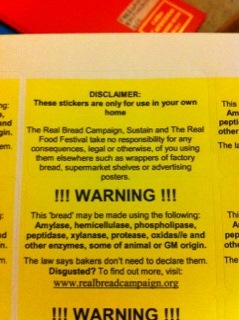
Bread gets messed-around with. This sticky label, from the 2009 Real Food Festival, lists ingredients that might be found on bread – but are never listed.

The label said:

~~~~~~~~~~~~~~~

“!!!WARNING!!!

This ‘bread’ may be made using the following:

Amylase, hemicellulase, phospholipase, peptidase, xylanase, protease, oxidase and other enzymes, some of animal or GM origin.

The law says bakers don’t need to declare them.

DISCLAIMER

These stickers are only for use in your own home. The Real Bread Campaign, Sustain and The Real Food Festival take no responsibility for any consequences, legal or otherwise, of you using them elsewhere such as wrappers of factory bread, supermarket shelves or advertising posters.”

~~~~~~~~~~~~~~~~

As Michael Pollan says: if they are more than five ingredients on a label, avoid.

The long list of enzymes above are “processing aids”. In other words they are used to make the bread rise faster, look nicer, last longer.

But because these processing aids are not classified as food ingredients then – by law – they do not need to be listed on the label.

Whaaat? You eat them but they are not food ingredients?

It reminds me of adulterated food sold to the Victorian poor

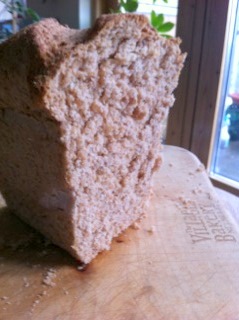
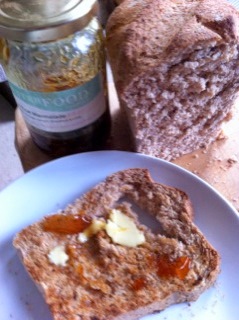
My real bread came from the Better Food Company in St Werburgh’s, Bristol where I also got marmalade made by their chef (as good as homemade…hey, it’s January, time for marmalade-making again) and organic butter from Nature’s Genius in Fishponds, Bristol.

Yes, the bread cost more than supermarket bread but I got more food for my cash. My grandmother would say money spent on un-nutritious food is money wasted. And I agree. Do you?

Do we really need more meat?

We need to double food output by 2050.

Oh yeah?

Who says?

Monsanto and a few other agri-companies say so.

Not the most trusted sources, as far as I am concerned.

A far more trusted source, the organic charity, the Soil Association, believes that the message currently driving food-policy to “double food production by 2050” is based on a lie.

This call to double food production (convenient for agribiz) is based on a forecast that production of animal feed would need to increase by 70% in order to feed developing countries with the same fast-food junk that is making the west ill.

Apparently half the world’s crops are feeding animals not humans. This is nuts. Do we really need more meat?  If we ate less meat, we could use the crops to feed more humans.

The ideal organic vision is for a “closed” system – that is, where the animals are fed by crops grown on the farm, and in turn help fertilise the soil with their poo.

This is Simon Fairlie’s argument in his new book, Meat, which even persuaded George Monbiot that meat thus produced could be ethical.

A mixed farming system (crops+animals+poo all on the same farm) is completely different way of producing meat in factory farms – where the animals are treated as a commodities without sensibilities and their poo goes to waste (literally).

Carnivores – eat meat by all means – but in moderation (remember when we had chicken as a treat?) and from mixed organic farms.

I am at the launch of a new Soil Association report.

Peter Melchett, policy director, gives us the lowdown, starting with above context.

Feeding the animals that feed us is the first of several Soil Association reports on the future of farming including phosphate, water and oil.

Not promising answers – more starting a discussion.

Organic premium – who profits?

Why do we need organic food?

(As in the picture above of the beautiful stall from Somerset Organic Link, the farmers’ cooperative, at the Organic Food Festival last September).

What kind of topsy-turvy world do we live in that organic food has to be ring-fenced by regulations? Organic food should be the norm. It is food grown with chemicals that is the aberration!

NON-organic food should have to jump through all the hoops to be certified. Those that use the farm chemicals and potentially-harmful food additives should be paying extra in time and money to be regulated.

And people should pay more for the privilege: if industrial food factories had to pay for the damage they do – for instance polluting rivers and encouraging obesity – non-organic food would be very expensive indeed.

Instead it is organic food that attracts a “premium” (i.e. costs more).

Sometimes I wonder: Why? Who profits?

I include this letter from a farmer in the latest issue of Organic Farming which indicates that the profiteer is the supermarket.

“…If the Soil Association is serious [about challenging the public’s perception that organic is too expensive] it might do well to investigate the ongoing disparity between the supermarket shelf ‘premium’ and the ‘premium’ paid to farmers. Take lamb mince as an example: on 1 July 2010 Tesco was selling organic at £7.48/kg, compared to £5.74/kg for non-organic – that’s a difference of £1.74/kg or 23 per cent. Yet I am lucky to get a 5 per cent premium…..”

It’s annoying that eating organic often costs more (unless you are canny and take the extra effort to eat organic on a budget.)

It strikes me as grossly unfair that those of us who want to eat food – grown as nature intended – have to take more time, effort and money to do so.

What do you think?

Tesco on Stokes Croft halted

Will Tesco open on Stokes Croft?

No. Tesco does not have the planning permission it needs to open the 39th Tesco store in Bristol. (39th? O yes. Please see Tesco’s own store locator).

Here’s how:

Following the planning meeting on the 22 September, Tesco has to modify its shop front before Bristol City Council planning committee will give permission for it.

More significantly, the council did not approve Tesco’s application for “external works and installation of plant and machinery”.

The planning committee asked instead for a noise assessment.

Currently the plant Tesco would need to use to run the store would be far too noisy.

You may well ask why this was not done beforehand.

Our own campaigners managed to get an acoustic report done, included in its 37-page report (which by the way the planners advised the councillors not to read in depth as the planners insisted that all our points – including about noise and traffic – are “not material considerations” and thus irrelevant. Whaaaat?! I think we will find out in due course the planners got it very, very wrong. )

This comment from someone called Ruth at Bristol 247.com sums it up well:

“The planners gave very strict criteria for extra noise when they approved change of use for the site, and the plant Tesco want to install can’t meet it. It was concerns about this that caused councillors to delay the vote on this application. If the council doesn’t want to sign off on a breach of the condition it itself imposed less than a year ago (which would be an interesting thing to do from a legal standpoint, as some officials seem to be aware), the council can’t approve the application.”

What I would like to know: are increases of traffic also included as criteria for change-of-use?

Like all multi-nationals, Tesco exploits regulations.

O!  The wrongness of Tesco using a third party to apply for change-of-use, which hoodwinked the planning people into thinking they were giving permission for an ordinary shop.

From a traffic point-of-view there is a huge difference: an ordinary shop has to store its stock on-site, while Tesco delivers stock when needed.

Tesco’s six-a-day delivery lorries will create traffic problems on the Cheltenham Road, as Claire Milne points out.

But it is not just the food deliveries I object to: it is the Tesco marketing that promises cheapness that does not deliver and damages local communities instead.

Stokes Croft is an exciting up-and-coming area developing from the grass-roots up. People come from outside Bristol and different countries to admire its uniqueness. And this is just the beginning.

Stokes Croft is an asset to Bristol.

Let’s keep it that way.

Tesco fiasco

Yesterday Bristol City Council appeared to give Tesco what it wanted – planning permission for its red, white and blue shop front in OUR amazing and unique Stokes Croft.

Tesco does NOT however have permission to open a shop on Stokes Croft – see clarification below. (And my post after this)

After a rally (above), free food and music, over 200 supporters of the No Tesco in Stokes Croft trooped into the Council house.

Claire, Rachel and Sam – who have been working on this campaign for seven months and were representing over 2,000 people – got 7.5 minutes each to speak. I got 3 minutes. You need Internet Explorer to watch proceedings here.

Then we descended into two hours of planning law hell where we were actually banned from asking questions, or even pointing at a document that someone held aloft (we were only trying to be helpful as councillors did not seem to know the relevant page number).

At one point, the chair shhhhhed us, as if we were naughty children.

Not responsible citizens who care enough about our community to take a whole day out of our lives to sit in Council chambers.

Here is what struck me.

Tesco power.

Its shameless abuse of power.

Tesco steamrollers local councils all over the country, according to the Daily Mail.

Yesterday I saw it with my own eyes.

The horrible thing is does Tesco not have to do anything, or even turn up.

The stick Tesco wields is the fear that Tesco might appeal against a planning decision, costing local taxpayers’ money.

Tesco can afford a legal appeal – peanuts to the mighty corporate that makes nearly £3.5 billion a year.

The councillors could have ignored their planning officer – as they did in North Norfolk.  Tesco might not have appealed – Stokes Croft is already a Tesco PR nightmare.

But our council bowed to the bully.

Yesterday we saw the unedifying site of planning officers doing Tesco’s bidding.  And councillors – despite asking all the right concerned questions – voting for it.

The other thing I saw with my very eyes was how Tesco’s underhand trick of using a third-party to apply for planning permission worked.

Let me explain.

Last September 2009  Tesco applied for the premises in Stokes Croft to be turned from a comedy club to a shop. But sneakily – using a third-party.

Thus change-of-use to a shop was granted without anyone being aware that “shop” actually meant a Tesco store.

Here is how this dreadful trick worked in Tesco’s favour:

Yesterday in Bristol City’s council house, we expressed concerns about how a Tesco would increase traffic.  At least 42 deliveries a week can be expected on a street with a cycle lane. And how will a huge lorry negotiate the one-track cobblestoned Picton Lane?

However these genuine concerns for threats to life-and-limb were not considered significant. Why?

Because they were part-and-parcel of the “change-of-use to shop” decision back in September 2009.

i.e. based on the lie that the proposed Tesco store was an ordinary local shop.

This is a Tesco planning fiasco.

Clarification: The Council granted two applications yesterday – 1) shop front and 2) illuminated signage – with conditions such as wooden lettering. So the applications must return for Council approval.

The third application re external works was postponed until a noise assessment has been done.

In other words, Tesco does NOT have planning permission to open.

I repeat: Tesco does NOT have planning permission to open.

Why I object to Tesco in Stokes Croft, Bristol

On Tuesday I ate (well) in Zazu’s Kitchen in the cultural quarter of Stokes Croft.

A unique area featuring street art from vintage Banksy
to up-to-the-minute street art attracting visitors from far and wide including Italian food blogger, Jasmine.

“93% of local people say NO to Tesco in Stokes Croft,” says the fresh notice on Stokes Croft’s  creative response to street drinking, Turbo Island.

How many Tescos does a city need? There are already 38 Tescos in Bristol according to Tesco – and two within five minutes of the proposed site.

Tesco picked the wrong place to wield its corporate takeover of the high street when it set its sights on the eighteenth-century building at 138-142 Cheltenham Road in Stokes Croft.

Using an intermediary (to deflect suspicion?), it bought the lease on Jesters comedy club and applied for change-of-use to shop in November 2009.

Apparently, one Bristol City councillor said: had he known it was Tesco applying, he would not have agreed. But the application got passed, unnoticed.

Thus Tesco infiltrated the heartland of Stokes Croft, as part of its taking advantage of the recession master-plan. What a double-win for Tesco: cheapness and take-over. The more shops Tesco has, the less competition.

Local shops cannot compete against a supermarket’s marketing millions. Hello supermarket means goodbye local family businesses.

Stokes Croft happens to bring together a powerful group of people: freethinkers, food activists and artists. The area’s independent shops offer a wealth of cultural diversity and quality food – including a long-established Italian delicatessen and organic farm shop – and community.

People know each other and help each other.

The local shops have an informal agreement not to sell cheap-as-dirt super-strength alcohol – the liver-rotting stuff supermarkets sell. It will be the beginning of the end if Tesco moves in.

As Joni Mitchell sung in the Sixties: “They paved Paradise and put up a parking lot… You don’t know what you’ve got till it’s gone.”

There is still time to stop the juggernaut. All Bristolians have a right to object.

It’s true that current planning laws do not allow a Council to protect its own local shops as the Channel 4 Dispatches documentary: Tesco – the supermarket eating Britain – shows.

However the formal objection process against a shop front still gives plenty of scope for voicing concerns. Tesco front store branding promises cheapness but is a lie. Our local shops are cheaper than Tesco Express, according to a local survey.

I am helping run workshops to help people write their letters. We all need encouragement. I know I did.

The No Tesco in Stokes Croft campaignwebsite has a template letter to email to Bristol City Council. Copy and paste, then top-and-tail with a list of your concerns and your postal address.

The deadline for emailing your objection is the 14 September 2010.

I have also sent my written statement asking to speak at the planning committee on 22 September at Bristol City Council on College Green.

There will be a party on College Green from 12.30 – 2.00pm to celebrate our campaign. Whatever happens, our fight for fair planning laws has just begun.

Food I eat in the US

Leaving Las Vegas

on the US Asia bus (tip: cheaper than Greyhound bus).

I have my bag of provisions from New Frontiers. Organic roasted cashews, plums, bananas, chocolate almonds.

I had oatmeal porridge for breakfast in the Sahara hotel and casino on the Strip.

My palatial room with en-suite was only $28 a night. I could live cheaply in Las Vegas.

The vast lobby filled with a 100 gambling machines holds no temptation.

Nor does the food.

It is plentiful alright. But nothing I want.

I am in the land of GM.

No labelling on food. No choice.

My list of food I don’t want includes:
anything with corn in it – one of the native American ‘three sisters’, it is a prime victim of genetic modification.

That cuts out a lot including, sadly, tortillas.

I don’t want to be fussy about food.

But I know too much.

I can’t unknow that cattle are pumped with grain and hormones, or shrimp is laced with antibiotics, or the gene to resist the weedkiller Roundup Ready has been inserted into the corn plant’s cells.

Plus my delicate digestion is like a canary down a mine.

I had a rice drink in my first week from a cafe. Rice sounded nice. But the next day my bowels knew it. I think it was the high-fructose corn syrup.

As the US food writer, Michael Pollan, says:

If it comes from a plant, eat it, if it was made in a plant don’t.

I am in the land of the overfed – and I am losing weight.

How ironic.

PS Just after writing this moany blog,  the bus stopped mid-desert. I eschewed McDonald’s and plumped for Chinese fast food. Joy! I rate Panda Express.