Category Archives: health

In Bristol’s green heart, we trust

Gus-Hoyt

Green party councillor, Gus Hoyt, says Bristol’s mayoral Cabinet has a “green heart at its core”. (Image credit Bristol 24-7)

Previously city councillors had voted for their leader. But the Coalition government gave ten of England’s biggest cities the option to vote for its own. Last May, Bristol people voted in a referendum to elect their own mayor, the only city to do so. In November, independent candidate, George Ferguson, became the city’s first “directly-elected” mayor.

Does a directly-elected mayor give more power to the people because they (rather than councillors) are voting? Or does the new role give too much power to one person, the mayor? But that’s another story.

Last November, Gus Hoyt, Bristol North’s first Green party councillor, got a late-night call from newly-elected mayor, George Ferguson, inviting him to join the new mayoral “rainbow” cabinet.  Gus Hoyt explains in his blog why he accepted.

It’s a question because the Green Party is opposed to the cuts – yet the Bristol mayoral cabinet is pledged to cut £35 million. The intention of the cabinet is to minimise hardship, says George Ferguson. “I’m trying to minimise the effect on services,” he says.

Personally, I don’t get this cuts business. For a start, the UK is one of the most powerful countries in the world. To my mind, Austerity Britain is a marketing slogan to cover up the reality which is: “Stop giving money to the poor, so the rich can get richer.” But I digress.

Last night at a Bristol Friends of the Earth meeting, guest speaker, Gus Hoyt – focusing on food and energy – described the positive things the cabinet hopes to achieve.

Green Bristol food vision

  • Make it easier for local food producers to sell their produce, building connections with local supply chains
  • Establish a “nuts-and-bolts” food market at Bristol Temple Meads railway station new enterprise zone – if successful it could be replicated in areas of deprivation
  • Aim to declare Bristol a zero waste city hopefully working with green-friendly Labour MP for Bristol East, Kerry McCarthy, who introduced a food waste bill in parliament
  • One fruit tree to be planted for each Bristol child born so apples and nuts can be harvested at will, and children can learn where food comes from (it really does grow on trees.)
  • Edible beds in public spaces and food production in parks so food can be picked for free
  • Turn Bristol into a food capital. The city already hosts several food festivals – let’s host more
  • Enable more schoolchildren to learn how to grow food to eat and how to cook it.

At this point Gus Hoyt referred to the horsemeat scandal, and how we must bust the myth that affordable food has to be rubbish. When people cook from scratch, food can be healthy, fresh – and affordable.

At this point, let me invoke my mother invoking her mother:

“The secret of good cooking is quality ingredients. The first step to learning how to cook is knowing how to choose quality raw materials.”

My grandparents lived in poverty in the East End – but they knew how to cook. The UK media delights in making healthy food a class issue, as it sneers at middle class obsessions about organic food. Hello?! The true class issue is companies producing rubbish food and spending millions on marketing it to poor people.

Back to last night’s meeting. There was a discussion about the Blue Finger, a stretch of local land perfect for growing food. At the start of the 20th century, Bristol was ringed with market gardens which fed Bristol. Now we buy tasteless produce in supermarkets trucked in from far away.

And should the negative effects of climate change and fuel shortages take hold, making Bristol more self-sufficient in food makes a lot of sense. And more pleasant and healthy, too.

At the Friends of the Earth meeting, Phil Haughton of Better Food Company said that plenty of local farmers would be happy to lease/sell a field the land: what is missing, he said, are entrepreneurs. Meanwhile Joy Carey, author of Who Feeds Bristol, said to make Bristol food-secure, eight main things need to happen including composting, growing, learning to cook and supporting small shops and producers.

Involves all of us

Bristol Food Policy Council (the first in the UK) is developing a food plan with those eight components. Bristol, be proud.

Green Bristol energy vision

  • Bristol to become the go-to-city for renewable energy 
  • Make Bristol a truly solar city
  • Bristol can be “a living university ” for green institutions
  • Aim for Bristol to become the European Green Capital
  • Invite aeronautical businesses to use their expertise to create tidal technology (rather than bomber ‘planes) –  a kind of “swords into ploughshares” idea
  • Secure £10 million to make council houses more energy-saving
  • Work with institutions such as the NHS and universities to make energy more affordable with ‘Energy Partnerships’
  • Wind turbines at Avonmouth are due to open in December
  • Bristol to be 100 % “fracking” and nuclear-free.

So, dear reader, does this gladden your heart? It did mine.

Katie Stewart: Marmalade 2013

Photo shoot in snow

Oranges snow today

The cookery writer, Katie Stewart, died earlier this month.

There was an outpouring on Twitter from those including me who had learned to cook from her cookbooks.

Then Guardian food and wine writer, Fiona Beckett, suggested a Katie Cook (#katiestewart) day and others on Twitter took up the call, followed by Alex Renton in The Times. This is my contribution.

I have been following Katie Stewart’s helpful, practical recipe for making chunky marmalade since 1980 from The Times Calendar Cookbook. Having decreased  sugar bit by bit, I now use less sugar than fruit.

Katie’s original amounts: 3 lbs/ 1.1/4 kg Seville oranges | 6lbs / 2.3/4 kg sugar | 5 pts/ 2.3/4 litres water | juice of 2 lemons.

I use organic Seville oranges. They cost twice as much this year as non-organic ones because we live in a nutty world where wholesome food is more expensive than junk food. Still, added expense worth it because:

  1. Organic oranges have more pronounced taste because they are smaller and denser (basically less watery) than non-organic oranges
  2. More nutrients in organic too: “conventional farmers (drive) down nutrient levels via their pursuit of ever-higher yields,” says Charles M. Benbrook
  3. By paying the extra, I am doing my bit for healthier soils and water, and feeding the world. Think of it as a charity donation.

Talking of which, Katie Stewart’s family has asked for donations (rather than flowers) for The Kids’ Cookery School. The charity’s mission is to give every child in the UK an unique fun cooking experience to help them make informed choices about food. You can donate online.

My marmalade 2001 blog post talks about the young US soldier, Bradley Manning, Wikileaks whistleblower. Currently in pre-trial court martial proceedings, on Thursday he was refused the whistleblower’s defence: motive.

The marmalade: Katie Stewart’s recipe for Chunky Seville Marmalade, her invaluable tips, my amounts and spin on my Marmalade 2011. Apologies not metric – any help with converting amounts welcome.

Marmalade 

5lbs organic Seville oranges

4 lbs organic cane sugar

2 lemons

4 pts of water + 1 pt for extracting pectin

Top Katie Tips

  • Place a few saucers in freezer so boiling jam can cool quickly when testing to see it has set
  • Put weighed sugar in a preserving pan in low oven to warm
  • Clean jars thoroughly with hot water and dry them in oven
  • Add lemons at preserving pan stage.

Five stages of making marmalade

1. Clean oranges + simmer to soften
Washing oranges

Scrub non-organic oranges and remove stalks. Cook in a large pan or two smaller ones – with lids – in 4 pints of water and simmer heartily for about an hour until peel is soft. Orangey aroma fills room…

Drain cooked whole oranges and preserve cooking water as if it were a precious liquid (it is).

This process can be done earlier, or even the day before.

2. Extracting pith and pips for pectin

Pith and pips

Pith and pips (left)

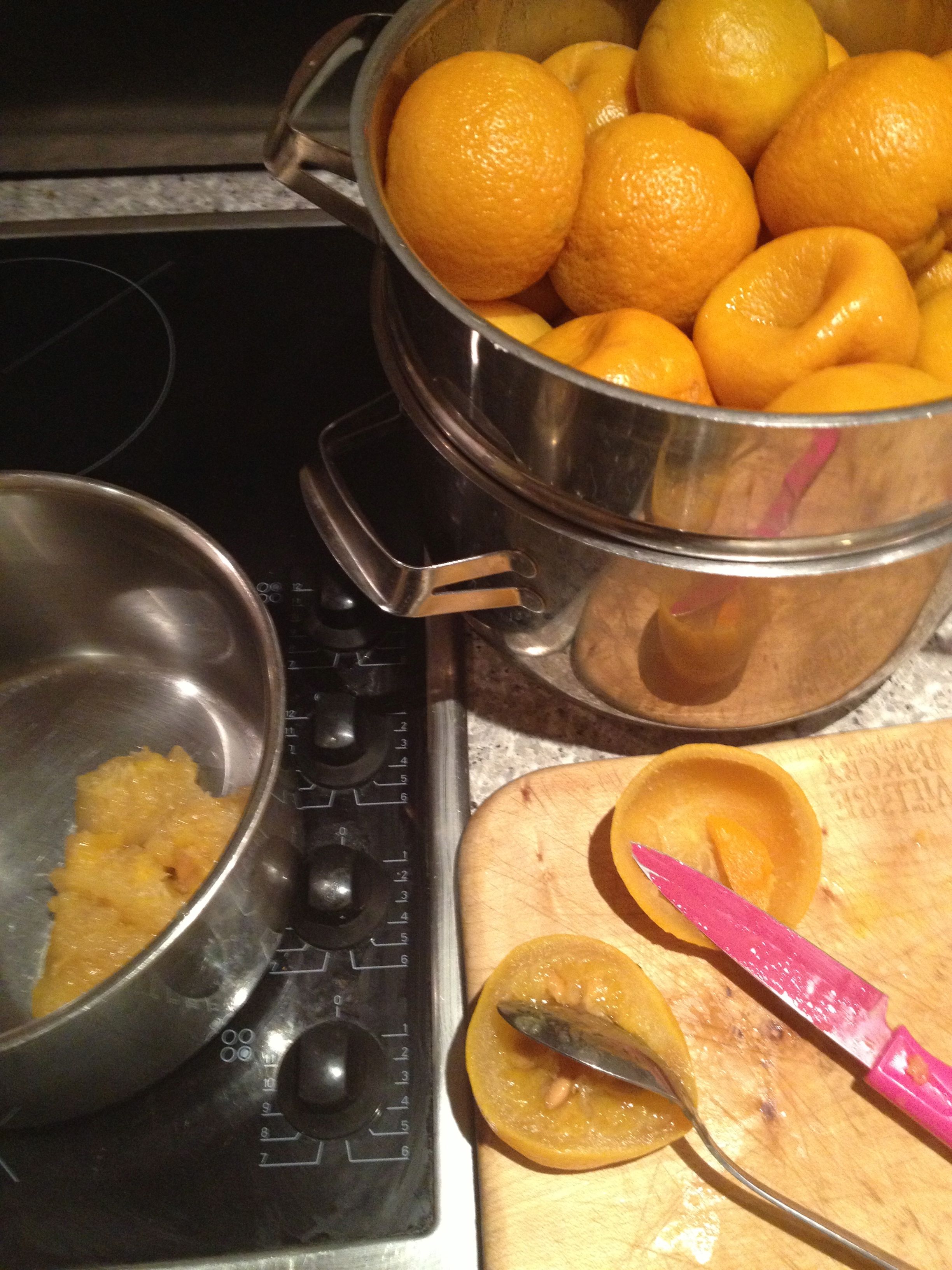
Pectin, extracted from the insides of the fruit, is the setting agent. Cut cooked-and-cooled oranges in half. Scoop out with spoon the oranges’ insides – the pith and pips (pith and pips pith and pips – say it quickly) .

Add pith and pips to large pan with the 1 extra pint of water. Simmer for ten minutes then drain: this pectin-rich liquid will help jam set in Stage 4.

3. Slicing peel 
Slicing peel
Flatten softened peel with your hand, and cut up peel of oranges (and lemons), thinly or thickly, as you like.

4. Sugar boiling drama 

Fast-boil for imminent set

Fast-boil for imminent set

Add the sugar (warmed from the oven) to a preserving pan. Strongly suggest a preserving pan is good investment – otherwise use two of your widest pans.

Add the precious-liquid (stage 1), drained pectin-juice (stage 2), and cut-up peel (stage 3) in with sugar in preserving pan. Start boiling…

You must not overboil or you can lose that magic-setting moment. It really is as terrifying as it sounds. But you know what they say: the other side of fear is excitement.

It takes about 20-30 minutes to get it to boiling temperature and then you have to watch it like a hawk.

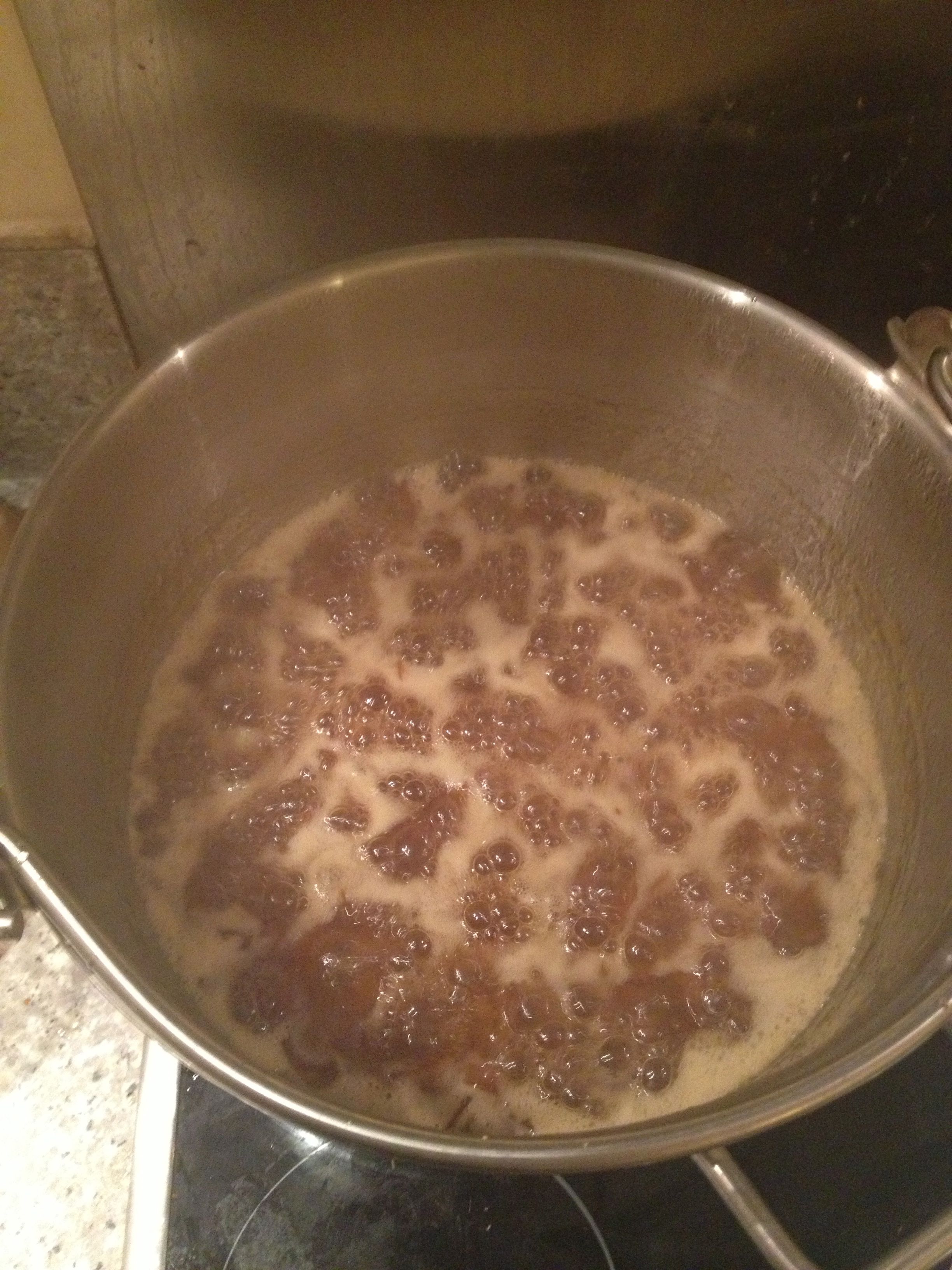
Start timing your 15-20 minutes when the jam is boiling like mad i.e. not just bubbling but when liquid goes into a furious fast-boiling glucky whirl – then start timing those 15-20 minutes.

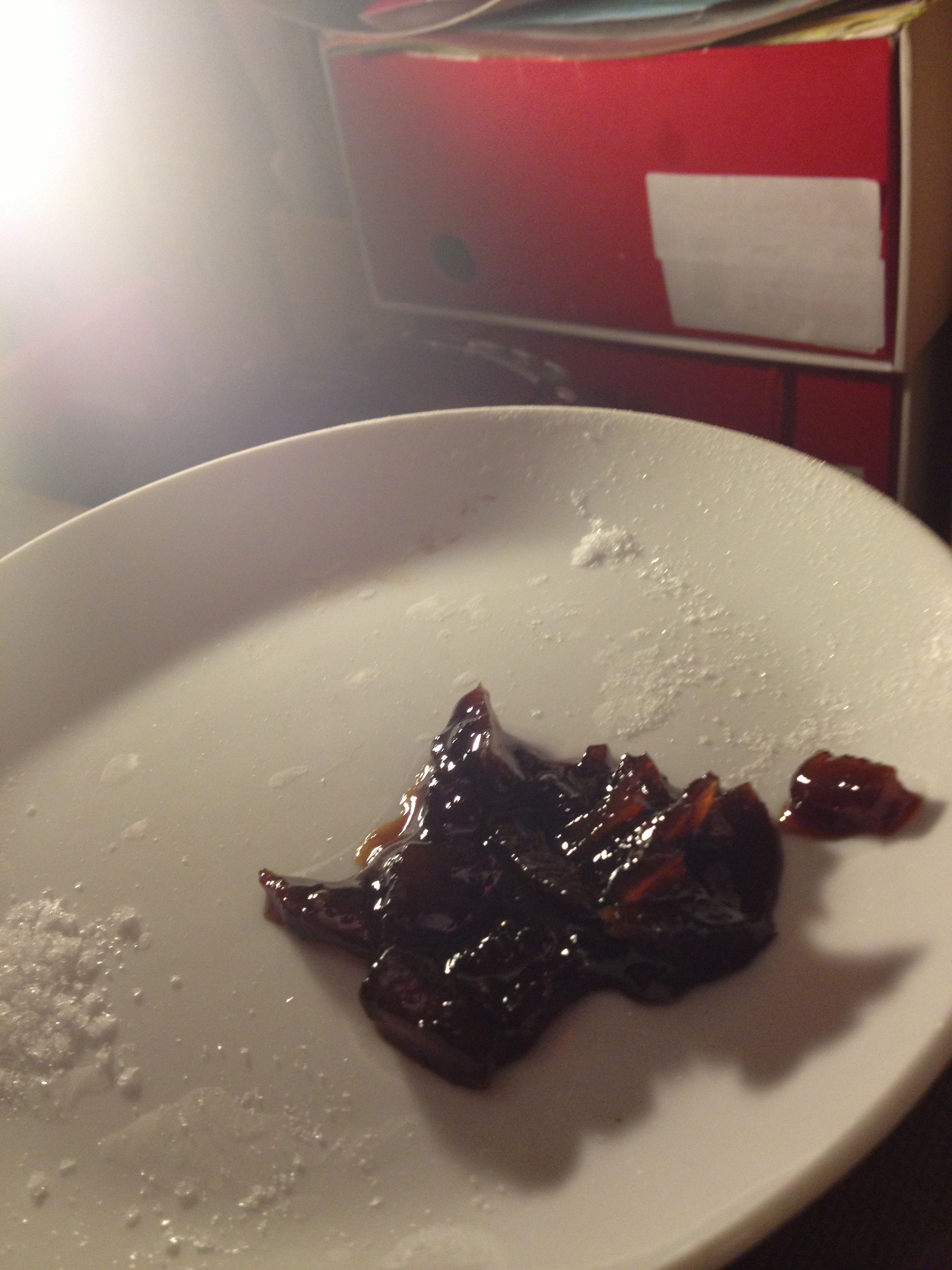
So, after 15 minutes, take the pan off the heat and drop some hot jam on one of those icy-cold plates.

Let jam-droplet cool, tilting plate to encourage cooling, then push droplet gently with your finger. You are looking for tell-tale wrinkles and jelly-like character. (The opposite of an ideal lover? My 2011 joke).

If droplet is still runny, carry on boiling the big pan for a few minutes then test again. And so on.

Stage 5. Marmalade in jars

cooling marmalade

The marmalade droplets are now unequivocally set. Let jam cool in pan until not-too-hot nor too-set for pouring . Next, the sticky bit. Use newspaper to cover kitchen surface, use a ladle or a small cup. Good luck.

Recipes say use waxed discs to keep out condensation and mould but, cutting-corners-cook that I am, I have not not done so for years, with no adverse effects. Wipe jars from stickiness and proudly label.

Marmalade in jars

Katie Stewart: Pots de Crème au Chocolat (chocolate pots)

Spring vegetables Petersham Nurseries Katie Stewart book

Yesterday I received an email from the Guild of Food Writers with sad news: the cookery writer, Katie Stewart, had died.

“…a long-time Guild member and the recipient of our 2008 Lifetime Achievement Award. Katie was taken ill on Friday and died on Saturday” said the email.

My mum gave me The Times Calendar Cookbook (my edition published 1976) and I have used it since the 1980s. I also had the privilege of meeting Katie Stewart when she received her Guild of Food Writers’ Lifetime Achievement Award in 2008.

I tweeted the sad news, and soon there was an outpouring of tweet messages from fellow food writers who, like me, had learnt to cook thanks to Katie Stewart.

I believe generosity of spirit, and the heartfelt desire to communicate and share, really does transmit, to create classic cookbooks.

Yesterday Fiona Beckett, Guardian food writer, suggested on Twitter we have a day/weekend when we cook one of Katie’s recipes. What a great idea. More and more food writers thought so too. (Wow. Social media in action. Love it!).

I suggested we have a #katiestewart hashtag, and explained why at my other blog.

Alex Renton, The Times food writer got in touch. He is doing an obituary piece in Thursday’s edition for Katie, who was The Times cookery columnist.

He did not have a Katie recipe, so I offered to write one down.

I know the page number for pot au chocolate – page 77 – by heart.

My additions in brackets.

Pots de Crème au Chocolat

6oz/175g chocolate chips or plain chocolate broken in pieces

1/2 pint/3 dl. (300 ml single cream)

1 egg

pinch salt

1/2 teaspoon vanilla essence (optional)

Katie says: ‘Put the chocolate in the globlet of a blender. Heat the cream until just under boiling point, then pour on to the chocolate. Cover, switch on and blend until smooth. The heat of the cream will melt the chocolate. Add the egg, salt and vanilla essence and blend again quickly. The mixture at this stage will be quite thin. Pour into six small individual pots, or failing this, small glasses. Chill for several hours or overnight until the mixture is quite firm. Serves 6

Katie Stewart pot au chocolat

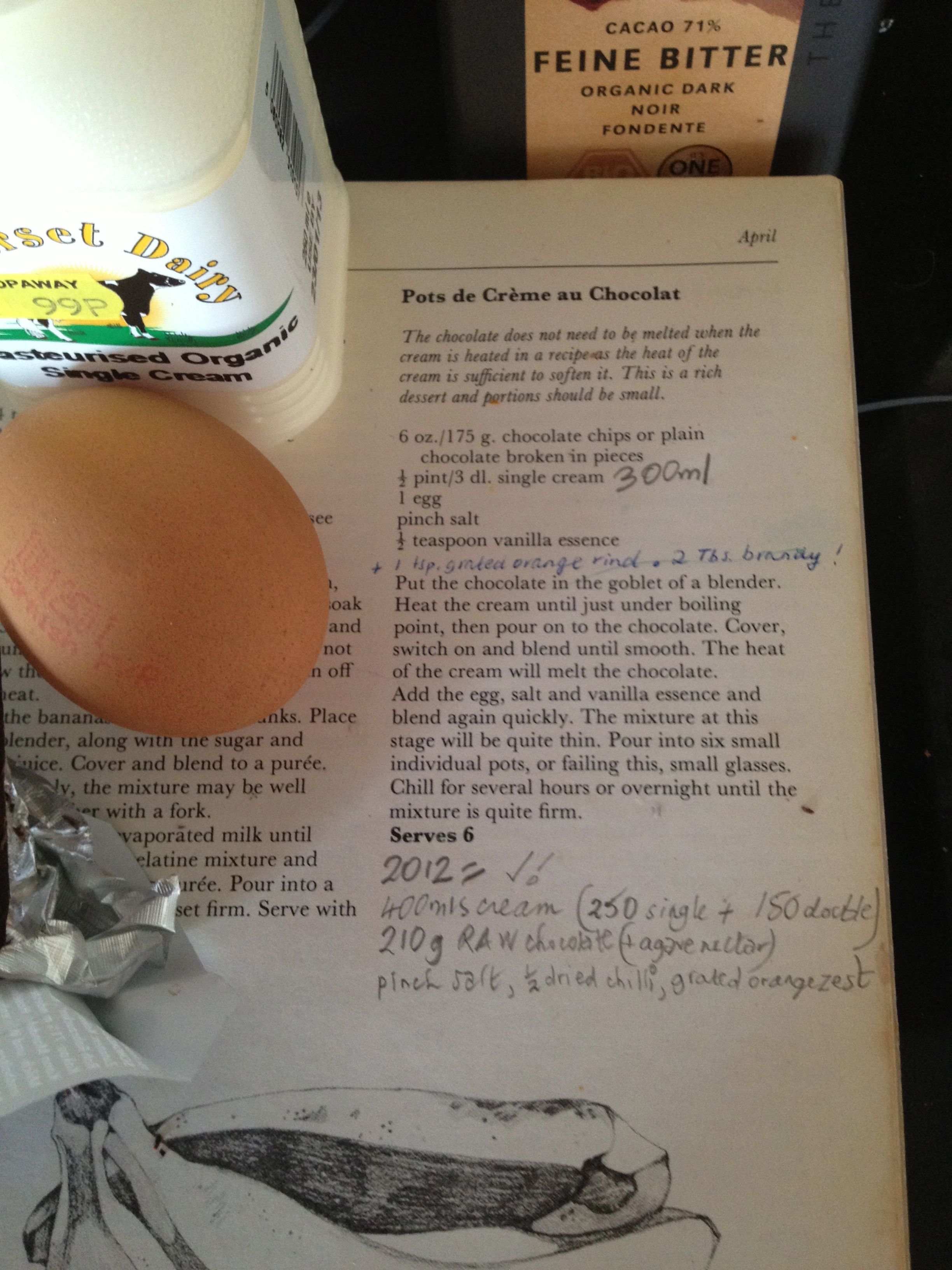
As you will see from my pic, I have played with this recipe over the years, and in 2012, made a raw chocolate version with chilli and orange zest.

Her book, The Times Calendar Cookbook, follows, without fanfare, seasonality: “Fruit, vegetables, meat, fish and game mature according to the seasons and over the year offer us a wide variety of fresh foods to use in recipes,” writes Katie Stewart in her introduction.

The pic of spring vegetables (heading up this blog) is a photograph from the book illustrating May. The vegetables come from Petersham Nurseries, still going strong.

I fear I am jumping the gun a bit because our #katiestewart, or Katie Cook Day as Alex coined it, is really at the weekend.

So please, please all fellow Katie Stewart fans near and far – get cooking at the weekend, share your recipe and…pass it on!

God bless Katie Stewart. What a life-enhancing legacy.

May her soul rest at peace.

Celeriac salad

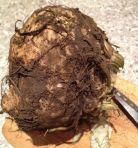
Celeriac

Celeriac’s brutish appearance belies its tender nature.

This winter root vegetable makes a fabulous nutritious raw salad in minutes.

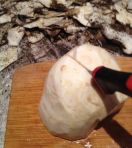
Here is the celeriac peeled, its dirty shavings discarded and its whiteness revealed, ready for grating.

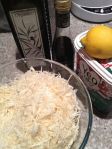
Celeriac - grated with ingredients

After grating it, I dressed the organically-grown celeriac with yogurt, balsamic vinegar, olive oil and lemon juice. All organic because I want less of the bad stuff, more of the good stuff.

Nigel Slater’s classic celeriac remoulade is made with cream and mayonnaise. He points out dressed celeriac goes soggy overnight so eat it freshly-made.

Celeriac salad goes well with many dishes such as fish

Celeriac - salad

– and is also just great on its own.

Organic nourishment from Neal’s Yard Remedies


As an organic fanatic, I apply the same quest for uncontaminated naturalness to skincare products as to food.

I don’t want to rub parabens (preservative linked to cancer) into my skin.

I don’t want my unctions laced with Sodium Lauryl Sulphate (chemical used in paint stripper linked to skin irritation and allergies), thank you very much.

About half of what you put on your body goes in your body.

Thanks to campaigning, the European Commission is considering a restricted ban on parabens.

However, worrying evidence already exists. Which is why organic standards have already banned parabens.

This is what I like about organic standards: they are based, o so sensibly, on the Precautionary Principle.

Does this ingredient pose a potential health risk?

Is this risk necessary? If not, then…

– don’t take it!

Thanks to the Precautionary principle, organic standards have already banned, as I said, parabens, and Sodium Laurel Sulphate. (And many more).

Factory-made chemicals with potential health risks are cheap to produce – they are in the small print on the packaging. The beneficial ingredients are in bigger lettering, shouted on the packaging, sounding as if they make up most of the product.

Organic skincare products avoid ingredients with health risks and have more active ingredients than non-organic products.

I am always happy to promote products that are as honest as they can get.

I work in PR but I’m also a campaigner. And luckily (could it be any other way?) I do both.

I have been working with Neal’s Yard Remedies, a campaigning (my favourite type) brand.

Please check out its up-to-minute information resource: NYR Natural Health News now edited by previous-Ecologist editor and investigative journalist and author, Pat Thomas.

This blog describes Neal’s Yard Remedies’ eco-factory at Peacemarsh, Dorset.

Neal’s Yard Remedies was founded 30 years ago by pioneering Romy Fraser.

Determined the company would not fall to greenwashing corporates, she sold it in 2006 to environmental campaigner, Peter Kindersley of Sheepdrove Organic Farm (which supplies Neal’s Yard Remedies with organic herbs). The organic products are now all 100% Soil Association certified.

Mini-digression: Romy Fraser makes soaps for Neal’s Yard Remedies, and runs courses on Trill Farm, her must-visit organic farm in Devon – with Daphne Lambert (for the-most-nutritious food education – and food).

Last month, we had a great evening at Neal’s Yard Remedies store in Bristol for Organic September.

We invited Bristol bloggers interested in organic products for babies.

Lovely people and what a great supportive blogging community. And yielding such fresh honest responses to the evening, such as from Tigerlilly Quinn’s night out, ShipShape’s review , Purple Ella, Knitty Mummy, and Circus Queen (moon cups and all!),

Brilliant to meet people previously only-met online. Despite being a social media maniac, I believe: Nothing. Beats. Real. Life.

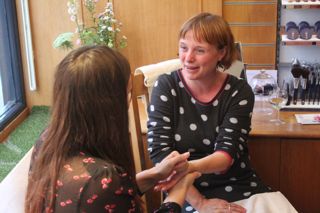
Max from Neal’s Yard Remedies in Bristol gives Bristol blogger, Purple Ella, a hand massage.

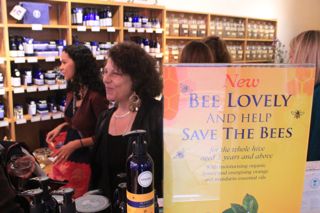
Fantastic to have support from Neal’s Yard Remedies HQ in Covent Garden. Nicola Nolan gave a great talk about the company, and its Bee Lovely campaign to ban the lethal bee-harming and totally unnecessary neonicotinoid pesticides – please sign the petition.

Also, from Covent Garden, Jane Killingsworth.

Organic cheeses provided by Sheepdrove Organic Farm – its Butcher’s shop is just across the Whiteladies road.

The best of organic Mediterranean produce from artisan farms and cooperatives – breads sticks, dip-in spreads, olives. Thank you, Organico. (My fuzzy pic)

Me bee-hind the Bee Lovely campaign and Bee Lovely organic products stand.


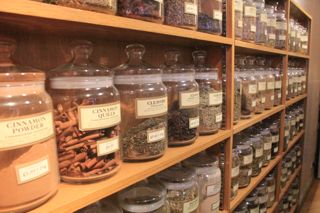
Neal’s Yard Remedies is like an old-fashioned apothecary – rows of healing herbs and spices.

Thank you to all the Bristol bloggers and Tweeters.

Thank you, Nadia Hillman, for above fab photos – do credit her if you use them!

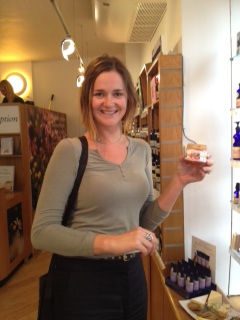
I took this one of Nadia!

Kedgeree

I ask Nadia over. Our plan: to make a video of cooking kedgeree, then scoff it convivially.

We assemble the ingredients, position Nadia at the cooker and I film the three-minute video on my iPhone without a script.

I like it fast and real, like my food.

According to Wikipedia, kedgeree ‘consists of cooked, flaked fish (sometimes smoked haddock), boiled rice, parsley, hard-boiled eggs, curry powder, butter or cream and occasionally sultanas’.

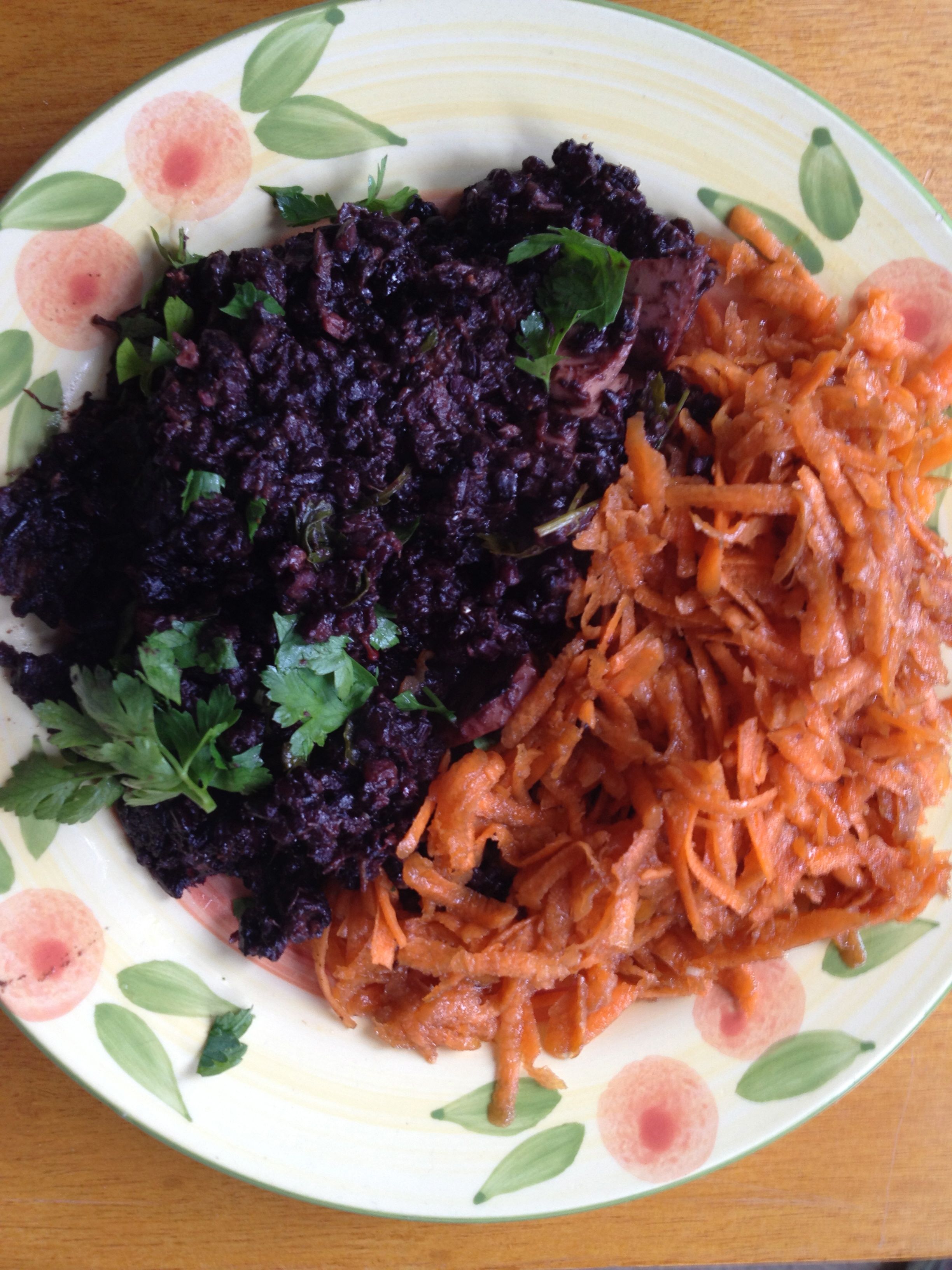
We use Organico Nerone (black) rice, into which, once cooked, we stir 1 tsp curry powder, quartered organic hard-boiled eggs, chopped dates, Fish4Ever peppered mackerel then lemon juice + chopped parsley.

We concoct curry powder with ground spices. Recipe for future ref: 4 tsp coriander + 2 tsp turmeric + 2 tsp chilli + 1 tsp ginger + 1 tsp mustard seed + 2 tsp cinnamon + 8 single cloves. We only use 1 tsp of this mix in the kedgeree. Would be wrong to overpower the rest of the ingredients…

No sultanas but miraculously I have dates, softening in water. We decide 8 cut-up small ones are fine. No butter because the fish is canned in plenty of organic sunflower oil. (I hope this encourages you to experiment when cooking).

Before Nadia arrives, I hard-boil eggs.  Note to self: try 3 next time.

I boil the rice.

250 g Organico Nerone rice simmers for 40 mins in 800 ml water. A whole grain, cook black rice as if brown rice: 1 cup of rice for 2 of water.

Listen, sometimes cooking is guess-work. Jamie Oliver uses 170g of long-grain rice for his kedgeree recipe but give no quantities of water. Water has to cover the rice generously because rice swells.

Amounts-wise, I’m a bit hit-and-miss. (Gad, how I hate reading posts like this when desperately seeking a recipe. Sorry). How do you cook your rice?

STOP PRESS: After saying on Twitter that I could not find a classic kedgeree recipe online, chef James McIntosh blogged this one! Fresh!

I was dying to try Organico Nerone rice. Known as ‘forbidden rice’, it did not disappoint. Dramatically black, the cooked grains are fragrant, dense and vibrant.

A speciality grain, it is grown only in parts of the Po valley. Charles Redfern, Organico’s founder and MD, is rightly proud of his artisan suppliers – Organico Nerone rice is cultivated and packed by the Picco family, growing it since 1878.

Organico Nerone rice recently won two stars in the 2012 Great Taste Awards. “Two stars = faultless” according to the Great Taste Awards.

Declaring interests, Organico and its sister company Fish4Ever are clients. I only promote what is Winkle-tastic real food. And I did the video just-for-the-love-of-it.

Fish4Ever, the world’s first sustainable canned fish brand, is store-cupboard convenience with a conscience. In organic world, everything is connected. Fish4Ever’s eco-practices include supporting local day boats, artisan fishing and local canning, and 100% organic land ingredients. The result? Quality fish. It’s a virtuous circle.

Here’s me eating it. Yup, I overcooked the rice a bit. And still, utterly delicious.

Black rice kedgeree served with grated carrots

And here it is, served the next day.

Keepers: Creamed coconut rice and raw vegetable marinade

Recently two recipes have entered my cooking repertoire. Both vegan (as it happens) they complement each other (as it happens). I want to record them with credits.

Creamed coconut rice

Step up, Claire Milne, the leading light behind the No Tesco in Stokes Croft campaign (and compadre), and the genius who came up with the easiest way to make the best coconut rice ever.

To cooked brown rice, add creamed coconut, cut small so it melts easily, and hey presto: soothing, luxurious coconut rice.

For 8 people: 3 mugs of rice for 6 mugs of water (how to cook brown rice here), 1 creamed coconut block (200g) cut in small pieces. (correction on rice proportions thanks for comment below).

(Experiment with adding cooked lentils, squash fried in small cubes, fresh herbs etc.).

Raw vegetable marinade

Step up,  Julia Guest. A filmmaker who made Letter To The Prime Minister in Bagdad during the bombing, in Fallujah during the occupation.

Julia’s current film, In Her Own Image, is an exploration of female divinity – in response to the war in Iraq as she explains at Indiegogo (where you can crowd-source/support the film). 

Anyway, food – where was I?

Raw vegetable marinade

A marinade is a sauce in which you soak your raw food (usually before cooking but in this case, no cooking required).

Which vegetables can you eat raw? Certainly not potatoes.  More info on raw food here.

I ate sliced mushroom, grated courgette, matchsticks of beetroot.

Choose veg you usually eat raw such as tomatoes, cucumber, radish, but think of others such as carrot or cabbage.

Sliver or slice or grate or anyway cut nice and slim.

Superfood dressing: tamari and cider vinegar and olive oil in equal proportions.

The marinade helps digestion of the vegetables.

Let the sliced veg soak in the dressing for a couple of hours before serving.

Would go well with the creamed coconut rice.

Marine Ecocide trial sets legal precedent

Ecocide is the destruction of nature, and the Ecocide Act seeks to bring those responsible for this destruction to account.

Drafted by barrister and campaigner, Polly Higgins, the Ecocide Act is not law. Not yet.

Writing post-Rio, Polly Higgins says the Ecocide Act is “a fully-worked piece of legislation which is ready to be implemented. All we need do is mobilise people to say that this must happen.”

In this spirit, the Bristol Law School organised the Marine Ecocide Trial in the presence of Polly Higgins (seated in pic below).

It was cool to meet Polly Higgins – we chatted (as one does!) about vested interests lobbying politicians. Polly Higgins said, worryingly, political lobbying is regulated by voluntary guidelines only, and only since last year.

Now to declare my vested interests: Charles Redfern, the MD and founder of Fish4Ever, the world’s first sustainable canned fish brand, is one of my clients. I only promote causes and companies I believe in. My involvement in the Marine Ecocide Trial was passionate and, mostly, voluntary (as is writing this blog).

The Marine Ecocide trial took place on the first floor of Bordeaux Quay restaurant on 15 June 2012 during Bristol’s Big Green week.

Real barristers cross-examined expert witnesses in front of judge and jury as if the Ecocide Act were law.

Although not a “real” trial, the Marine Ecocide trial is nonetheless of huge relevance to future trials. As Bristol Law School principal lecturer in law and organiser, Benjamin Pontin, says:

“Documentation and arguments used at this trial will be used as legal precedents in future ecocide trials.”

The Bristol Law School is soon to launch a website dedicated to the Marine Ecocide Trial – watch this space.

The previous Ecocide trial at the Supreme Court – which found Tar Sands bosses guilty of ecocide – had actors as expert witnesses. In contrast, the Marine Ecocide trial used real expert witnesses.

In the Bristol trial, the UK Secretary of State for the Environment, Caroline Spelman, was charged for implementing policies that “are causing damage to and destruction of UK fishing ecosystems…”

The government pleaded not guilty and did not appear. Instead Graham Watson the Liberal Democrat Member of the European Parliament  appeared as a defence witness. So did Jeremy Percy, the chief executive of the Under Tens Fishermen’s Association.

The defence focused on showing that Caroline Spelman was not in control of UK fisheries policy, because it was devolved nations and the EU also being responsible.

The Walrus and the Carpenter

The words of Lewis Carroll’s poem, about the Walrus gobbling up the oysters, came to mind as I listened to the so-called concerns of the defence:

‘”I weep for you,” the Walrus said. “I deeply sympathise”.

With sobs and tears, he sorted out those of the largest size, holding his pocket handkerchief before his streaming eyes. “”

Marine Ecocide prosecution

Jonathon Porritt appeared as an expert witness for the prosecution, swearing his oath on Gaia. He talked about the “systematic abuse of science” for political ends.

He also said that fish stocks don’t necessarily replenish once overfishing has been halted. In other words, overfishing can lead to extinction.

Another expert witness, was marine lawyer, Tom Appleby. When questioned by the prosecution about whether the UK government can legally hand out fish quotas, he said: “I do not believe Defra has this power to give out property rights.”

Dr Jean-Luc Solandt from the Marine Conservation Society gave the history of UK fishing and a factual but searing account of the damage done to the sea bed by scallop dredgers and beam trawlers.

Charles Redfern, MD and founder of Fish4Ever, the world’s first sustainable canned fish brand, was an expert witness for the prosecution.

He said that consumer awareness of the plight of the fish was a double-edged sword because now people care more about sustainability, it is possible for unauthenticated sustainability claims to be made.

Think how many times you see “Dolphin-friendly” on canned fish. Charles Redfern says you might as well label chocolate as “dolphin-friendly”; that is how meaningless the term is.

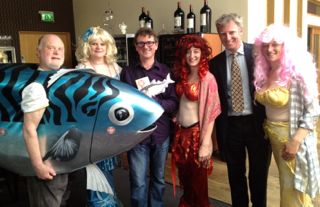
Time to present the Fish4Ever mermaids pretending to be sworn in


Imilia Lucas

Jane Victoria Powell

with costumes made by

fellow mermaid, Melanie Small.

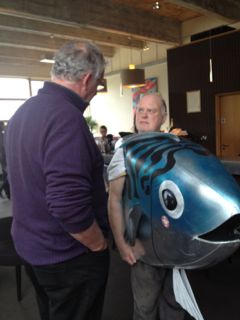
Here is the Greenpeace fish talking to fisherman, Jeremy Percy – please check out Greenpeace’s new campaign to be Be a Fisherman’s Friend.

(Yes, fishers do seem to be mostly male.).

Results of Marine Ecocide Trial

In response to the jury’s failure to deliver an unanimous verdict in the time available, the judge acquitted the Secretary of State and ordered the prosecution to pay court costs.

I am not MEANT to know how the jury of sixth-formers voted but I do know so I am now going to tell you.

The jury at first voted 7 to 5 in favour of finding the Secretary of State Caroline Spellman guilty of ecocide.

The jury went away to try to reach an unanimous verdict. It returned a verdict even closer to a guilty charge, voting 8 to 4 in favour of finding the Secretary of State guilty.

However, the jury could not deliberate further because, unlike a real trial, we only had a day, and the day was ending.

So the defence jumped in and asked for the Secretary of State to be acquitted and costs to be awarded to the prosecution, and, wrongly – in my biased pro-fish opinion – the judge agreed.

As I could not be a mermaid that day, here is a picture of me

on Bias Lane (in Devon). Apologies for the diversion.

Whatever the outcome of the trial, it raises awareness of the Eradicating Ecocide campaign to make ecocide an international crime.

As Polly Higgins wrote recently:

“Big ideas always start out in the margins before they spread into the mainstream. Earth law and in particular the law of Ecocide is just that – a big idea worth spreading.”

Worst Olympic sponsor?

The Olympics loom. Once again I am out of step with the nation. I feel like Scrooge at Christmas.

I salute sports people, their dedication and prowess. But the nobility of their art is undermined by their patrons.

Greenwash Gold is inviting votes for the worst sponsor.

I am cross about Olympics’ sponsors  of fast-foods such as Coca Cola or McDonald’s which contribute to obesity.

However, my vote for worst sponsor must go to the Dow Chemical Company.

Its website looks green and pleasant.

Dow Chemical with Monsanto produced Agent Orange, a deadly herbicide used in the Vietnam war. Agent Orange caused severe deformations in children, according to the Vietnam Red Cross.

Dow Chemical owns the Union Carbide company responsible for the 1984 Bhopal tragedy. A terrible explosion of the US multinational’s pesticide factory one night in an Indian city resulted in painful deaths, poisoned water, chronic illness.

The survivors are still fighting for justice.

Meredith Alexander, a commissioner on the sustainability watchdog of the London 2012 Games, resigned over Dow Chemical’s sponsorship.

She explains in her words why, adding:

“I would like to see Dow take responsibility for the Bhopal tragedy.. .This would be a true Olympic legacy.

Look, the London 2012 Olympics have inspired groovy things such as sourcing sustainable wood and sustainable fish. I am not saying it is all bad.

However, just as Christmas is monetised, so are the Olympics.

Rooted in mythology, the Olympics were intended to develop spirituality. O, to revive this noble intention!

Which sponsor gets your worst vote?

Thank you Criminal Chalklist for ‘100 metre Dash’ image above. I think it might have inspired this post. 

London, 17 May: Symphony of the Soil UK premiere

I am a soil lover.

Some see soil as dirty.

What does that say about our relationship with the world?

Love soil – our lives depend on it.

I am proud to be promoting the Symphony of the Soil UK film premiere on 17 May 2012.

With specially-composed music from a Hollywood great, and original animation, Symphony of the Soil is a multi-media film. Read its roll-call of expert interviewees soil scientists, farmers and campaigners including Dr Vandana Shiva.

Organico, the Mediterranean organic food company, is sponsoring the invitation-only premiere. Do Like Organico on Facebook for the chance to win tickets to this exclusive event.

Director and filmmaker, Deborah Koons Garcia (above) will be  talking about Symphony of the Soil with the Soil Association’s Helen Browning OBE and organic farmer.

In 2006, I organised the London premiere of Deborah Koons Garcia’s film documentary The Future of Food. It examined the corporate domination of our food system, sounding the alarm on GM patents, and exposed revolving-door politics between biotetch executives and the US administration.

The Future of Food helped spearhead the US real food movement, currently calling for GM labelling in California.

Deborah Koons Garcia says  that Symphony of the Soil is a positive film because we can all do something, such as make compost or support organic farms.

“I am making a positive film, science presented in an artistic manner [so] that people will fall in love with [soil] and become part of the soil community – because we are anyway. We rise up from it and we go back to it. So we’re part of it and when we are responsible members of the soil community, we give back to it, it gives back to us. …

“When people see this film they’ll actually become even more committed to a positive relationship with soil.”

As I am writing this blog, I hear BBC radio news announce: “Half of Britain is in drought.”

I shout to the radio: “Go organic!”

Organic soils retain more water than non-organic soils, according to long-term research.

If we put back what we take out, the soil can nurture us.

“We don’t grow plants. We grow healthy soil – and the soil grows the plants,” says a grower in the film.

Symphony of the Soil illuminates the complex dynamic relationship between soil life plants – “a dialogue of nutrients.”

It is all common sense. You have to put back what you take out otherwise soil becomes barren.

So why not listen to our common sense?

Follow the money.

Dr Hans Herren co-chaired the IASSTD 400-strong scientific review of agriculture which found that what the world needs now is small-scale ecological farming.

Interviewed in the Symphony of the Soil, Herren says of organic farming:

“…but it does not fill the pockets of the few. It only feeds the consumer and the farmer.”

Symphony of the Soil is a beautiful and moving film – shows how clever and intricate and subtle nature is.

But it will also made me angry and sad because there is so much needless destruction of this natural precious resource.