Category Archives: food

Carrot cake at the Grand Canyon

I ask the Grand Canyon rancher: “What is the trail for the scaredy-cats with no heads for heights?”

Nonplussed, she sends us to the start of the Bright Angel trail.

Looks steep and scary to me.

I do not dare take in the view. Just focus on my feet.

Try to ignore the images of pitching headlong over the edge which my mind is generously supplying.

We see a zag of lightning.

Thunder hollers in the canyon.

Anxiety about heat exhaustion (it was 100 degrees when we started) is replaced by fear of being struck by lightning.

Fat plops of rain fall.

When we reach the Mile-and-a-half shelter, I am soaked. Chilly.

Three US students and a  family from Amsterdam are also sheltering. We commiserate over Holland losing the World Cup.

The students have been hiking since early morning.

They witnessed a helicopter rescue for a hiker with a scorpion bite. The helicopter took six hours to arrive, the rancher two.

Not enough money, say the students. The Grand Canyon is feeling the recession.

The rain stops.

We set off on our return journey up the trail.

Miraculously, my mind is no longer furnishing scenes of disaster.

I am no longer hugging the side of the rock.

I am taking in the view. And stride.  A miracle.

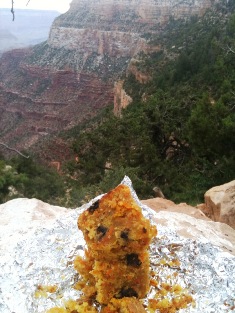
Time for the carrot cake’s photo-shoot (see pic above).

I baked it the night before, amalgamating and adjusting several recipes found on the web for the simplest.

Here it is before I forget it.

Whisk five small eggs (or four big ones) with 1+1/4 cups of sugar and 1+1/4 of organic coconut oil

Fold in 2 cups of organic flour and 2 teaspoons of cinnamon.

Plus 3 cups of grated organic carrot and some cut-up raisins.

Bake in a greased loaf tin for 1 hour at 350 degrees.

Insert a knife to check it is not wet when withdrawn. If wet, the cake is not sufficiently cooked.

Because of the high altitude (7,000 feet) of Flagstaff, the cake took another twenty minutes.

I concocted a separate topping of whisked organic tofu, lime juice and organic agave nectar (the un-organic kind is highly processed and not worth it).

The topping did not come with us to the Grand Canyon.

Unlike the brave carrot cake, that did.

You can’t beat US home cooked food

The US Asia bus from Las Vegas (hot tip: cheaper than the Greyhound) drops me on the outskirts of Los Angeles, at Monterey Park.

I buy a new watch strap and a refreshing green tea with succulent mango seeds from one of the many local Chinese shops.

I ask directions for downtown LA, using my rudimentary Spanish as the lady I ask speaks no English.

Poor people, and workers, on the no 70 bus. I am minority White. Everyone helpful and polite.

Downtown LA with its impressive skyscrapers.

After catching another bus, stressed from travelling in a strange land, I am picked up by my Servas host.

Servas was started after the Second World War to promote peace and understanding amongst nations.

Suddenly, I am whisked to heaven – yoga in the garden, fine wines on the veranda, then supper with soul conversations.

I realise that most of the food I have been eating in the US has been ethnic: Thai, Chinese or Indian.

This is my first taste of traditional American food.

Home cooked, with ingredients from the local farmers’ markets, it is superb.

Traditional July 4 food: barbecued and succulent spare ribs, homemade watermelon rind pickle, refrigerator cucumber pickle (Midwest speciality) and – officially – the best coleslaw I have ever tasted – courtesy of Angie’s father with spicy cayenne and refreshing parsley and cilantro.

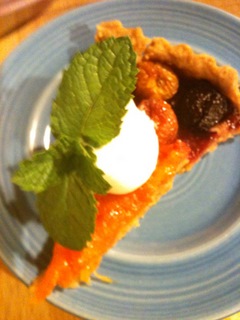
The pudding: seasonal cherries picked that day by Angie in Leona valley, a nearby microclimate defying the Californian desert. Plus apricots, a blob of creme fraiche, and the most elegantly thin wholemeal pastry (a feat as such pastry is usually cludgy).

Bless you, Angie and Hans, for giving me sanctuary.

Vardo, Venice

I walk the boardwalk from Santa Monica to Venice.

The sky is overcast (yummy, just like home in England). The locals call it June gloom.

I am hungry but nothing takes my fancy.

It looks touristy and, well, not real food.

I can’t get this restaurant out of my head that I had passed earlier.

The sign had said: ethnic, vegan, vegetarian…

I don’t like retracing my steps, or leaving the ocean.

But I am glad I did.

It is rare to find somewhere where I want to eat every dish on the menu.

This is the place for me.

An oasis. Delicate flavours, vegan and vegetarian delights, raw food desserts and all ingredients organic.

I had the aromatic gently spicy dhal and spinach curries and salad, beautifully dressed with homemade vinaigrette.

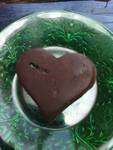
followed by this sweetheart of raw chocolate with fresh mint and coconut filling.

Vardo means gypsy in Roma.

And suited this gypsy queen down to the ground.

Food I eat in the US

Leaving Las Vegas

on the US Asia bus (tip: cheaper than Greyhound bus).

I have my bag of provisions from New Frontiers. Organic roasted cashews, plums, bananas, chocolate almonds.

I had oatmeal porridge for breakfast in the Sahara hotel and casino on the Strip.

My palatial room with en-suite was only $28 a night. I could live cheaply in Las Vegas.

The vast lobby filled with a 100 gambling machines holds no temptation.

Nor does the food.

It is plentiful alright. But nothing I want.

I am in the land of GM.

No labelling on food. No choice.

My list of food I don’t want includes:
anything with corn in it – one of the native American ‘three sisters’, it is a prime victim of genetic modification.

That cuts out a lot including, sadly, tortillas.

I don’t want to be fussy about food.

But I know too much.

I can’t unknow that cattle are pumped with grain and hormones, or shrimp is laced with antibiotics, or the gene to resist the weedkiller Roundup Ready has been inserted into the corn plant’s cells.

Plus my delicate digestion is like a canary down a mine.

I had a rice drink in my first week from a cafe. Rice sounded nice. But the next day my bowels knew it. I think it was the high-fructose corn syrup.

As the US food writer, Michael Pollan, says:

If it comes from a plant, eat it, if it was made in a plant don’t.

I am in the land of the overfed – and I am losing weight.

How ironic.

PS Just after writing this moany blog,  the bus stopped mid-desert. I eschewed McDonald’s and plumped for Chinese fast food. Joy! I rate Panda Express.

God bless farmers’ markets

So here I am in the land of fast food.

Food is not only about how it tastes when you eat it.

–  food technologists can make food taste good.

But how did the food taste before the additives were added?

And how does it feel in your gut after you have eaten?

Fast food ruins my digestion. To be avoided at all costs.

Thank god for fresh food at Flagstaff farmers’ market

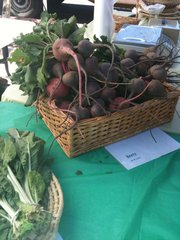
Above – fresh organic beets and chard from Seacat Gardens.

And Flagstaff farmer’s market now accepts food stamps.

– thanks, Kennedy, for that hot-off-the-press info.

Praise-be for Community Shared Agriculture too.

Such as Crooked Sky Farms

where you can give your labour in exchange for a share in the harvest.

Community Shared Agriculture – like fast food – originated in the United States.

Ah, complex beautiful country, providing both the problems

and the cutting-edge solutions!

In praise of Amtrak

Supper time on board the Amtrak train from New York to Chicago. Wild rice, trout and a medley of vegetables

The Hudson river (above) was our companion for a good while on the Lake Shore railroad.

Every meal time, we sat with different people. Several asked me about the British health care system. I said: “I bless the National Health Service.”

Socialism has a bad rap in the US but there is nothing to be scared of. It’s simply about society sharing the care of its citizens, especially the vulnerable ones.

This is my first time in the US.

We had flown from the UK to New York.

Going by train from New York to Arizona was initially for green reasons.

It was also more scenic, more convivial, more educational and also allowed more natural adjustment to time differences.

After sleeping on the train, we changed at Chicago. Like New York, it reminded me of European cities.

But the landscape became less familiar after Chicago.

Our conductor on the Southwest Chief gave us hot flannels, a welcome hangover from the days of steam trains.

We sat in the observatory lounge and watched the landscape change.

Agricultural fields of corn (see above), but few houses or people.

You get a lot of land for your money in the Midwest, said one passenger. But, he explained, it suffered from water shortages. There was competition for water between the states and much water went on golf courses.

The conductors had great lines of repartee and wit, such as:

“In a few moments we will be reaching Raton, New Mexico, and time for a brief smoke break. Have a few puffs on that cigarette but don’t wander far from the train or you will become a hitchhiker not a passenger although the good news is – there is another train in 24 hours.”

The landscape changed again after Albuquerque where we stopped for an hour in the intense heat, and an unexpected anti-genocide exhibition,
One Million Bones.

I fell in love with the railroad and big skies, the America of much loved novels.

I felt touched by the people I spent time with hearing something of their stories and why they are travelling: grandchildren, graduation, loss of loved ones.

I also had great chats about food: cinnamon in porridge; beer batter for frying flounders, and lavender and chamomile for restful herbal tea.

I feel sad how people from different countries and cultures can get divided from each other, through the iniquities of a profit-before-people system.

It took us two and half days to reach our destination in Arizona.

It was a privilege.

Eat organic – reduce carbon

Today I met my friend and ex-Soil Association colleague, Gundula Azeez, for lunch.

She wrote the Soil Association 2010 report, Soil carbon and organic farming.

I confess carbon used to confuse me.

As a journalist, my ignorance is my strength. If I can understand it, so can you.

Gundula kindly went back to basics for a beginner’s mind explanation.

Is carbon good or bad?

Carbon is both good and bad depending on where it is.

When it is in the soil, or locked up in oil and coal, it’s good.

When it’s in the atmosphere, it’s bad.

Carbon-in-the-air i.e. carbon dioxide is something we need to breathe OUT.

In the case of current planetary concerns, rising levels of carbon dioxide (or CO2) create rising greenhouse gases – too much of which contributes to climate change.

(Sentence rewritten following Georgie’s comment below).

Organic farming and the carbon cycle

Plants remove carbon from the atmosphere by breathing IN carbon dioxide.

That’s good.

When plants decay, the carbon is stored in the soil.

That’s good too.

Organic farmers uses this natural cycle to replenish the soil.

According to the Soil Association report, if all UK farmland were converted to organic farming, at least 3.2 million tonnes of carbon would be stored in the soil each year – the equivalent of taking nearly 1 million cars off the road

Not only that – but when carbon is stored in the soil, it does a LOT of good.

That’s because it is stored as organic matter which retains nutrients, soil structure and water.

Organic farmers create more carbon-rich organic matter through their farming practices.

They grow green manures and add compost to enrich the soil.

Soil life

Introducing soil microbes, the tiniest creatures on earth that perform vital functions to keep the soil healthy.

These soil microbes are exterminated by chemical farming practices but are actually encouraged by organic farmers.

Soil micro-organisms are essential to life on earth.

They help deliver nutrients to the growing plant.

They help it decompose when it is dead.

Thus creating more organic matter and its carbon-storage capacity.

Clods of earth

The soil actually clumps – or aggregates – around the carbon to protect it.

This delicious crumbly soil also provides a holding place for water, nutrients and air.

Which is why majority-world countries benefit from organic farming practices because they increase yield, and create water-retaining soil.

This gives developing countries more economic independence too.

They don’t have to pay the West for chemicals to feed the soil because organic farming does it naturally – by using the planet’s natural carbon cycle.

Lunch at Saint Stephen’s cafe

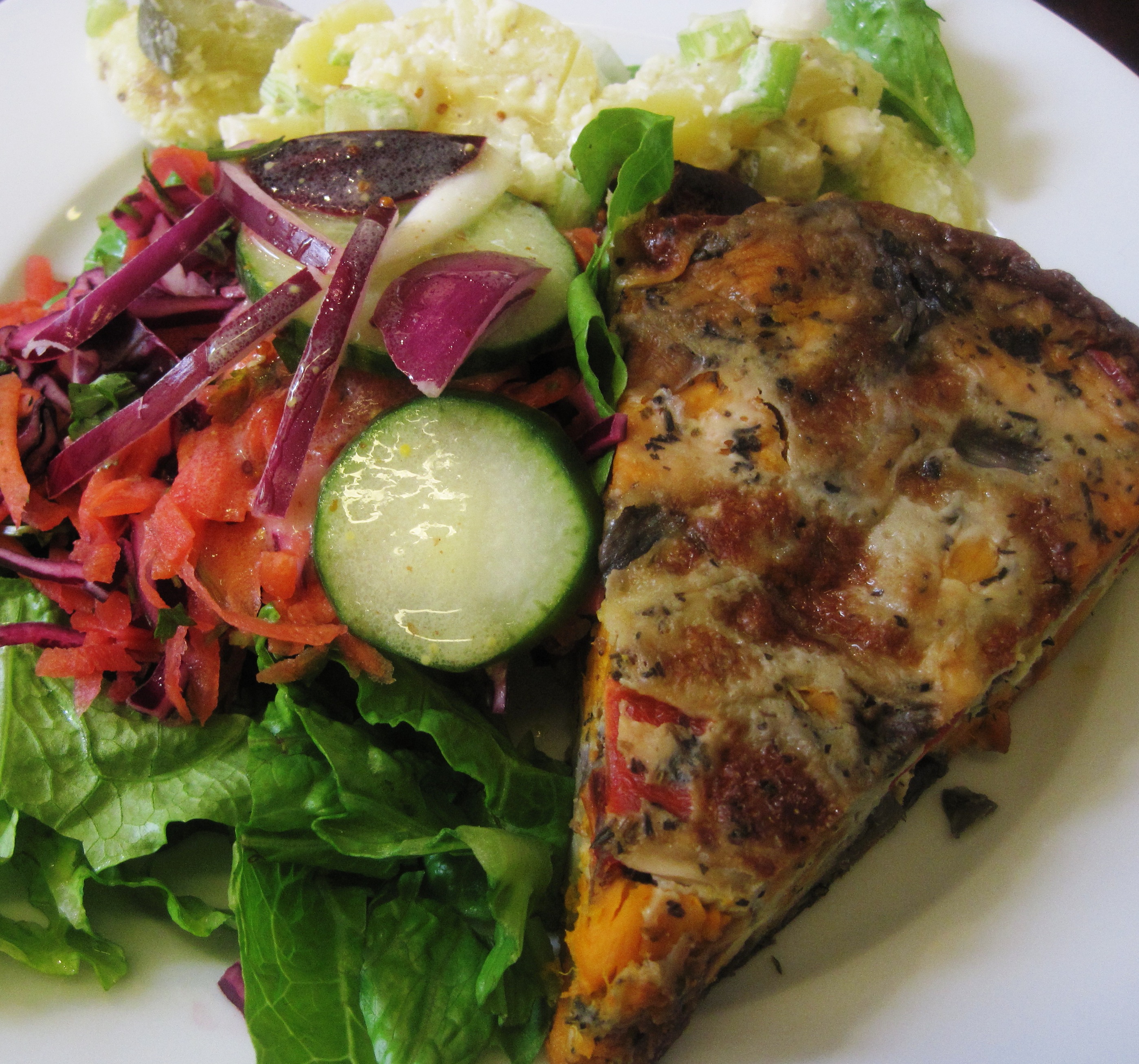
I had sweet potato frittata and salad – pictured – at Saint Stephen’s cafe.

The food is amazing – home-cooked and organic, seasonal, fair trade and local where possible.

Saint Stephen’s church cares deeply about the environment and this is reflected in its cafe food, conceived by one of Bristol’s best cooks, Edna Yeffet Summerel.

Nice to know when I eat organic food that I am enriching the soil and helping store carbon…

Bristol eco-village

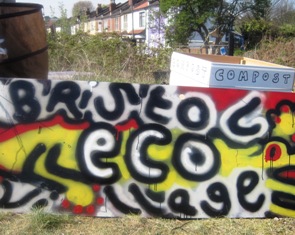
Welcome to Bristol eco-village.

Welcome.

The squatters moved in on Saturday and already three acres of desolate wasteland in inner-city Bristol have been transformed.

What is dead has been brought back to life.

The beans are planted in the soil – on lined raised beds as the land used to be a scrapyard and may be contaminated by toxins.

The squatters are conducting soil tests.

If contamination is found, the squatters plan some soil restoration, such as feeding with compost tea and planting with nitrate-fixing plants (such as beans).

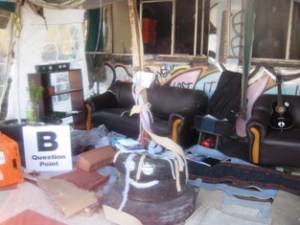
Here is their reception area where visitors can get more info.

It looks like something out of Mad Max or a similar post-apocalyptic movie – and that’s the point.

Rather than be victims of a future likely eco-disaster, some people would rather prepare positively in the present.

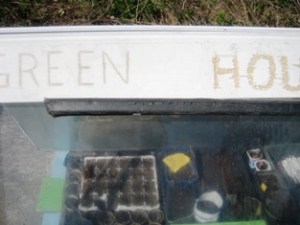
Here is a makeshift green house.

On Tuesday the squatters must got to court.

Why?

Must the land be repossessed by the owners so it may lie unused for another twenty years?

Or can it be restored to life as the squatters are doing, growing vegetables and rebuilding soil fertility?

“We come in peace they said

To dig and sow

We come to work the lands in common

And to make the waste ground grow

This earth divided

We will make whole

So it will be

A common treasury for all

We work, we eat together

We need no swords

We will not bow to the masters

Or pay rent to the lords.

Still we are free

Though we are poor

You Diggers all stand up for glory

Stand up now!”

Easy-to-make spelt loaf

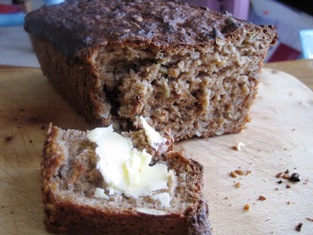
This is the most delicious bread I have baked in my life, ever – and the fastest.

Spelt bread has three great things going for it:

1. Wheat-sensitive types like myself find spelt easier-to-digest

2. Because it is spelt, you can get away with no-kneading because, as Rose Prince says in her recipe for white spelt, “Spelt, an ancient wheat grain, reacts quickly to yeast”.

3. It tastes fantastic – the crust was seed-crunchy and the inside was moist and held together.

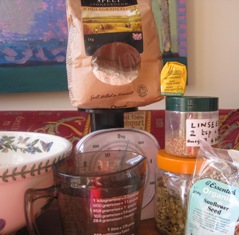
My leading characters:

Thank you to Julia for real-time baking advice, the recipe and the loaf we ate

while watching Life In The Fast Lane, about the 1990s M11 road protest.

Julia says you have to use real yeast to make it taste so good, and I did.

See Yeast ** further down for more info including using dried yeast.

Ingredients

1lb 2oz/ 500g spelt flour

½ tsp sea salt

2oz/ 50g pumpkin seeds

2oz/ 50g sunflower seeds

2oz/ 50g linseeds or sesame seeds

17floz/ 500ml warm water

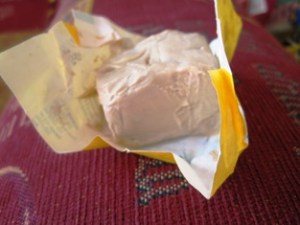
15-20g fresh yeast with 1 teaspoon of honey

a slosh of olive oil (or any oil)

Method after Julia

Add the fresh yeast and honey (1 teaspoon) to the warm water and leave it somewhere warm for 10 minutes to activate the yeast. Feel it gently fizz in your face as you peer into the jug – smells like beer brewing.

Mix the ingredients above – flour + salt + seeds + oil (and anything else such as chilli for a devilish spicyness) – in a large mixing bowl, adding the yeast/water last.

Grease two loaf tins with oil and scatter seeds to line.

Size of tins? One 2lb tin and one 1lb tin did the job for me but you can improvise.

Pour in the mixture and leave it to rise in the tins

– about 30 minutes rising-time.

If you leave it longer, dough-mixture might collapse.

Bake in an oven pre-heated to Gas Mark 6 / 200C / 400F  for 30 minutes.

Turn out and eat as soon as it cools.

(The recipe does tell you to return the loaf to oven for 5 minutes after removing it from tin but this did not seem necessary).

Yeast

It’s exciting – a living organism.

If using dried yeast see Xanthe Clay‘s recipe – which is even faster as there is no need to wait for dough-mixture to rise in the tin (although dried yeast does have additives).

How much fresh yeast to use? Rose Prince says use 7g (1/4oz) of fresh yeast for making a white spelt loaf. Julia says use about 15g.

By mistake I used 42g. Read on.

My yeast story

In my ignorance I used the entire packet of organic fresh yeast instead of a third as Julia recommended.

It got very dramatic as the dough-mixture rose and rose and spilled over the loaf tin.

Domestic-slut that I am

I scooped the spilled mixture and slopped it into another greased loaf tin.

And let the mixture(s) rise again.

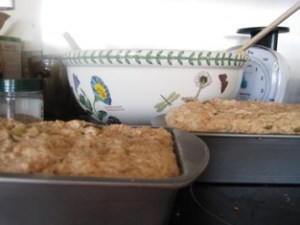
They behaved quite well this time, rising just-so – see pic below.

The bread was delicious and non-yeasty – maybe because the wholemeal spelt flour was strong enough to take the accidental extra yeast.

The moral of the tale?

You can make mistakes while cooking…

So to recap.

This spelt bread does not need kneading

making it fast to bake

Plus so damn delicious it’s also fast to partake.

Claudia Roden’s homemade falafel

The paparazzi caught me last Sunday buying herbs from the glorious Sweet Mart in Easton.

Easton in Bristol has three mosques, several churches, one synagogue and one Sikh temple

– in other words my sort of town.

Sweet Mart do mail order.

I was buying the herbs to make falafel for a family meal on Easter Monday.

I had spotted the recipe in my mum’s Claudia Roden international Jewish cookery book – I was very taken with it because it uses herbs, and butter beans instead of the traditional chick peas.

Here is my version of the wonderful Claudia Roden‘s recipe

Soak 500g of butter beans overnight and cook for a good hour.

Drain the beans (Claudia says pat them dry too)

Blend the drained beans in a food processor until they become a smooth puree.

Add chopped up onion and garlic, (Claudia says use 8 spring onions instead of onion) and ground spices such as chilli, ground cumin and coriander

(Claudia says 2 tsp of cumin and 2 tsp of ground coriander)

Add washed and drained herbs – I used fresh coriander, mint and fennel (see armfuls above).

Leave the paste for an hour or so to settle.

Then roll into balls

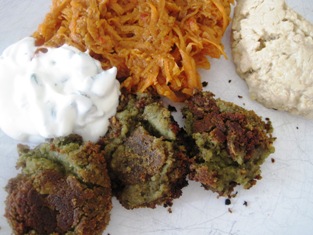
Deep fry and serve with homemade hummus, yogurt with garlic and mint, and grated carrot salad.

My falafel did not turn into hard crispy little balls. I think because

a) I used lots of herbs so they go too wet b) I hate deep-frying so did not use enough oil.

Despite not being crisp, they were

…DELICIOUS

(and even better cold at midnight).