

The secret to hummus lies in its ingredients.
Jump to hummus recipe
Forget cooked chickpeas in tin or jar. Using dried chickpeas from scratch makes all the difference.
A jar/tin of ready-cooked chickpeas is OK in a hurry BUT the texture will be more mushy.
Why use dried chickpeas from scratch?
- They keep their shape
- They have more nutrients than canned
- They double in size
- They are cheaper
- and if you do not use them for hummus, they can be sprouted.
While the dried chickpeas are soaking in water (recipe below), let me tell you about The Bean Book by Rose Elliot. A life-changing cookery book, it introduced me (in the early ’80s) to the magic of beans and other pulses, one of the first crops humans grew. The dried seeds of pea-family plants (or legumes) are nutritional powerhouses.
A vegetarian cookery pioneer, Rose Elliot explains the art of mixing proteins from two different plant foods such as pulses/nuts/seeds/grains to get super-charged protein. Chickpeas (pulse) + sesame tahini (seed) equals protein-rich hummus. The raw garlic and lemon juice adds immune-boosting vitality.
Use organic ingredients if possible too. Farming which works with nature adds to the taste. Enriched with nature’s fertilisers (sun/compost/clover etc), organic soils are teeming with life so have a wider range of minerals/nutrients for the plants. Without chemical fertilisers, crops work a bit harder, producing more flavour compounds. Soluble chemical fertilisers (particularly nitrogen) make non-organic crops grow fast – but sappy. Organic produce has a lower water content. All this adds up to richer, more complex taste. Just a thought.
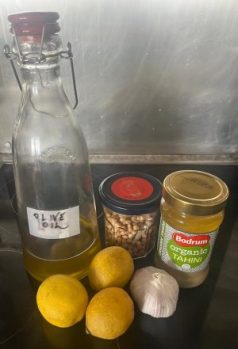
Hummus Recipe
Ingredients
- 200g or 1 cup of dried chickpeas (or 400g of cooked chickpeas)
- 1-3 lemons squeezed (about 4-6 tablespoons of juice)
- 2-4 cloves of raw garlic, peeled (minced by hand if not using electric blender)
- 4-6 tablespoons of olive oil
- 4-6 tablespoons of tahini (ground roasted sesame seeds)
- Salt and optional cumin to taste.
Cover about 200g of dried chickpeas with plenty of water so they have space to swell (swell. What a word).
Ideally you have access to an electric handblender or food processor. I use a Nutribullet. You could use a potato masher if doing it by hand. If so, ensure the garlic is well-crushed before adding.
The amounts of garlic and lemon juice depends on you. I use lots of both (three lemons and five garlic cloves). Ditto with olive oil and tahini. I have given guidelines so you can adjust accordingly.
Method
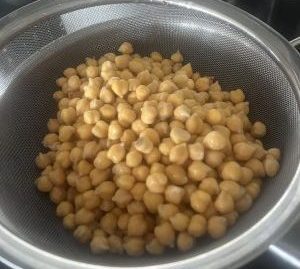
Start by soaking about 200g of the dried chickpeas in water overnight (or use boiling water and soak for about an hour until plumped up). Drain then add to a pan with fresh water, and simmer for about 45 minutes. Once cooked (soft enough to munch but not mushy), drain the chickpeas and let them cool down a bit.
If using a Nutribullet, put the raw garlic in the goblet first with the oil and lemon juice so, when you turn the goblet upside down to whizz it, the blades can crunch down. Then add tahini and cooked chickpeas. Add salt/cumin to taste.
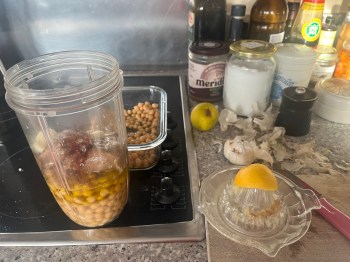
Above is a pic of kitchen chaos. No homemade hummus ever comes out the same, the mystery of homemade.

Blend until its consistency (above image with nutribullet, below, using a hand blender).
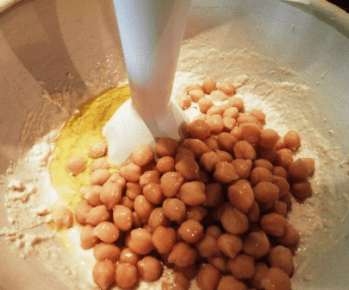
For a smoother hummus, add some chickpea cooking-water, a cautious tablespoon at a time. Or add more olive oil. Blend in two batches to vary texture between smooth and whole chickpeas.
Serve with a whisper of paprika to add colour, and a trickle of olive oil. Store in the fridge for three-five days.
Good luck and let me know how you get on.
P.S. This blog on hummus is dedicated to Unreal, the UK charity for people with depersonalisation and derealisation.


 Real Food Lover