
I was told yesterday that today is the last day of the Mayan calendar.
That means the end of 28,000 years of hierarchy and oppression.
Yippee!
And I have finally found a spouting system that works.
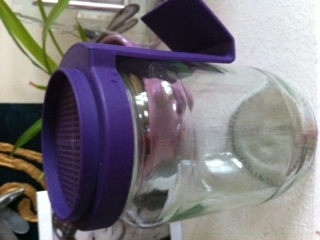
I bought this jar with its plastic perforated lid from Harvest, part of Essential Trading Worker Co-op.
DIY types can make their own. Or use old tights or muslin as the lovely Alys Fowler suggests.
Or buy one like mine (after years of experimentation, I can vouch that This One Works), and get loads of sprouting info from Living Food of St Ives.
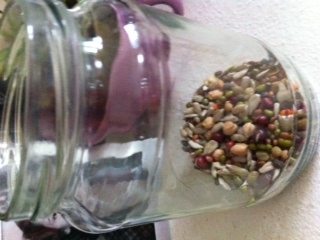
First you put the dry (organic) seeds in the jar.
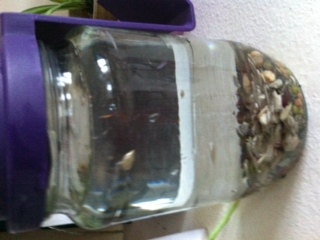
Add water and leave them overnight to bring them to life.
After that first long soak, you wash the seeds daily (or twice, thrice).
The seeds like being clean and wet (not soaked or drowned).
So after filling the jar with water, swill the seeds around then drain away the water (hence the natty perforated lid which makes life so much easier).
And how is this for a virtuous circle? I drain the water on the indoor plants so they get a regular watering.
After a few days, I have produced living things.
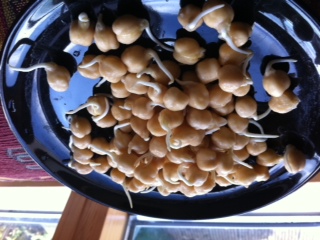
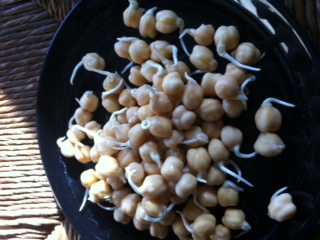
Here are some sprouting chickpeas, looking positively Lawrentian.
(DH Lawrence being one of my fave authors because he describes life on its different levels: soul, mundane etc and because: “Lawrence believed that industrialised Western culture was dehumanising…”).
So now I am going sprout-mad. Sprouts in stews. On toast with cream cheese.
Whizzed with Organico Artichoke Spread for instant hummus.
Hold on a minute. Did I say hummus?
I ask myself: WHY make hummus with cooked chickpeas when you can use extra-bursting-with-vitality FRESH sprouting raw chickpeas?
So, I substitute the cooked chickpeas for my Lawrentian darlings, add some turmeric and crushed coriander seeds (must sprout THEM one day) and of course lemon juice, olive oil, tahini, raw garlic, as in my usual recipe for hummus .
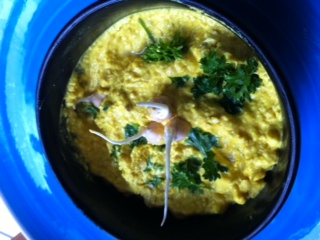
And it was delicious.


 Real Food Lover
And if you don’t like sprouting chickpeas, I just found this great food blog with lots of other ways of doing raw hummus.
LikeLike
I’m going to give this is a go.The kids will love seeing the sprouts grow.
LikeLike
Hi Alison
Good idea. I struggle with growing things from scratch, so my sense of achievement with the sprouts is profound. And so great to grow things indoors too, AND quickly.
For more advice: Alys Fowler on sprouting, as I said.
And there is no shortage of videos. I like this one from Bad Boy Organics because it gets straight to the point.
And I have added the sprouting experts, Sprout People, to my Blogroll.
I am still trying to find out where to buy my easy-to-use jar online. As Harvest (where I bought my sprouter) is part of the wholefood wholesalers, Essential food coop, it must be there…Will carry on searching when more time presents itself…….
LikeLike
Oooo, how exciting! I must nip across to Gloucester Road to check out ‘Harvest’. Looks like an interesting place.
(Still haven’t grabbed a copy of ‘The Plumed Serpent’. Long nights are upon us though, which means more reading).
LikeLike
O, sprouting IS exciting!
Have just finished The Plumed Serpent. It has elements to argue with, but I found it mind-blowing, too. Miss reading it.
DH Lawrence’s book (published 1926) also showed me the roots of hippy interest in Native American rituals and spirituality: the hand-drums and honouring of nature.
Let us know when you visit Gloucester Road!
LikeLike
I love sprouts too – and have long enjoyed a sprouting jar with a perforated lid – it does indeed make sprouting very simple. I love the idea of the hummus too – must give it a go. Thanks – as always – for making healthy eating so easy and fun!
LikeLike
Thanks, Roz. Yes, it got to be fun, or I just ain’t doing it!
LikeLike
This is a brilliant idea. Apparently, the humus industry is one of the biggest and fastest growing in food today. The big supermarkets have put their humus recipes under lock and key.. I love the idea of undermining the big guys. Having said that, I must be the only person in the UK that doesn’t like humus…too beany for me. But now i am wondering…are they beans or are they peas as in chickpeas?
LikeLike
Entirely agree, and funny how we are both drawn to Lawrence, he can be irritating, but he had a lot to say still very relevant today.
LikeLike
Education for Pjw8 – The Chickpea (also ceci bean, garbanzo bean, chana, sanagalu Indian pea, Bengal gram) is a legume. The English word hummus comes from Arabic حمّص ḥummuṣ, in turn derived from ḥimmaṣ “chickpeas”. Apparently its known in Hebrew as humusiot and Israelis have elevated Hummus to become a “national food symbol” and consume more than twice as much hummus as their Arab neighbours.
LikeLike
Excerpt from ‘Ten things about hummus’ from Bristol city’s parish church, Saint Stephen’s (seasonal. Fairtrade, local) Cafe. Hummus information from cafe manager, Edna Yeffet, who makes homemade hummus. And more.
Ten things about hummus by Edna Yeffet Summerell
1. Said to be a 5,000 year-old dish, hummus is the one thing you find everywhere in the Middle East…and where there’s hummus, there’s rivalry. Everyone claims their hummus was the first and is the best.
2) The truth is no one knows where hummus originated.
3) Hummus is the Arab word for chickpeas.
6) Hummus is food that unites and harmonises – everyone loves it. Make it with chickpeas from Turkey or Syria, olive oil from Palestine, lemons from Israel, tahini from Lebanon, garlic from Egypt…make hummus and not war!
.
More…
LikeLike
Gotta love the sprouting. Cool how you explained it all and how to do it – really unique among the Raw Hummus recipes I have seen.
Rich
Co-Creator
http://www.evolvewithflavor.com
LikeLike
Hi Richard
I saw your comment and was cheered. It offset the usual self-doubt.
Finally, time to visit my own blog (viz) and your Facebook Page to find you are a raw food master. Am chuffed again.
I am intrigued by the (raw, alkaline) foods you specialise in due to a delicate digestion.
To explore more. Thanks.
Elisabeth
LikeLike