Tag Archives: tahini

Tahini sauce 

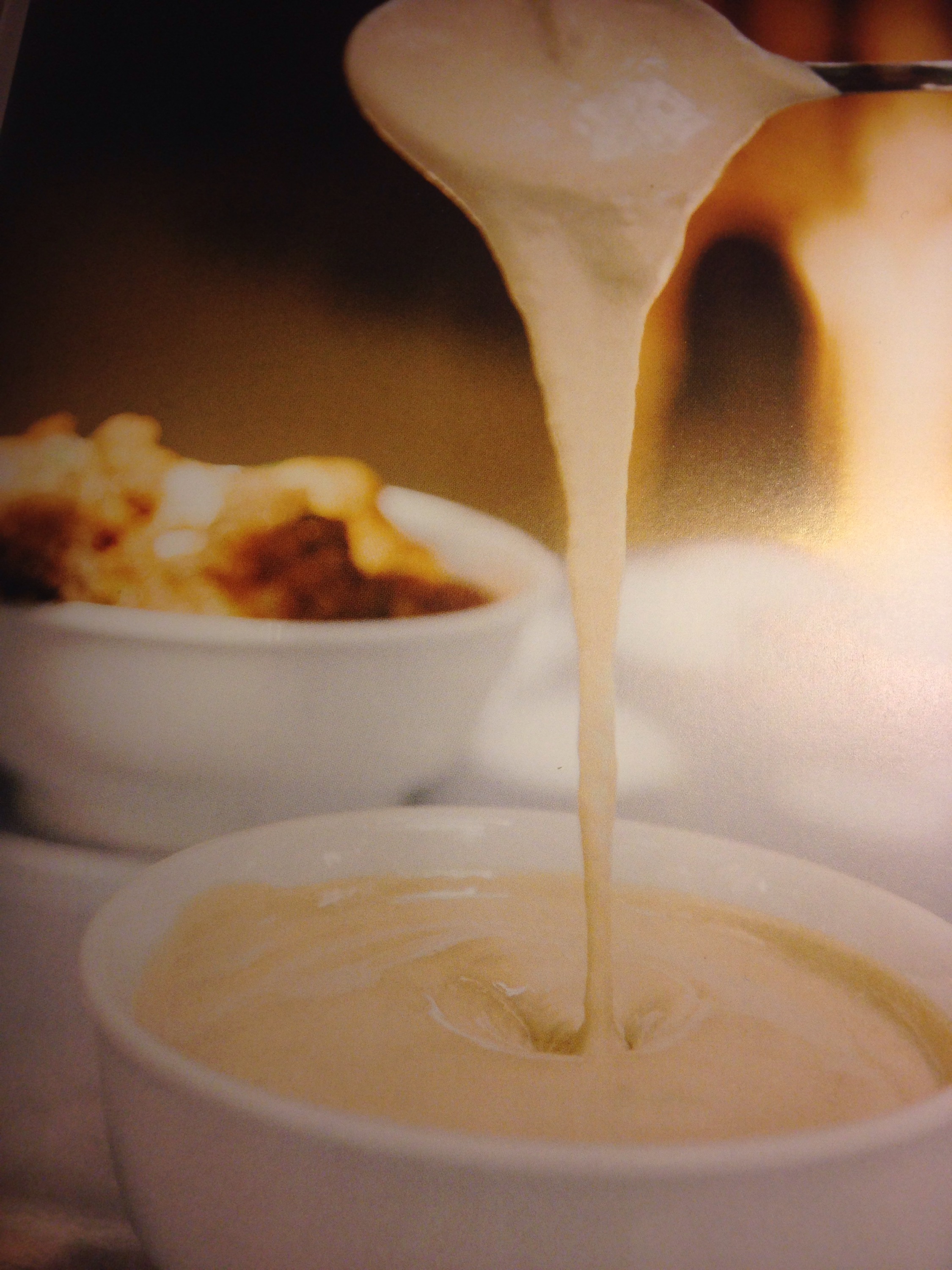
Sauce drips in a stream from a spoon

This image and recipe comes from a new book, Lebanese Home Cooking, by Kamal Mouzawak, the founder of Lebanon’s first farmers’ market.

Lebanese Home Cooking, from Quarto Eats, has all my favourite food words in its title. In the 1980s a friend took me to a Lebanese restaurant in Soho and I was knocked out. Every dish appealed in new, refreshing ways. Tahini, beans, yogurt, lemons, olive oil, garlic. These are now my favourite ingredients. Versatile and health-giving, they are always in the kitchen.

(My posts on making home-made yogurt and hummus both of which I eat almost daily).


Writing about the Lebanese market founded in 2004, The New York Times says that Souk El Tayeb (“market of good”): “reconciles Lebanon’s warring factions through their common love of their food.”

Kamal Mouzawak writes: Food is a window – “the best way to look into people’s lives.”

Make food, not war.

Kamal Mouzawak is full of practical wisdom and inspiring encouragement. The recipes are simple. He says souk food is easy and fast – how I like to cook.

Tahini sauce – Tarator 

Garlic 1 clove or more

240g tahini (sesame paste)

Juice of 3 lemons

1 tablespoon of olive oil.

Crush garlic with little salt, add to tahini in the bowl, and add the lemon juice. Tahini will thicken so continue stirring with a fork and add more lemon juice if needed. The mixture will be smooth. Season with salt to taste, blend in olive oil and serve. Good over dark leafy vegetables.

Fava bean stew – foul medamass

I love the addition of quartered lemons to this fava bean stew.

120g small brown beans

1 onion peeled halved

Garlic

Handful split yellow lentils

1 lemon plus juice of 2 lemons

80 ml olive oil

Ground cumin and salt.

Soak beans overnight. Drain. Add onion halves, garlic and lentils. Add water to cover by 2 fingers. Cook beans for several hours to be mushy. Add quartered lemons 20 minutes before the end. Take off heat and add lemon juice, olive oil, cumin and salt to taste.

Souk food – soul food.

PS On the subject of tahini sauce, I came across this amazing recipe by UK chef and co-owner of Wahaca, Thomasina: Tagliatelle with blue cheese, tahini and caramelised onions. Straining the yogurt and adding tahini makes this into a luxurious and creamy dish, yet it is light too. Comfort food – recommend!

The original recipe (serves 4-6). Here follows my mini-version:

Cook 900g sliced onions slowly (25 mins) in 4 teaspoons olive oil + 30g butter. Cook 450g pasta (I use buckwheat noodles), adding 300g frozen peas in the last three minutes of cooking. Drain pasta and peas but keep 250ml of the cooking water. Strain 450g of Greek natural yogurt. (I added the residual ‘yogurt water’ to the pasta cooking water because I hate waste.).

Put pasta in a bowl. Beat reserved pasta water into strained yogurt, and season. Then add to pasta, so it absorbs sauce for a few minutes. Add more of the cooking water gradually until you have a “silky pile of pasta”. Crumble 100g blue cheese over your luxurious pasta pile, and top with the caramelised onions.

Exterior of Byblos with yellow awning with lettering, Mezza of Lebanon

And, finally, a picture of Rafic’s (see comments) Lebanese restaurant in London. Mezza of Lebanon (1968 – 2004) was at 262 Kensington High Street, near Holland Park.
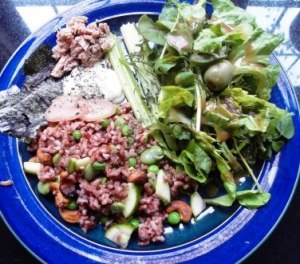
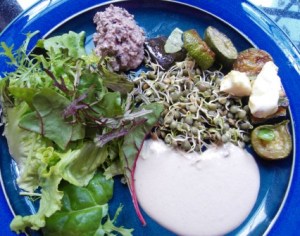
Brain food

brown rice salad, wasabi mayo and toasted nori

There is nothing like being cooked for, especially when it is your favourite food. Every lunchtime this last week I have feasted on creative vegetarian dishes thanks to Sarah Roy’s inventive nutritional know-how, handsomely assisted by Ali.

These wonderful health-feasts are part of the Symphonic Mind treatment offered by Sarah and her husband, James Roy. As I am helping them with their marketing, they insisted I experience the whole package including daily Yogic massage and brain training.

I have never thought much about my brain or its waves. But according to the emerging sciences of the mind, emotional and physical trauma as well as a range of health conditions can cause imbalance.

For instance, someone might have too many theta waves in the front lobes, or conscious part, of their brain. Theta-induced dreaminess is good for creativity but not for paying bills on time. So after an assessment, Brain State Technology comes up with a precise customised programme to restore balance.

In my case, I have a huge amount of brain waves associated with self-critical judgements in the unconscious part of my brain.

Sarah says this is common. I can believe it. We come from centuries of repression and mind control. It is hard to feel good-enough just to be.

In the brain sessions, I sat back in a comfortable state-of-the-art chair. Sensory electrodes picking up information from my brain were placed on different sections of my head, depending on which part we were working on. I was asked to do a variety of mind-stilling exercises such as focusing on a lit candle while I listened to sounds of my brain waves played back to me.

This is a very pleasant way to spend the day and could not have come in a better time as I transition from employee to entrepreneur, and need to call on all my resources unhampered and to maximum effect.

Brain State Technology translates brainwaves into sounds, colours and shapes. One exercise which appealed to my competitive self was using my mind to move a coloured bar on a screen. If you focus hard-enough the bar goes up or down. How fascinating to see in real-time the value of setting an intention!

The massage treatments sandwiched between the brain work was a way of grounding these changes  in my physical being. James Roy used to train with the masseur of the Dalai Lama and the masseur of the Thai abbots. (Am happy to hear monks get massaged).

For two hours a day I was Breathed and Yoga-ed. I lay on a large mat as James guided my limbs and lungs to do their yogic thing. It is something else to have someone else help you get into postures and breathe deeply. The beauty is I can touch my toes again, something I have been unable to do since a slipped disc injury three years ago.

As for my brains, I overcame a deeply troubling situation leading to the calm of acceptance; and (reporting a few days later), my focus and meditation seems to have improved.

Now for the food. As well as being a neurotherapist and body worker like James, Sarah is a nutritionist. The above dish was brown rice salad with peas (defrosted but raw – works a treat), fresh broad beans and roasted cashew nuts; with toasted nori flakes, pickled ginger, olive paté with cream cheese, green salad leaves from a Riverford Organic veg box, and wasabi added to mayonnaise. Wasabi is that green Japanese horseradish you get with a sushi. Thanks to Sarah, I can now add it to my repertoire.

Another one to note is the tahini sauce (below) which Sarah made with lemon juice, tabasco for spice, a little water and – the magic ingredient and a new one for the store cupboard – the saltiness and digestive-enhancement of umboshi paste.

I felt so lucky, I was envying myself.

umboshi tahini sauce

Reblog this post [with Zemanta]

Homemade hummus

cast-assembled

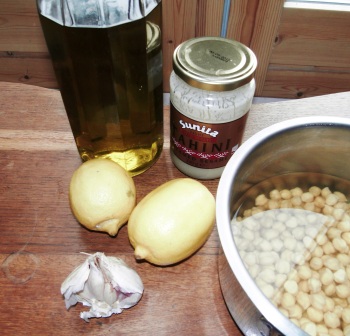
The cast is assembled. The starring ingredients (pictured) in a classic production of hummus are: olive oil, a jar of tahini,  lemons and garlic, and chickpeas soaking in a pan of water.

Thanks to kineseology, I was recently diagnosed as lactose-intolerant. Ah ha! The missing piece of the jigsaw – no wonder I prefer vegan food.

I am sad to ban eating cheese, butter and cream but not when I realise those yummy darlings make my gut sore because I lack the digestive enzymes to process them. Apparently most non-Europeans (including Mediterreanean/Eastern European types like myself) are lactose-intolerant.

This makes me ponder: our dairy-filled western diet may be dominant but is it giving the rest of the world a belly-ache?

So instead of eating cheese, I concoct homemade hummus every week. Although made from plants, hummus is a complete protein because it is combines different groups of plants, in this case, chickpeas and sesame seeds.

You can buy cooked chickpeas in a can in most shops and search out a wholefood shop or Mediterranean/Middle east delicatessen for a jar of tahini (sesame seed paste) and raw chickpeas. This recipe uses raw chickpeas.

The amounts are enough for a party dip, or eight-ten servings. I dollop it on toast, brown rice, grated carrots, lentils, fried eggs…

[Note: Chickpea upped from 100g to 150g following Ingrid Rose’s helpful comments below. So do take note when doing five times the amount, Ingrid Rose!]

150g dried organic chickpeas soaked in over twice the amount of water. Soak overnight (or speed up the process by soaking in boiling-hot water) in a pan. The chickpeas will go from shrunken to plumped-up pellets.

Bring the pan with chickpeas to the boil then simmer for an hour (on a low light with a lid) until they are soft-enough to mash.

Drain the chickpeas (hang on to the cooking water for later) and put them in a large deep bowl ready for mashing (or blending) together with:

3 Tablespoons of organic tahini or sesame seed paste. I use a dessert spoon for measuring because it will fit in the jar – give the tahini a jolly good stir before spooning out.

3 Tablespoons of olive oil

Juice of two lemons – cut in half and rotate a fork vigorously to extract the juice and pulp or use a lemon squeezer. Organic lemons can be smaller than non-organic ones and have more pips but they are more juicy.

2 fat cloves of garlic – crushed with a garlic crusher or the flat of a knife. It’s optional – not everyone loves immune-boosting garlic.

Add salt and black pepper for taste and/or crushed chilli and/or ground cumin.

A word on chickpeas. You can buy them tinned – conveniently and organically – but I prefer dried. Dry, rattly chickpeas which you soak are cheaper, tastier, less watery and have twice the nutrients than canned ones.

blending-chickpeas

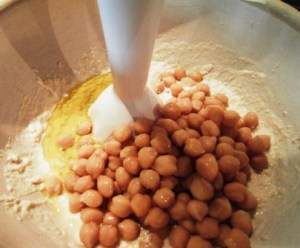
I blend half the drained chickpeas with:

garlic, lemon juice, tahini and olive oil

and whizz till smooth. It’s easier to work in small batches.

Then I add the remaining chickpeas – see picture above. If the mixture is too stiff to blend, add a teaspoonful or two of the cooking water. You are aiming for smooth and creamy not runny.

I am addicted to my electric handheld blender but a strong fork or potato masher will mash the chickpeas – just make sure the garlic is well-crushed before adding.

And here’s the mystery, every homemade hummus turns out differently.

Have you made hummus?

hummus-on-toast

Reblog this post [with Zemanta]

Shambala festival 2008

“Camping is like having a baby – you forget the pain and do it again,” said a woman at Shambala festival.

As the rain dripped, we wondered why we had left our warm dry homes to live in a field. Not even a quiet one because this was Festival Land where sounds pound night-and-day from eight different music tents. The chaos was offset by the healing area with its chimes dinging in the wind, and therapists offering massage or reiki or any manner of soothing restoration in calm tents.

I was helping the family crew welcome parents and children to the family yurt, a wondrous place of sanctuary. It was a pleasure seeing the children run free. And when dark descended, you could promenade in the anarchic carnival atmosphere.

Circus-huge tents were  themed from The Kamikaze tent and Geisha Palace to The Aloha beach with sand and pretend palm trees. My favourite was the Bollocks tent, a surreal lounge with sofas serving vodka shots and  impromptu jazz from top musicians dropping by.

There was always somewhere to have a cup of tea even at two in the morning such as Granny’s Gaff (granny looked manly and used tea-cosies).

Back at the family site, its boundaries not the usual walls but canvas, we took turns cooking the evening supper. On Sunday it was mine.

Two gas rings in a busy field kitchen and 18 adults and 12 children to feed. Mike was graceful about being my commis.

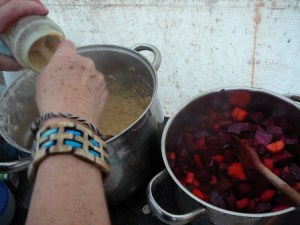
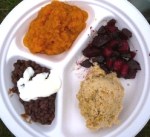
We served 500g split peas (soaked overnight and simmered for an hour) with juice squeezed from 10 fresh lemons, tahini and ground almonds; 400g of aduki beans (soaked overnight and simmered for an hour) with yogurt; mashed sweet potato; and pan-fried beetroot and carrot. I wanted to roast the beetroot and carrots but – no oven – so I experimented by cooking them for an hour in oil. They retained more sweetness than mere boiling.

We camped until the festival had truly ended. It was a privilege seeing the illusion dismantled like being backstage.

I watched the Posh Wash showers being loaded on to a truck and the mobile solar-powered cinema drive off. The circus was leaving town.

We slept the last night in an empty field where an owl hooted above the faraway sounds of the festival crew’s last party.

I love hummus

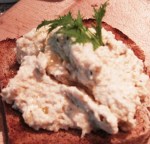
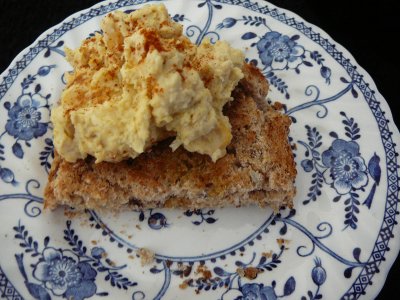
A blog of hummous on toast made with spelt on a plate

One of the best things about not being in the office this week was having time to make hummus. I ended up making several batches, each as subtly different as the last.

I kicked off with 200g dried organic chickpeas (from some supermarkets and all wholefood shops). Hard as bullets, I soaked them overnight in water and then cooked them (in the same water) for an hour until soft enough to eat. Of course, you can use tins for speed and this is a fab recipe.

(Mind you, the comments in above website were also instructive. I learnt I could use roasted sesame seeds instead of tahini. I had panicked because no exotic tahini could be found in this English seaside town. Luckily my saviour, Marshford, had a jar or two of the wondrous middle-eastern sesame seed paste.)

Using the hand-held blender, I noisily blended one clove of garlic (use more if no one objects) in the juice of one lemon, water from the cooked chickpeas (2 Tbs – that’s table not teaspoons!), olive oil (2 Tbs) and the yummy, runny, organic sesame seed paste (2 Tbs).  I added rock salt to taste (being careful not to oversalt – so easy to do), and a teaspoon each of ground cumin and coriander.

Once all the easy bits were blended, I added the fibrous chickpeas and mashed through them with my trusted electric tool.

I have written about hummus before but it is a food that bears repetition. And experimentation. When I ran out of lemon juice, I used lime and no one noticed.

Served with toast (in my case, spelt from the wondrous Common Loaf), I produced a nutrient-rich and high-fibre protein-filled snack.

The vegetarians and the world’s wise peasants know that combining pulses with grains (and subsituting, if you wish, pulses/grains for seeds) makes a protein equal to that delivered by the dear animals.