
I had to set an organic challenge for Hardeep Singh Kohli of Celebrity Masterchef fame: become 100% organic in two weeks. See how the comedian fared in olive, on sale now. It was a tall order because, in truth, going organic happens gradually.
I was mad-keen for Hardeep to visit a farmers’ market but he stuck to supermarkets. Farmers’ markets only set up stall once a week (or less), so I can see why they are not convenient. But the difference in quality between local organic food grown, made – or reared – within 50 miles, and the much-travelled organic food in supermarkets, is beyond compare.
Buying organic food from the person who grew it (from farmers’ markets or veg box delivery) adds a new dimension to shopping – you know where your food is from. Price-wise, buying direct is cheaper than supermarkets – no middleman to add costs.
Last Thursday at noon, catching a lift with Mike to Exeter train station, we unexpectedly passed Exeter’s farmers’ market.
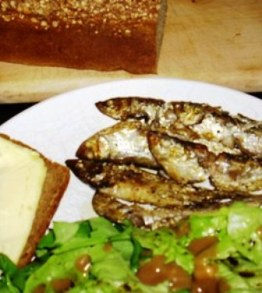
“Stop the car,” I said. I had ten minutes to gather dinner (see above). Everything was organic apart from the fish, which was wild. With only a short season, the sprats, caught in Dorset , are special. And cheap. I got six portions-worth for £5. Sprats are sustainable to fish and healthy to eat. Grill without oil – they are naturally rich in must-have omega-3.
I fried the above darlings, eating them with Rod and Ben’s salad and Emma’s homemade bread, fresh from Exeter’s Farmer’s Market.
As well as shallow-frying the fish, I slathered oil on the salad and butter on my bread – what am I like?
The next day my pal and child came round. We ate the fried sprats whole, crunchy heads and all. I was surprised a four-year old would enjoy them but he did.
This time I served them with organic mash potatoes grown at Radford Mill Farm 30 miles away, and sold at its inner-city organic farm shop luckily on my flight-path.
How do you access local organic produce? Do you find it hard like Hardeep?


 Real Food Lover