
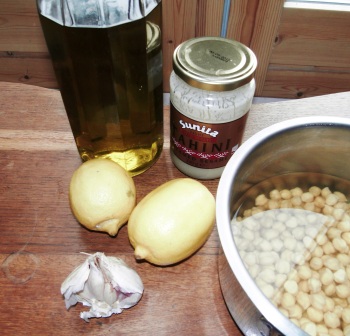
The cast is assembled. The starring ingredients (pictured) in a classic production of hummus are: olive oil, a jar of tahini, lemons and garlic, and chickpeas soaking in a pan of water.
Thanks to kineseology, I was recently diagnosed as lactose-intolerant. Ah ha! The missing piece of the jigsaw – no wonder I prefer vegan food.
I am sad to ban eating cheese, butter and cream but not when I realise those yummy darlings make my gut sore because I lack the digestive enzymes to process them. Apparently most non-Europeans (including Mediterreanean/Eastern European types like myself) are lactose-intolerant.
This makes me ponder: our dairy-filled western diet may be dominant but is it giving the rest of the world a belly-ache?
So instead of eating cheese, I concoct homemade hummus every week. Although made from plants, hummus is a complete protein because it is combines different groups of plants, in this case, chickpeas and sesame seeds.
You can buy cooked chickpeas in a can in most shops and search out a wholefood shop or Mediterranean/Middle east delicatessen for a jar of tahini (sesame seed paste) and raw chickpeas. This recipe uses raw chickpeas.
The amounts are enough for a party dip, or eight-ten servings. I dollop it on toast, brown rice, grated carrots, lentils, fried eggs…
[Note: Chickpea upped from 100g to 150g following Ingrid Rose’s helpful comments below. So do take note when doing five times the amount, Ingrid Rose!]
150g dried organic chickpeas soaked in over twice the amount of water. Soak overnight (or speed up the process by soaking in boiling-hot water) in a pan. The chickpeas will go from shrunken to plumped-up pellets.
Bring the pan with chickpeas to the boil then simmer for an hour (on a low light with a lid) until they are soft-enough to mash.
Drain the chickpeas (hang on to the cooking water for later) and put them in a large deep bowl ready for mashing (or blending) together with:
3 Tablespoons of organic tahini or sesame seed paste. I use a dessert spoon for measuring because it will fit in the jar – give the tahini a jolly good stir before spooning out.
3 Tablespoons of olive oil
Juice of two lemons – cut in half and rotate a fork vigorously to extract the juice and pulp or use a lemon squeezer. Organic lemons can be smaller than non-organic ones and have more pips but they are more juicy.
2 fat cloves of garlic – crushed with a garlic crusher or the flat of a knife. It’s optional – not everyone loves immune-boosting garlic.
Add salt and black pepper for taste and/or crushed chilli and/or ground cumin.
A word on chickpeas. You can buy them tinned – conveniently and organically – but I prefer dried. Dry, rattly chickpeas which you soak are cheaper, tastier, less watery and have twice the nutrients than canned ones.
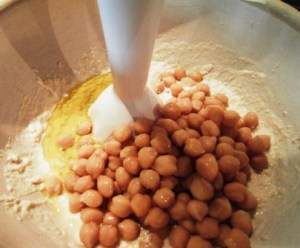
I blend half the drained chickpeas with:
garlic, lemon juice, tahini and olive oil
and whizz till smooth. It’s easier to work in small batches.
Then I add the remaining chickpeas – see picture above. If the mixture is too stiff to blend, add a teaspoonful or two of the cooking water. You are aiming for smooth and creamy not runny.
I am addicted to my electric handheld blender but a strong fork or potato masher will mash the chickpeas – just make sure the garlic is well-crushed before adding.
And here’s the mystery, every homemade hummus turns out differently.
![Reblog this post [with Zemanta]](https://i0.wp.com/img.zemanta.com/reblog_b.png)


 Real Food Lover