
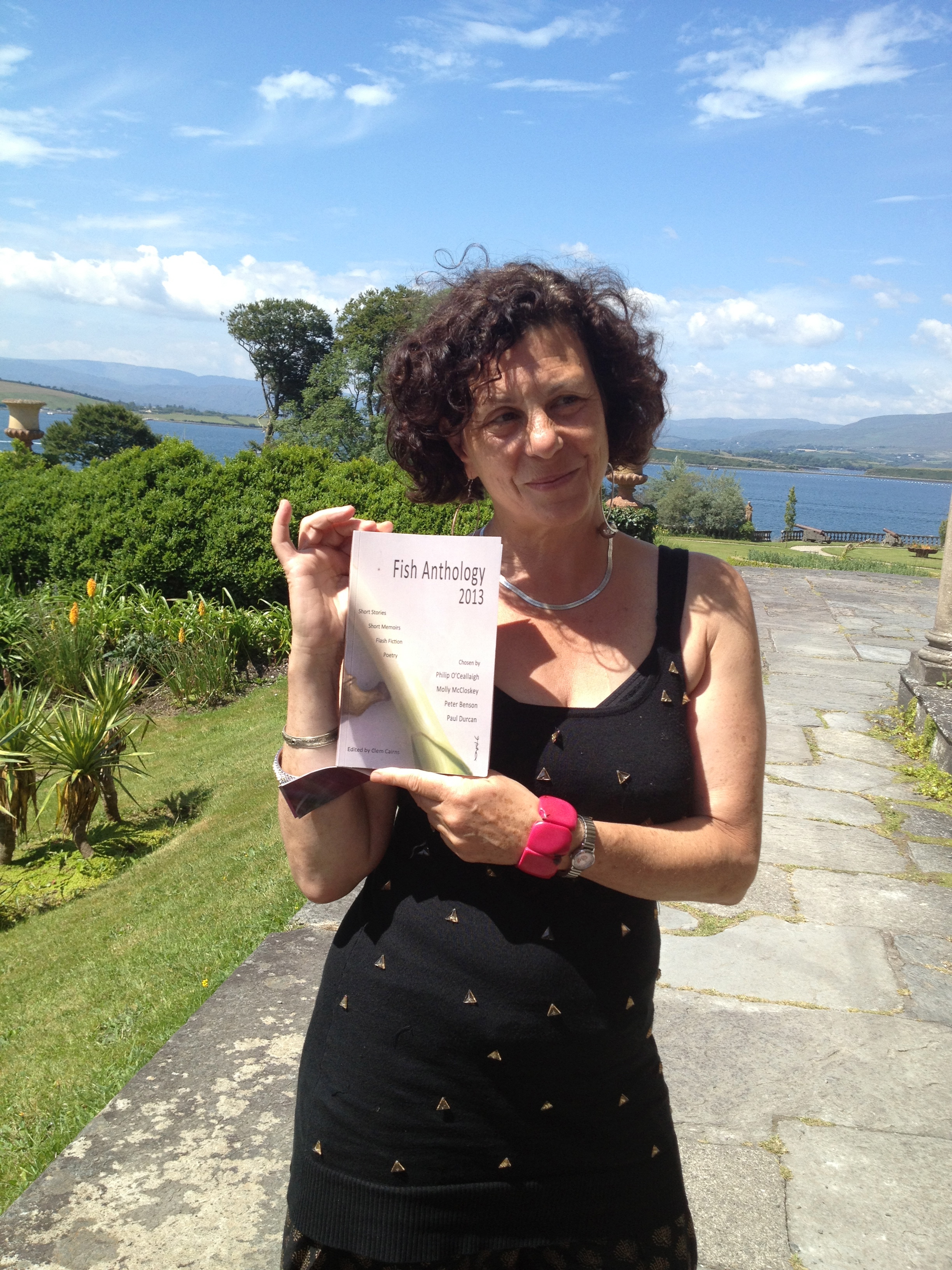
I won a literary prize. Published in the 2013 Fish Anthology, and launched at the West Cork Literary Festival in Bantry 7 – 14 July 2013.
I do not usually go to literary festivals (preferring music/dancing ones) but hey, how many times do you win an award? I had always wanted to go to Ireland so I made a week of it.
And what a week. For a start, I hit the heatwave. Instead of being bent over laptop while sun shines, I was at leisure, in nature, by the sea. I could not believe my luck.
I had booked a hotel half-an-hour walk from the town. Built in the 1970s, the Westlodge hotel was the first of its kind with a spa. So I started the day in the hotel pool.
In the grounds, I found a place to meditate (word used loosely – basically try to to sit still for five mins.). Pic below.

Then I found a hidden back-route towards town via the grounds of Bantry House (just visible in distance, below).
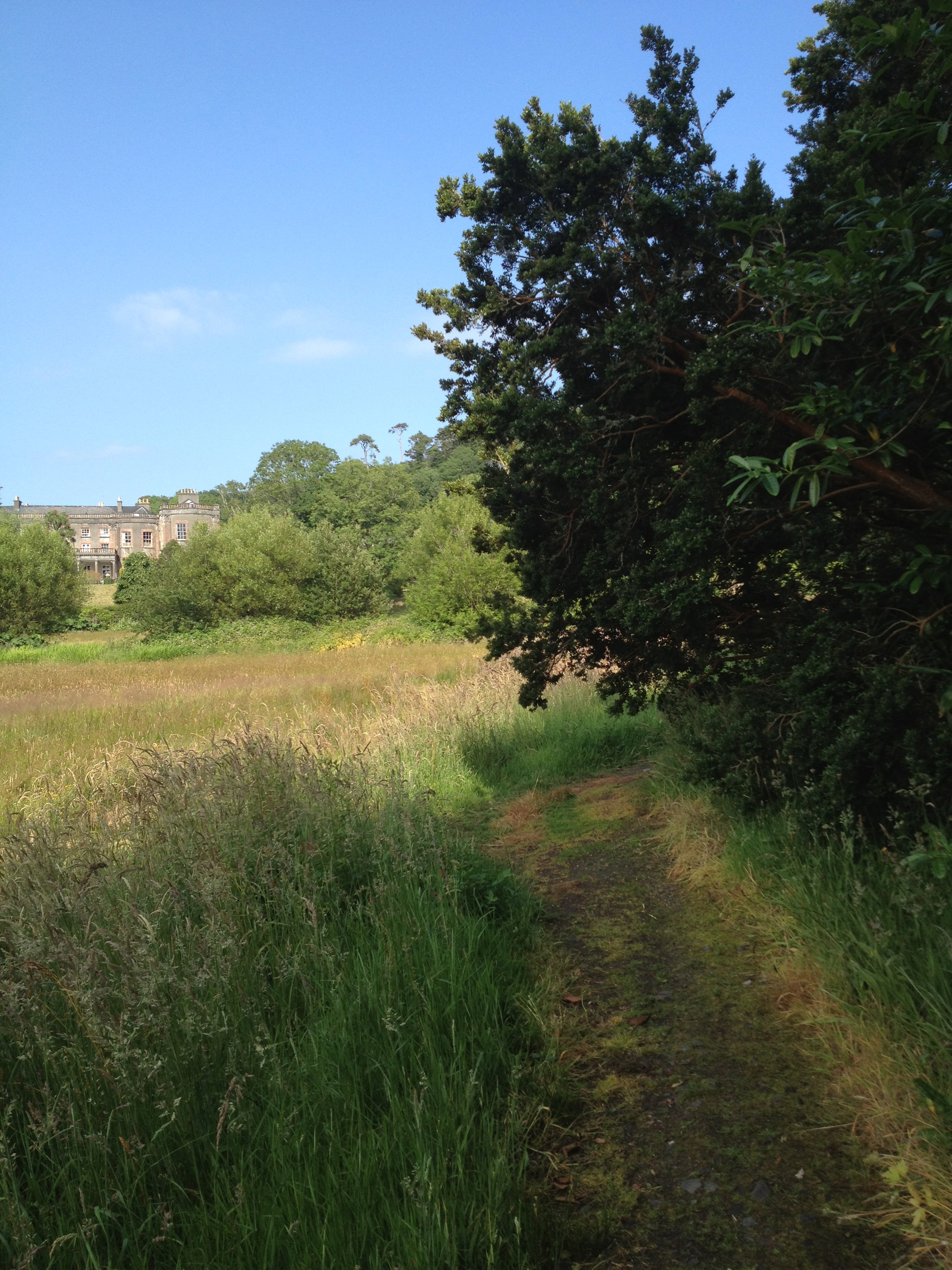
Ancient trees line this magical route
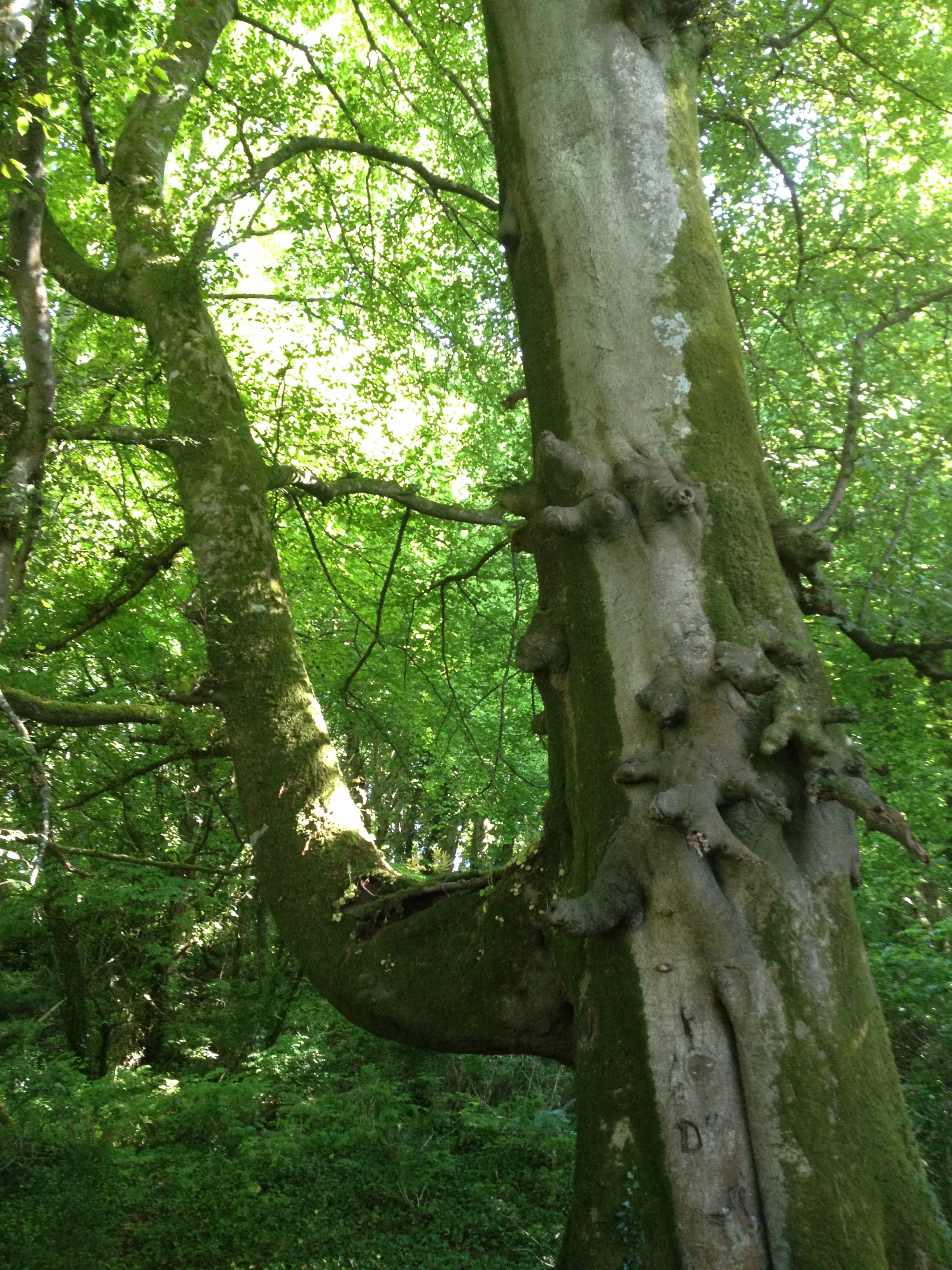
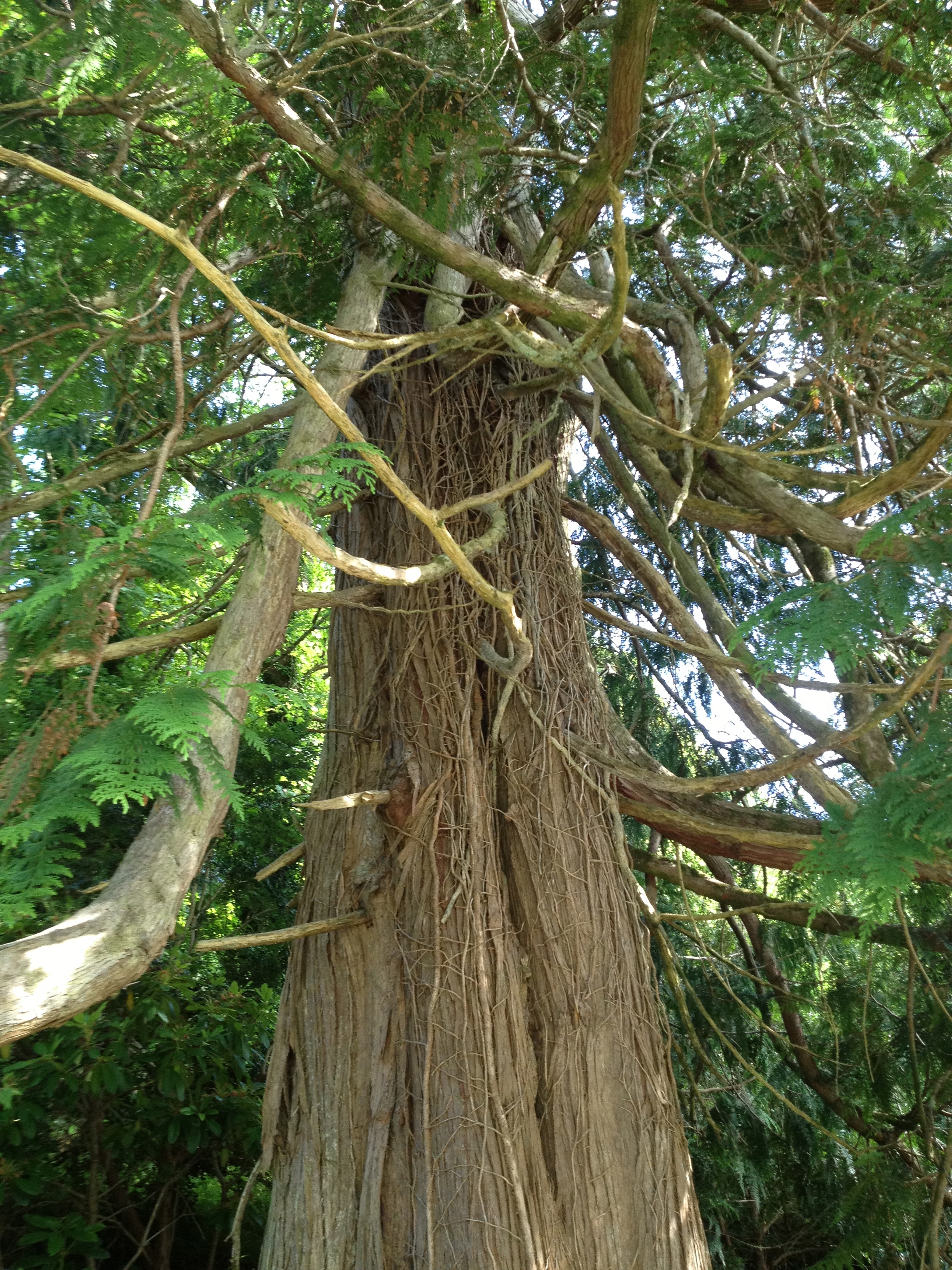
as I headed past the back of Bantry House, a Jacobean statement of oppressive English might-is-right.

I preferred its ruins, below.
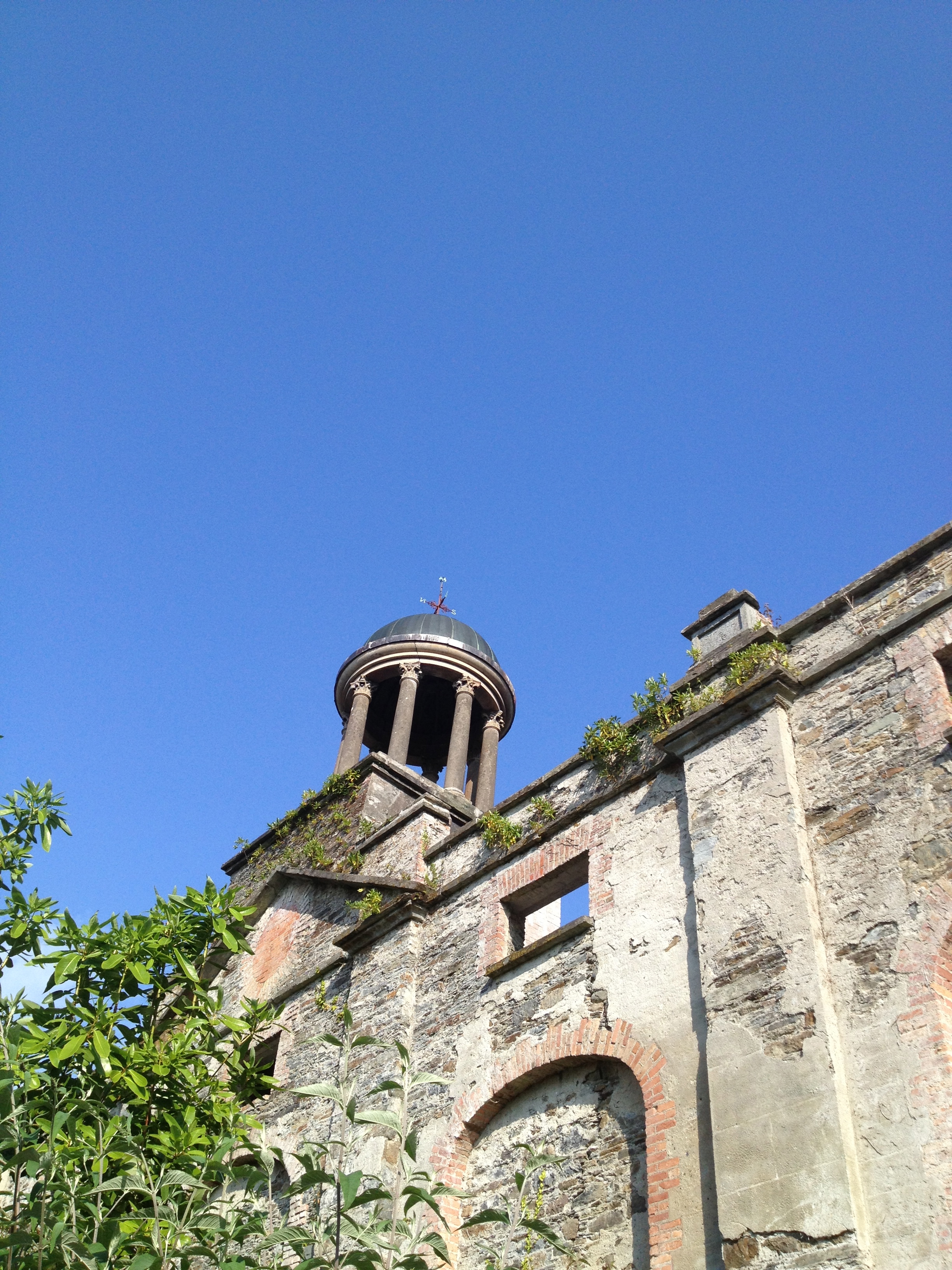
Or I could divert to the sea to a corner of the bay, beside the Abbey graveyard on a hill, where families swam every day in the Mediterranean-hot July.

And friendly women to look after my bag, and give me the local low-down.
Food-wise. For breakfast, soda bread. Real bread.
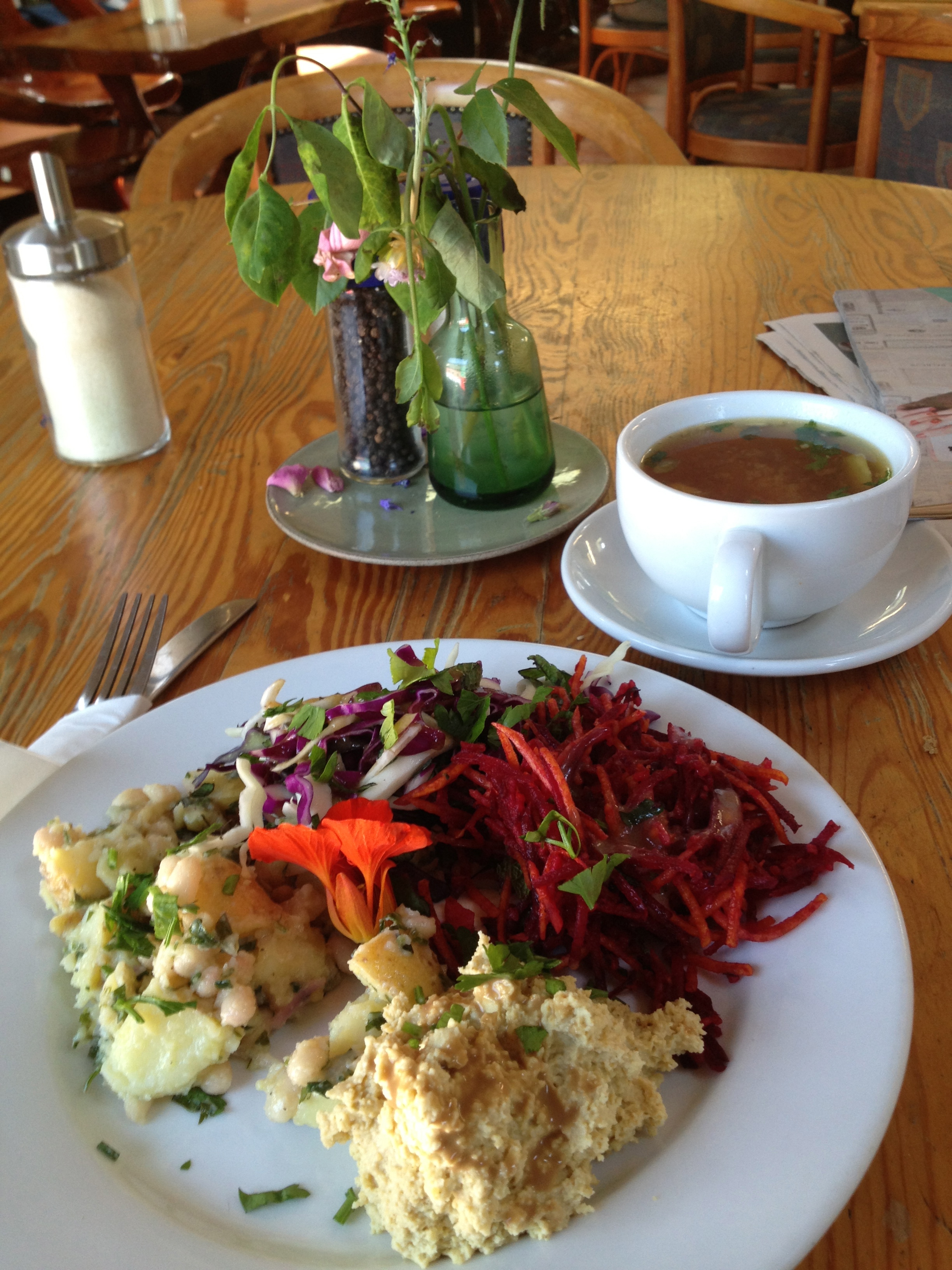
Raw carrot salad in Bantry House cafe. Delicatessen take-aways from The Stuffed Olive to eat on the steps of Bantry Library in brilliant sunshine.
And joy of joys, an organic cafe and store.
Organico is one of Europe’s pioneering organic shops. Founded in the 1990s selling wholefoods to hippies, it now caters for the increasingly mainstream demand for good food grown properly.
Organico Cafe also had the latest copy of one of my favourite eco-magazines, The Land
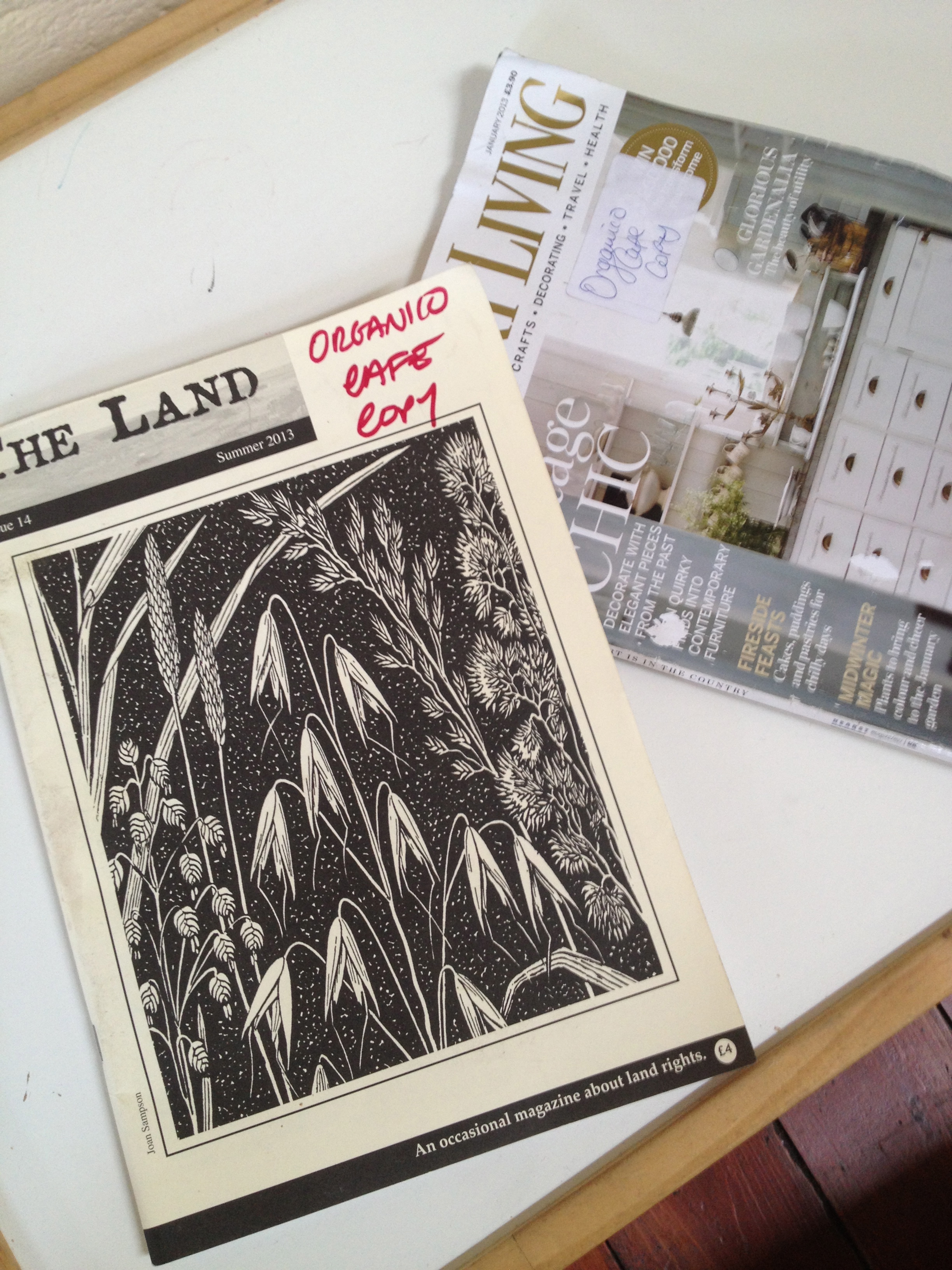
Tangent-alert as I praise The Land: a publication that believes social justice lies in access to the land, gives eye-opening history on Britain’s 500-year-old land-grabs, and reports on current efforts to access, and work the land, sustainably.
Back to food: fish and chips in the hot evening sun in Wolfe Tone Square. The Fish Kitchen looked nice but I never got there.
Festivals can be stressful if you suffer from FOMO (Fear Of Missing Out). A lifetime of this disease has taught me coping strategies. I lie down a lot and breathe, and accept I spend my whole life missing out. Here is the West Cork Literary festival programme, a long list of events I missed.
When I did venture out, things happened: I made good friends, had four strangely synchronistic conversations about getting writing help with mentoring from Fish Publishing and/or a Creative Writing MA, and caught some great speakers including:
Executive director of Amnesty International in Ireland, Colm O’Gorman, and the author of Beyond Belief – his story of sexual abuse by a priest, how he successfully sued the Roman Catholic Church, thus making way for fellow survivors to break their silence.
Colm O’Gorman was joined by a young man transitioning from the female gender he was born into, whose mum spoke from the audience, fierce with love for her son, causing some audience members to sniffle, so moving it was.
I also went to the best talk-ever on oceans ever by marine conservation biologist, Professor Callum Roberts. Clear, articulate and accessible speaker. Get his book, The Unnatural History of the Sea.
Callum featured in the powerful film on overfishing, The End of The Line, with eloquent descriptions of the destruction wreaked by the fish’s most efficient predator (us). Memorably, Callum had said: “The amount of fishing power we have at our command far outweighs our ability to control ourselves.” Talking about bottom-trawlers which dredge the sea-bed: “the signs of destruction brought up on deck by the trawl would make an angel weep.”
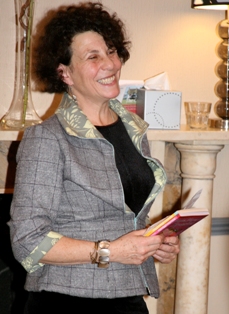
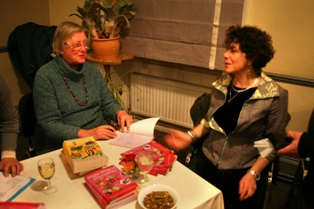
The high-point was Wednesday and holding a copy of the 2013 Fish Anthology in my hands. Thank you, Fish Publishing (thought-up by then-fisherman now publisher, Clem Cairns, hence its name).
It was a mixed emotional time because my winning memoir was about my late husband, the author Adrian Reid. He died 27 years ago, but love is not linear, and loss does not obey the passage of time.
On Friday, a sell-out talk by former president Mary Robinson – what a woman! I rose spontaneously with the massive audience to give a standing ovation. Yes, she has privilege, but she is on the side of the angels, as far as I am concerned – including raising awareness of climate change. Mary Robinson said: Ireland must follow Scotland, and create more renewable energy – wind, solar, and especially tidal.
In 1971, she told us, she campaigned for the legalisation of condoms, and was reviled by press and clergy. Archbishop McQuaid called her a “curse upon the country“. Mary Robinson said: Nothing has been as bad as that experience. (Not exact quote as audience was asked not to use mobiles and I use mine for taking notes).
The interviewer was journalist Alison O’Connor – acute, sober, intelligent. More, please.
Then on Saturday (after the ferry ride to Whiddy Island and poetry) a talk by Jane Murray Flutter on her late mother, the author Rumer Godden whose books I read and re-read as a child.
I always meant to write to Rumer Godden and thank her for writing the book for adults, The Peacock Spring. Her compassion for a teenager’s unplanned pregnancy helped me when I was expecting my first-born – then, in late 1970s, I was “unmarried” and my child was “illegitimate”.
I do not take feminism – or indeed any respect for human dignity – lightly. “The price of freedom is eternal vigilance”, a quote attributed to Thomas Jefferson.
My Bantry week took place against the backdrop of the Irish government debating whether women whose lives are at risk should be allowed a legal abortion.
No one wants an abortion. I know from my own experience it can be devastating. But surely, this must make it more imperative to treat a woman who has an abortion with kindness.
Thankfully, the de facto practice (allowed but not legal) of abortion became law on Friday 12 July. Nevertheless women who cannot prove their lives are at risk will still travel to England to have abortions, and poor women will get into debt to do the same.
So many significant meetings.
Deirdre whom I met on the aeroplane from Bristol who drove me to Bantry even though she lives in Cork, taking me up-to-speed on Irish politics, giving me insights into a country’s painful past transmuting to healing; Bogusia, poet (thanks for quirky humour and pics!), and Debra, Core Process (Buddhist psychology and mindfulness-based) psychotherapist and life-skills mentor, who gave me a great swim in a deserted bay, a bed for the night (her bookcase had few books not on my Bristol bookcase) and drove me to Cork the next day. And Carole (Bristol connections), and her friend who told us about Alexander technique for swimming.
More memorable conversations: talking about abortion with an Irish farmer (he thanked me keeping my first-born), and a gentleman on the bus to Manch Bridge who explained how Ireland (unlike England) largely escaped invasion by the Romans, and the Anglo-Saxons, leading me to conclude: its Celtic roots more intact, maybe that’s why the church came down so hard on Ireland’s earthy spirit.
And to wind-up the roll-call: journalist, Paul O’Donahue, who MC-ed the open mike, a true encourager of writing (and author of this great line: “I long to be your kissed”) plus comic poet, Martin Daly who had the open mike audience in hilarity – and songwriter, Steve Millar…Gad the list continues.
Here is the last food I had in Ireland:
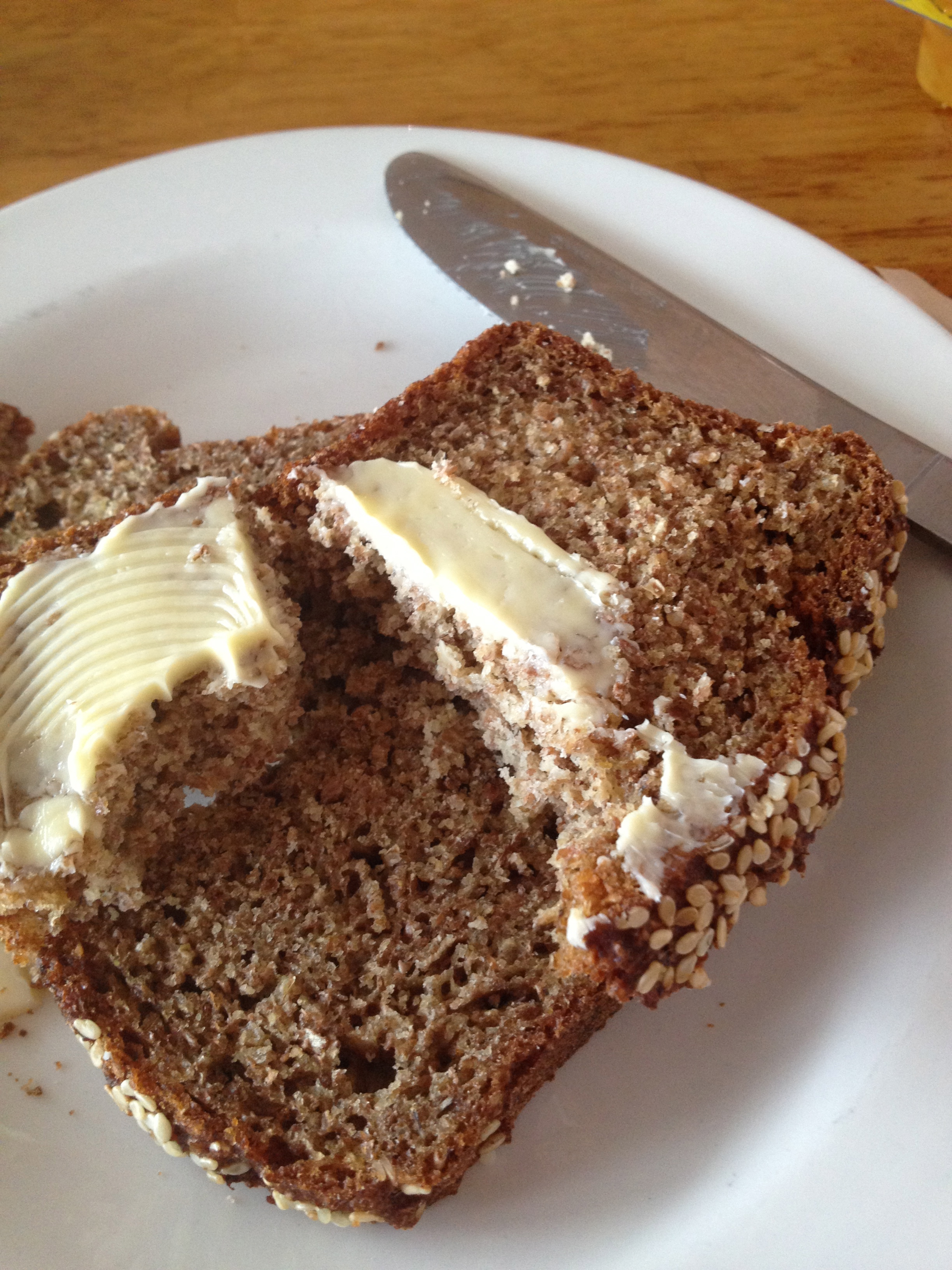
Irish soda bread at Cork airport, just like I’d had every morning in Bantry.
One of the best weeks of my life.


 Real Food Lover