Tag Archives: campaign

#Nojunk bean chocolate cake

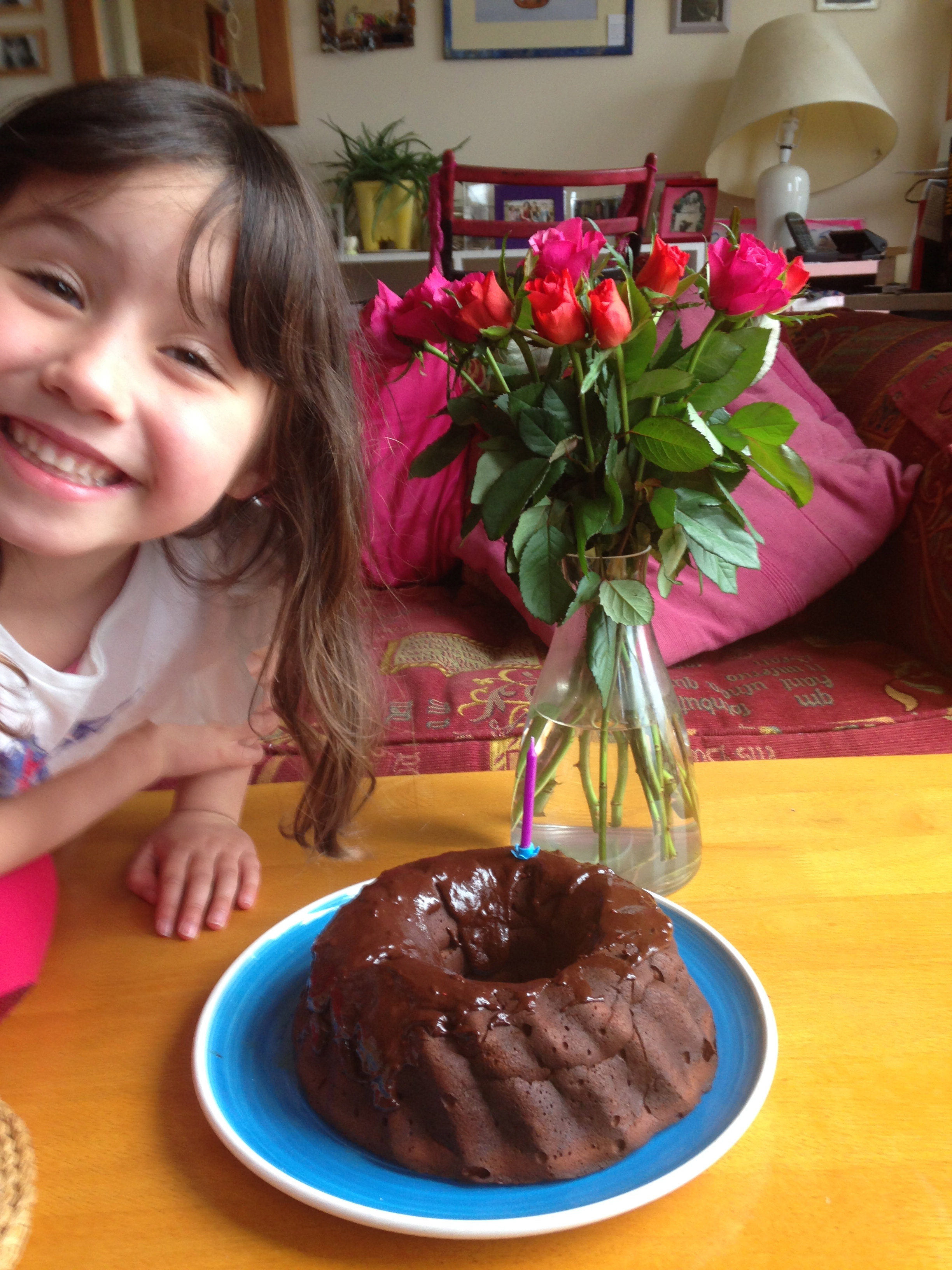
Happy grandchild with chocolate bean cake “I pledge to eat and feed my family only real ingredients I can recognise or spell.”

Last week, I signed the Organix #nojunk pledge because children need real food – not additives, fillers or artificial processes that produce profits for food manufacturers yet ill health for our children.

Is this right? NO!

Last week’s blog was about Organix, its pioneering ethos and why organic standards protect our children’s healthy by banning the nasties.

I promised a #nojunk cake and here it is.
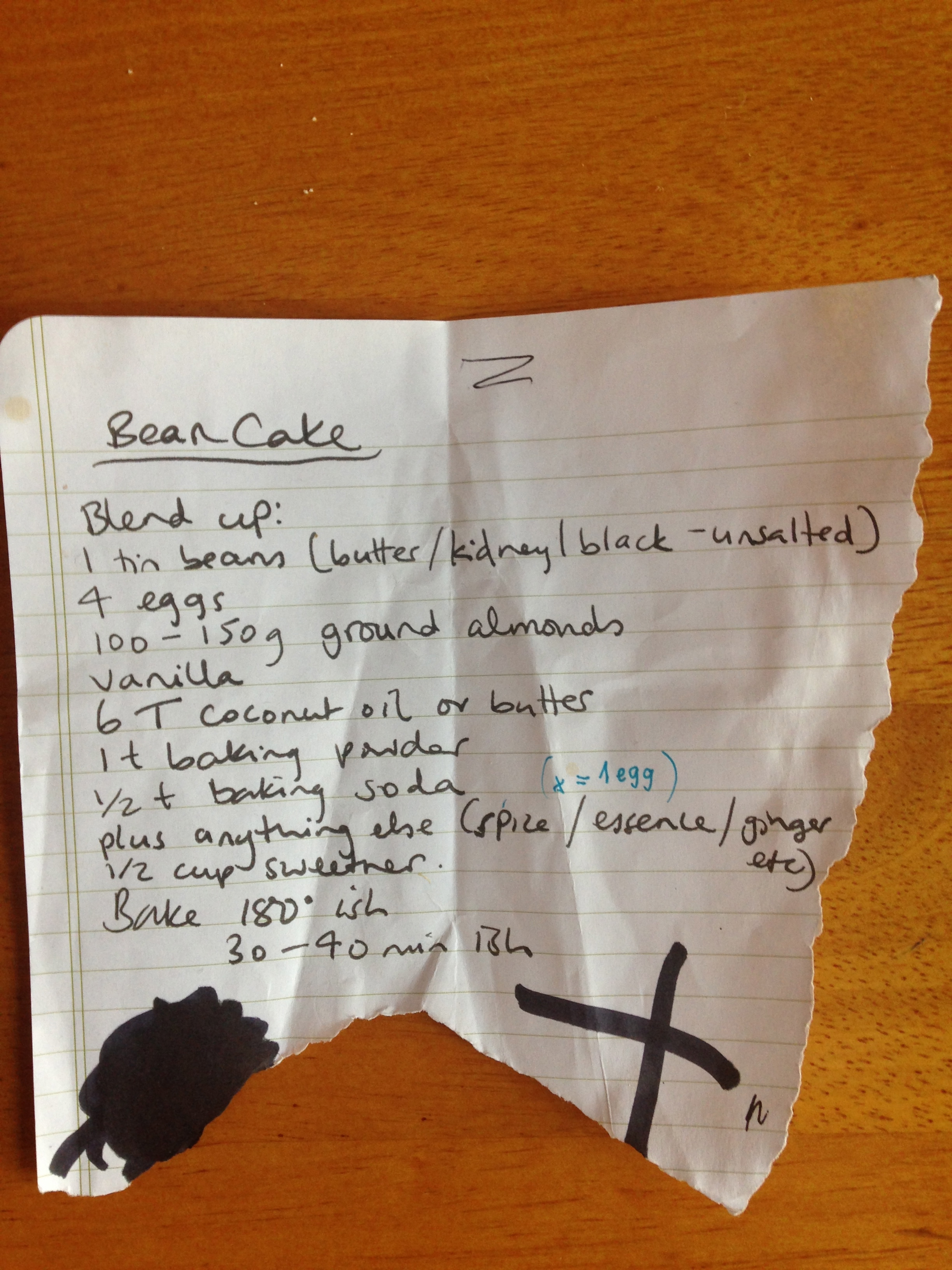
Hand-written recipe for Bean Cake

The recipe is thanks to Olea’s mum. Olea and my granddaughter Tayda are schoolchums. After I had contributed a wheat-free raw date and lemon cake to my granddaughter’s 5th birthday party, Olea’s mum wrote out there-and-then a healthy wheat-free recipe (see pic) using…beans.

I am a big fan of beans thanks to The Bean Book by Rose Elliot, my cooking bible when my own children were little in the 1980s.

Healthy beans

Beans are seeds, a plant’s future offspring. They spill on the soil where they wait for the right conditions to germinate. Their food reserves support this process and is also good for us when we eat them. Packed with protein, vitamins and minerals, beans are nutritional powerhouses.

Big yet compact, their plentiful food stores are low-fat and high-energy. They quieten sugar-levels because of their high-fibre – the soluble sort that gently coats the gut and is slow-acting – and have high-levels of cancer-busting antioxidants. (Above from my intro on beans in Make More of Peas and Beans).

Olea’s mum’s #nojunk bean cake
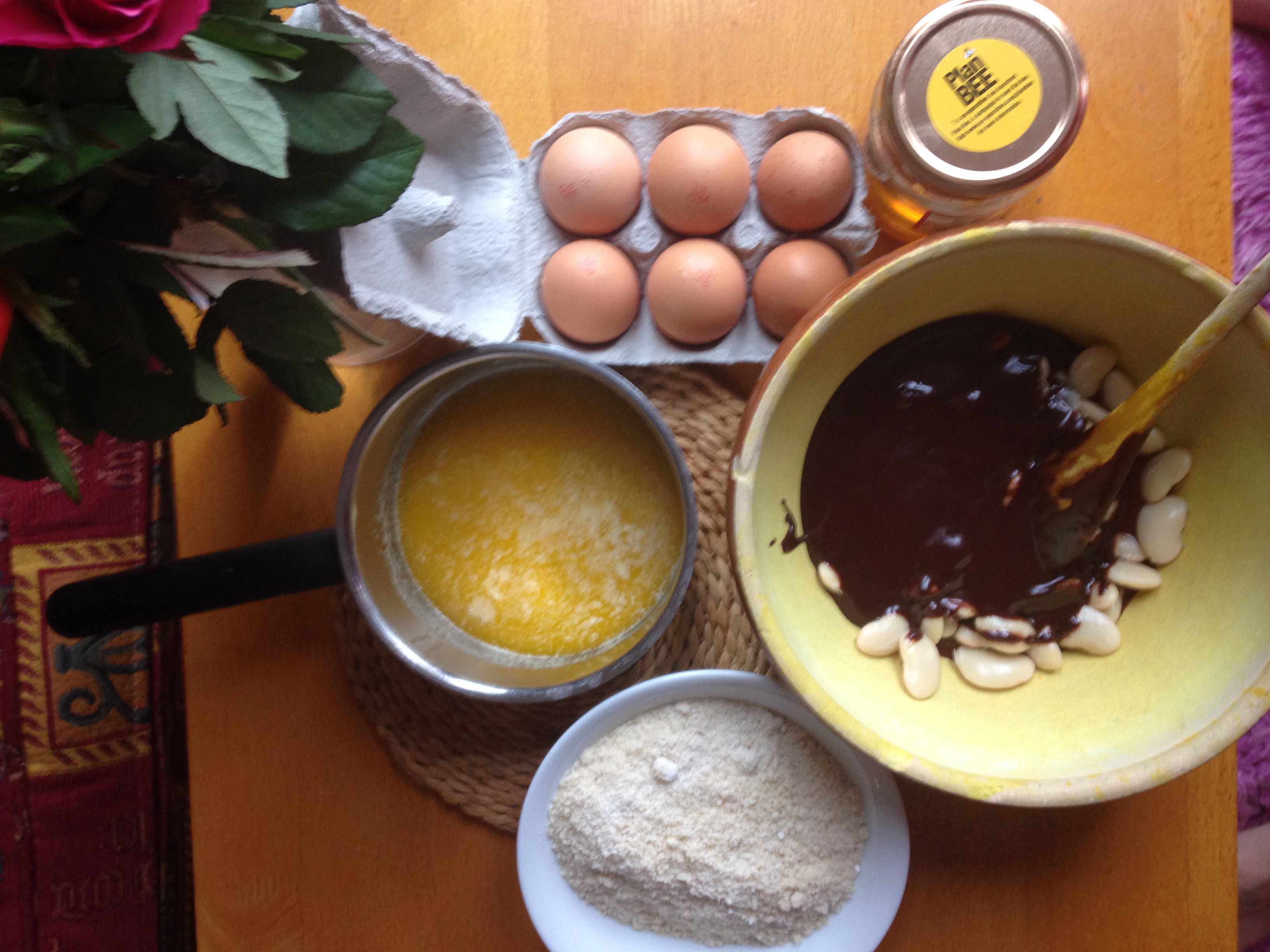
Raw ingredients for bean cake, eggs, melted butter, beans and melted chocolate, ground almonds, pot of honey

The cast assembled (clockwise from top): eggs, pot of honey, melted chocolate over a drained tin of butter beans, ground almonds with baking powder and melted butter.

Blend up:

  • 1 tin of cooked beans (butter/kidney/black – unsalted, drained)
  • 4 eggs
  • 100 – 150g ground almonds
  • 6 tablespoons of coconut oil or (melted) butter
  • 1 teaspoon baking powder
  • 1/2 teaspoon baking soda plus natural flavouring (spice, essence, ginger, vanilla etc)
  • 1/2 cup sweetener

Lightly grease baking tin. Bake 180° 30 – 40 mins-ish.  

I omitted the 1/2 tsp of baking powder, using instead an extra egg (5 eggs in total). I used organic eggs and butter for extra nutritional value (and guaranteed high animal welfare standards).  As sweetener, I used half a jar of honey for low-glycemic slow release sweetness (no one noticed honey taste at all).

For flavouring, I used a 150g bar of Green & Black’s organic dark chocolate, melted in a pan over another pan of boiling water, and blended into the cake mix. I also dribbled melted Green & Black’s chocolate on the cooled cake.
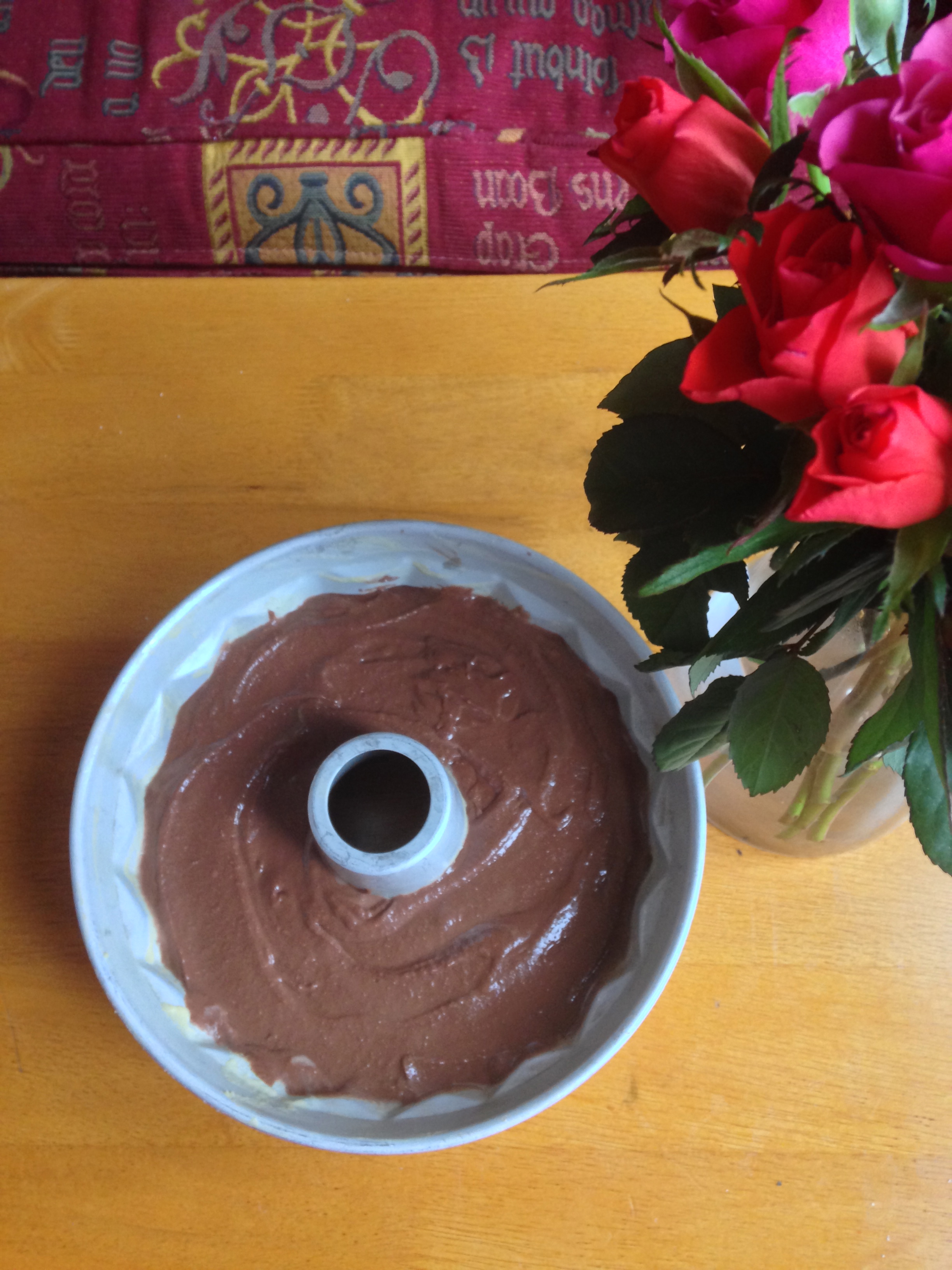
Cake mixture in fluted tin belonging to my grandma

I blended all the ingredients together with my trusty £20 hand-blender and poured the cake mixture into a fluted tin that once belonged to my grandmother. (When my mother gave me her cake tins recently, she said: “It feels like the royal abdication.”).


I served the cake with Biona organic sour cherries from a jar for the adults.
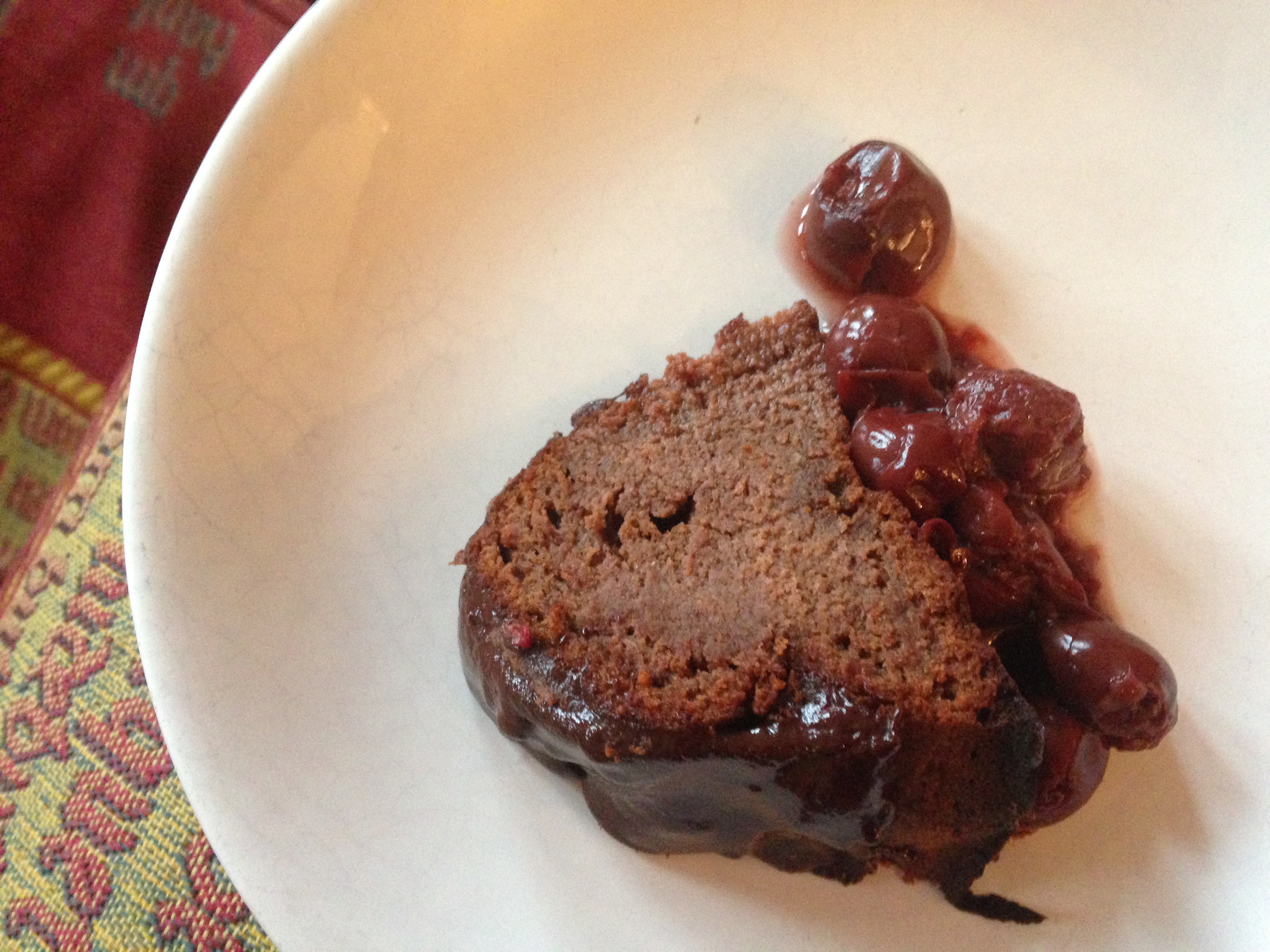
Slice of chocolate bean cake with unsweetcherries from a  jar


Everyone who tasted the cake pronounced it a success.

And no one guessed the mystery ingredient was healthy wholefood beans! Happy child sitting on low table eating healthy bean cakeTwo-year old enjoying my choco bean cake


 Organix #NoJunk Challenge badge

And….Join the #NoJunk Challenge!

Hey, I have just entered this blog post in the Organix #NoJunk Challenge Blog Hop…fingers crossed!
Reclaim real food with Organix #nojunk campaign

Happy grandchild with chocolate bean cake

I wish Organix had been around in the 1980s when my children were little. 

Organix produces healthy food for children so it is a godsend. Because it is certified organic, the junk is already excluded.

I love a good ban. Here is a small example of the junk which has always been banned from organic standards. 

  • Hydrogenated fats 
  • All colourings whether or not natural (except annatto)
  • All artificial flavourings.

You will never find the above in organic food because their standards are based on the Precautionary Principle: why take an unnecessary risk?

And what an unnecessary risk.

Hydrogenated fats or trans fats are industrially produced. A cheap filler, they prolong shelf life and make a fake cake look cake-like. They are linked to the UK’s obesity crisis. Child obesity is a huge health risk and is NOT FAIR to kids.

Artificial flavourings and colourings mask the yuk taste of the junk, and are linked to hyper-activity and allergies. Like trans fats, these additives are a cheap alternative to real ingredients, and a health risk. There is currently no requirement to reveal their exact quantity in food.

I love Organix’s latest campaign.

“I pledge to eat and feed my family only real ingredients I can recognise or spell.

I signed the pledge. I am sick of food ingredients that only a chemist can understand. I do not want food technology – I want REAL FOOD!

Organix was founded in 1992 by Lizzie Vann. After a childhood rife with asthma and eczema, she learned as an adult about the link between food and health (cut out those nasty additives for a start!).

As well as making tasty organic food for children, Organix also educates carers about how to make real food, and campaigns for nutritious food in hospitals, schools and nurseries. 

Awarded an MBE in 2000 for services to children’s food, Lizzie Vann was also a founding member of Food for Life, the multi-charity programme transforming school meals one meal at a time.

Food for Life’s manageable targets: 70% unprocessed, 50% local and 30% organic.

Lizzie Vann says: “A growing infant is not a miniature version of an adult. Their key body systems…are in a state of fast development for most of their early childhood. During this dynamic time, it is essential that the environment in which they grow is free of toxins, and the foods they are fed are pure and offer quality nutrition.”

If I were emperor for the day, I would command the food industry to stop being reckless with our children’s health.

I would ban the use of cheap, empty, risky, filler ingredients which make huge profits for manufacturers but are ruining our children’s health. 

I would decree food manufacturing magnates be force-fed the junk they peddle to children. From henceforth, the only food they would be allowed to sell would be stacked with nutritious goodness, with no toxic nasties. 

Please do sign the No Junk pledge.

PS The pic at the start of the blog is of my granddaughter and a healthy chocolate cake…recipe next week!

Marine Ecocide trial sets legal precedent

Ecocide is the destruction of nature, and the Ecocide Act seeks to bring those responsible for this destruction to account.

Drafted by barrister and campaigner, Polly Higgins, the Ecocide Act is not law. Not yet.

Writing post-Rio, Polly Higgins says the Ecocide Act is “a fully-worked piece of legislation which is ready to be implemented. All we need do is mobilise people to say that this must happen.”

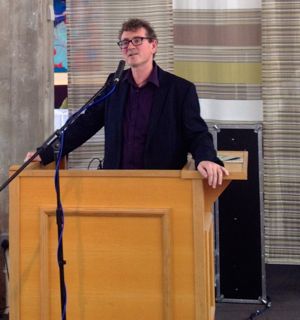
In this spirit, the Bristol Law School organised the Marine Ecocide Trial in the presence of Polly Higgins (seated in pic below).

It was cool to meet Polly Higgins – we chatted (as one does!) about vested interests lobbying politicians. Polly Higgins said, worryingly, political lobbying is regulated by voluntary guidelines only, and only since last year.

Now to declare my vested interests: Charles Redfern, the MD and founder of Fish4Ever, the world’s first sustainable canned fish brand, is one of my clients. I only promote causes and companies I believe in. My involvement in the Marine Ecocide Trial was passionate and, mostly, voluntary (as is writing this blog).

The Marine Ecocide trial took place on the first floor of Bordeaux Quay restaurant on 15 June 2012 during Bristol’s Big Green week.

Real barristers cross-examined expert witnesses in front of judge and jury as if the Ecocide Act were law.

Although not a “real” trial, the Marine Ecocide trial is nonetheless of huge relevance to future trials. As Bristol Law School principal lecturer in law and organiser, Benjamin Pontin, says:

“Documentation and arguments used at this trial will be used as legal precedents in future ecocide trials.”

The Bristol Law School is soon to launch a website dedicated to the Marine Ecocide Trial – watch this space.

The previous Ecocide trial at the Supreme Court – which found Tar Sands bosses guilty of ecocide – had actors as expert witnesses. In contrast, the Marine Ecocide trial used real expert witnesses.

In the Bristol trial, the UK Secretary of State for the Environment, Caroline Spelman, was charged for implementing policies that “are causing damage to and destruction of UK fishing ecosystems…”

The government pleaded not guilty and did not appear. Instead Graham Watson the Liberal Democrat Member of the European Parliament  appeared as a defence witness. So did Jeremy Percy, the chief executive of the Under Tens Fishermen’s Association.

The defence focused on showing that Caroline Spelman was not in control of UK fisheries policy, because it was devolved nations and the EU also being responsible.

The Walrus and the Carpenter

The words of Lewis Carroll’s poem, about the Walrus gobbling up the oysters, came to mind as I listened to the so-called concerns of the defence:

‘”I weep for you,” the Walrus said. “I deeply sympathise”.

With sobs and tears, he sorted out those of the largest size, holding his pocket handkerchief before his streaming eyes. “”

Marine Ecocide prosecution

Jonathon Porritt appeared as an expert witness for the prosecution, swearing his oath on Gaia. He talked about the “systematic abuse of science” for political ends.

He also said that fish stocks don’t necessarily replenish once overfishing has been halted. In other words, overfishing can lead to extinction.

Another expert witness, was marine lawyer, Tom Appleby. When questioned by the prosecution about whether the UK government can legally hand out fish quotas, he said: “I do not believe Defra has this power to give out property rights.”

Dr Jean-Luc Solandt from the Marine Conservation Society gave the history of UK fishing and a factual but searing account of the damage done to the sea bed by scallop dredgers and beam trawlers.

Charles Redfern, MD and founder of Fish4Ever, the world’s first sustainable canned fish brand, was an expert witness for the prosecution.

He said that consumer awareness of the plight of the fish was a double-edged sword because now people care more about sustainability, it is possible for unauthenticated sustainability claims to be made.

Think how many times you see “Dolphin-friendly” on canned fish. Charles Redfern says you might as well label chocolate as “dolphin-friendly”; that is how meaningless the term is.

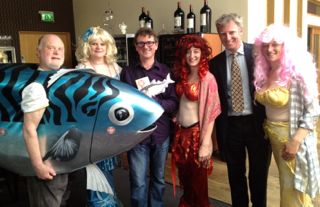
Time to present the Fish4Ever mermaids pretending to be sworn in


Imilia Lucas

Jane Victoria Powell

with costumes made by

fellow mermaid, Melanie Small.

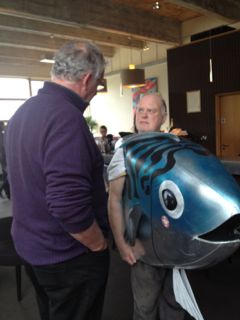
Here is the Greenpeace fish talking to fisherman, Jeremy Percy – please check out Greenpeace’s new campaign to be Be a Fisherman’s Friend.

(Yes, fishers do seem to be mostly male.).

Results of Marine Ecocide Trial

In response to the jury’s failure to deliver an unanimous verdict in the time available, the judge acquitted the Secretary of State and ordered the prosecution to pay court costs.

I am not MEANT to know how the jury of sixth-formers voted but I do know so I am now going to tell you.

The jury at first voted 7 to 5 in favour of finding the Secretary of State Caroline Spellman guilty of ecocide.

The jury went away to try to reach an unanimous verdict. It returned a verdict even closer to a guilty charge, voting 8 to 4 in favour of finding the Secretary of State guilty.

However, the jury could not deliberate further because, unlike a real trial, we only had a day, and the day was ending.

So the defence jumped in and asked for the Secretary of State to be acquitted and costs to be awarded to the prosecution, and, wrongly – in my biased pro-fish opinion – the judge agreed.

As I could not be a mermaid that day, here is a picture of me

on Bias Lane (in Devon). Apologies for the diversion.

Whatever the outcome of the trial, it raises awareness of the Eradicating Ecocide campaign to make ecocide an international crime.

As Polly Higgins wrote recently:

“Big ideas always start out in the margins before they spread into the mainstream. Earth law and in particular the law of Ecocide is just that – a big idea worth spreading.”