Tahini sauce 

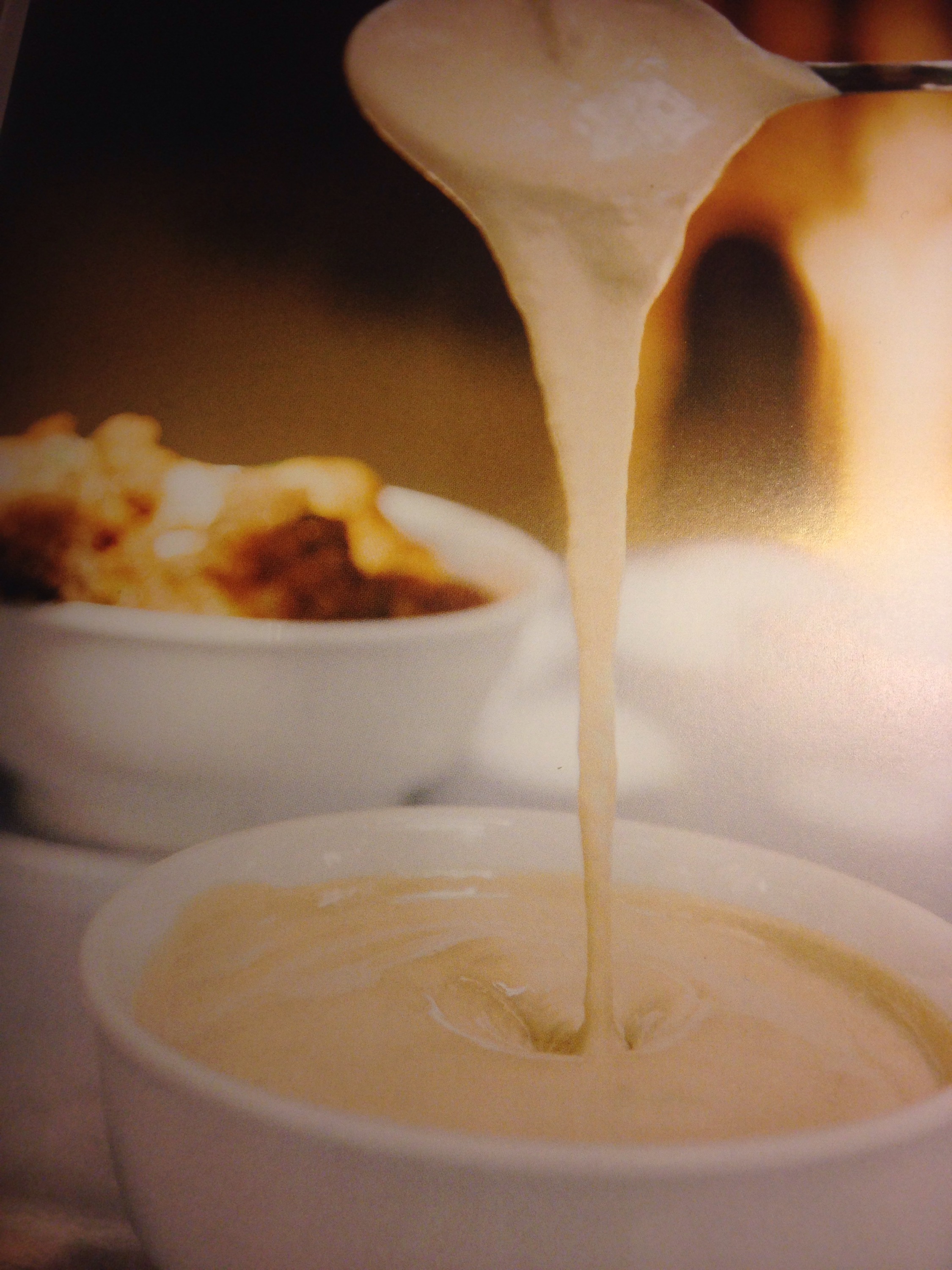
Sauce drips in a stream from a spoon

This image and recipe comes from a new book, Lebanese Home Cooking, by Kamal Mouzawak, the founder of Lebanon’s first farmers’ market.

Lebanese Home Cooking, from Quarto Eats, has all my favourite food words in its title. In the 1980s a friend took me to a Lebanese restaurant in Soho and I was knocked out. Every dish appealed in new, refreshing ways. Tahini, beans, yogurt, lemons, olive oil, garlic. These are now my favourite ingredients. Versatile and health-giving, they are always in the kitchen.

(My posts on making home-made yogurt and hummus both of which I eat almost daily).


Writing about the Lebanese market founded in 2004, The New York Times says that Souk El Tayeb (“market of good”): “reconciles Lebanon’s warring factions through their common love of their food.”

Kamal Mouzawak writes: Food is a window – “the best way to look into people’s lives.”

Make food, not war.

Kamal Mouzawak is full of practical wisdom and inspiring encouragement. The recipes are simple. He says souk food is easy and fast – how I like to cook.

Tahini sauce – Tarator 

Garlic 1 clove or more

240g tahini (sesame paste)

Juice of 3 lemons

1 tablespoon of olive oil.

Crush garlic with little salt, add to tahini in the bowl, and add the lemon juice. Tahini will thicken so continue stirring with a fork and add more lemon juice if needed. The mixture will be smooth. Season with salt to taste, blend in olive oil and serve. Good over dark leafy vegetables.

Fava bean stew – foul medamass

I love the addition of quartered lemons to this fava bean stew.

120g small brown beans

1 onion peeled halved

Garlic

Handful split yellow lentils

1 lemon plus juice of 2 lemons

80 ml olive oil

Ground cumin and salt.

Soak beans overnight. Drain. Add onion halves, garlic and lentils. Add water to cover by 2 fingers. Cook beans for several hours to be mushy. Add quartered lemons 20 minutes before the end. Take off heat and add lemon juice, olive oil, cumin and salt to taste.

Souk food – soul food.

PS On the subject of tahini sauce, I came across this amazing recipe by UK chef and co-owner of Wahaca, Thomasina: Tagliatelle with blue cheese, tahini and caramelised onions. Straining the yogurt and adding tahini makes this into a luxurious and creamy dish, yet it is light too. Comfort food – recommend!

The original recipe (serves 4-6). Here follows my mini-version:

Cook 900g sliced onions slowly (25 mins) in 4 teaspoons olive oil + 30g butter. Cook 450g pasta (I use buckwheat noodles), adding 300g frozen peas in the last three minutes of cooking. Drain pasta and peas but keep 250ml of the cooking water. Strain 450g of Greek natural yogurt. (I added the residual ‘yogurt water’ to the pasta cooking water because I hate waste.).

Put pasta in a bowl. Beat reserved pasta water into strained yogurt, and season. Then add to pasta, so it absorbs sauce for a few minutes. Add more of the cooking water gradually until you have a “silky pile of pasta”. Crumble 100g blue cheese over your luxurious pasta pile, and top with the caramelised onions.

Exterior of Byblos with yellow awning with lettering, Mezza of Lebanon

And, finally, a picture of Rafic’s (see comments) Lebanese restaurant in London. Mezza of Lebanon (1968 – 2004) was at 262 Kensington High Street, near Holland Park.


Easy fruit smoothie 

wine glass of creamy looking smoothie Ta da.

Start the day with a health-boosting refreshing fresh fruit drink.
You need an electric hand-blender to do the whizzing. I use the cheapest, least fancy (about £20) – my most valuable and versatile piece of kitchen technology.

Banana is the base – add fruit such as apple/pear/orange/berries.
Apple, orange and pear in the curve of banana's

Use the whole apple/pear: whizz it up, pips, peel and all. Don’t even peel the apple/pear (especially if organic).

Yes, take stones out of mango/peach/plum/apricot. (Blender blade can’t cope).
Yes, peel the orange.

But no need to de-pith orange. Whizz it up with pith, and pips.

Fruit in cut up piecesI learned this time-saving tip at a raw food workshop by Kira G Goldy. Kira is also a healer.

She encouraged me to write creatively: “You have all these voices inside that want to be heard.”

As a journalist, a challenge. But her words rung true. I focused on writing and two things have developed from my new intention.

I give courses to facilitate creative writing (and at the same time teach myself as it turns out).

And I have written a verbatim play based on interviews of people facing eviction in the hyper-regeneration of Brixton, and Lambeth council estates.

Verbatim is like journalism because it is entirely made of people’s quotes, like a documentary. The subject – how profit-driven thinking wrecks human lives – is a subject close to my campaigning heart.

The play is a collaboration with Changing Face Collective and director Lucy Curtis.

Where Will We Live? premieres at Southwark Playhouse on 25 – 28 November 2015.

I will need to keep my strength up. Time to make an easy smoothie!

Smoothie recipe for 1 – 2

Use organic fruit if possible. Why organic?

1 apple (cut-up with pips and peel ) 
1 orange (cut-up with pith and pips) 
1 banana (peeled and sliced)
Half a glass of water/milk (dairy/plant) to thin
A dollop of peanut butter and/or coconut oil and/or yogurt for protein and good fats. Or a handful of cashew nuts soaked overnight in water 
Optional: ground cinnamon/raw ginger
Blend with a hand-blender in a jug, pour and enjoy.

Ta da!

Blackberry jam is easy to make

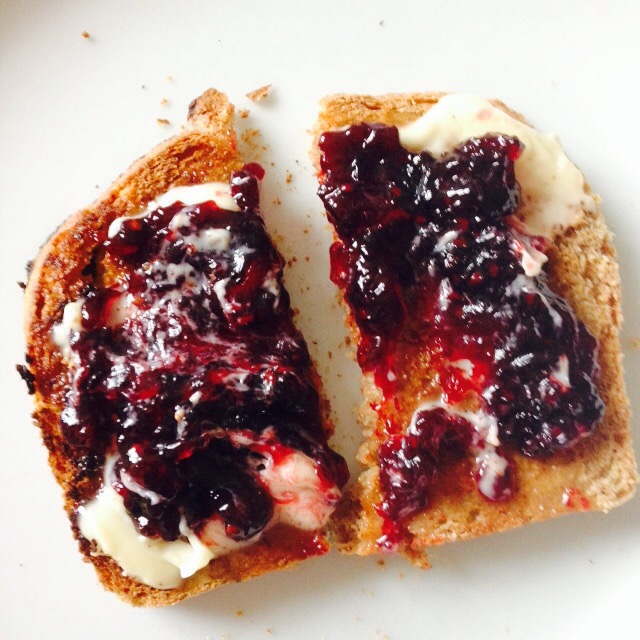
Toast with home made blackberry jam

If you have never made jam, blackberry jam is a good one to start with. It is quick (fruit is easy to prepare and jam sets quickly), and no specialist equipment is needed.
Blackberries on a Bristol allotment

Blackberries growing in hedgerows are plentiful now. Nice to know some things are in abundance… Obviously, check you are picking the right fruit. I don’t want you to pick the wrong berries.

Ingredients

Blackberries

Water

Juice of a lemon

Sugar

Amounts

I used 1 pound of blackberries with 1 pound of sugar and 3/4 pint of water

I used equal amounts of fruit and sugar. If you use more sugar (as most recipes suggest), you will indeed produce more jam. And maybe the jam will last longer because of the preserving quality of the sugar. But it will also be more sickly-sweet.

Personally, I prefer my version. Because I only produced a small amount, it will get scoffed quickly. And it is delicious: slightly tart, and very fruity.

(I will convert to metrics later! This blog is written in a hurry because I mistakenly published it via my WordPress App with images only! Mon dieu quel eejit…Now I am swiftly adding words.).

Method

Take the berries off the stem, give them a quick rinse and weigh them.

Put a small plate in the freezer or a cold place which will help to test if jam is set as I will explain later.

Put the blackberries in a saucepan with the water. Get it bubbling for a good 40 minutes until the water is reduced and fruit is soft.

Add the lemon juice and the sugar. Bubble and boil for ten minutes.

Take the jam off the heat while testing to see if it is set.

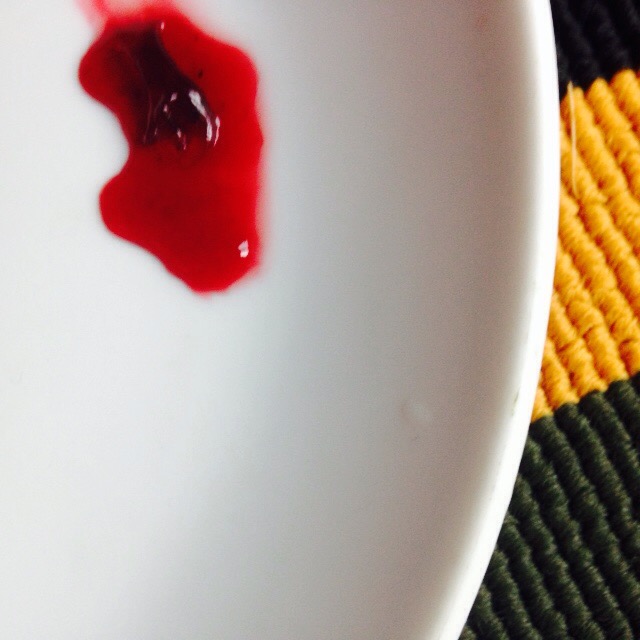
Blob of jam cooling on a plate

Test for a set by blobbing a bit of the runny jam on a very cold saucer or plate.

Prod the jam gently with a finger to see if it wrinkles. If it is set, it will wrinkle-up (oh yes, we love wrinkles) and not run in a dribble when you tip the plate.

If it is still dribbly, cook the jam for another five minutes (maybe more water needs to evaporate?) and test again.

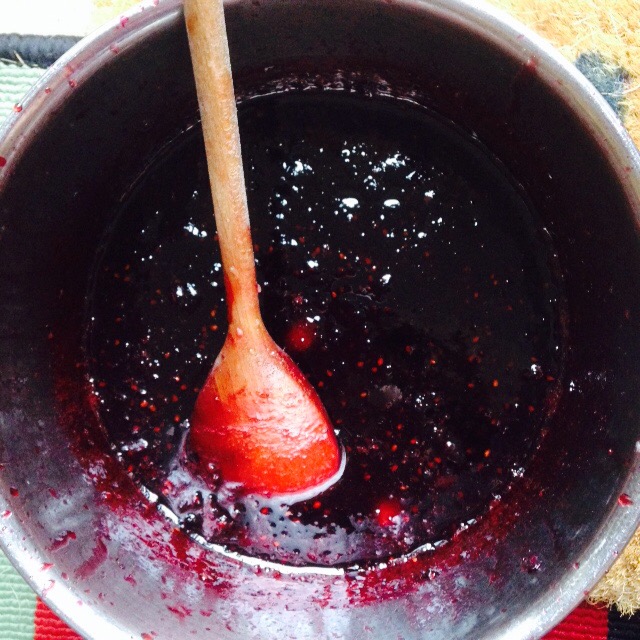
IMG_5946

This jam set after ten minutes just as the recipes said. It is so easy. Not like making marmalade which is a bit of a palaver.

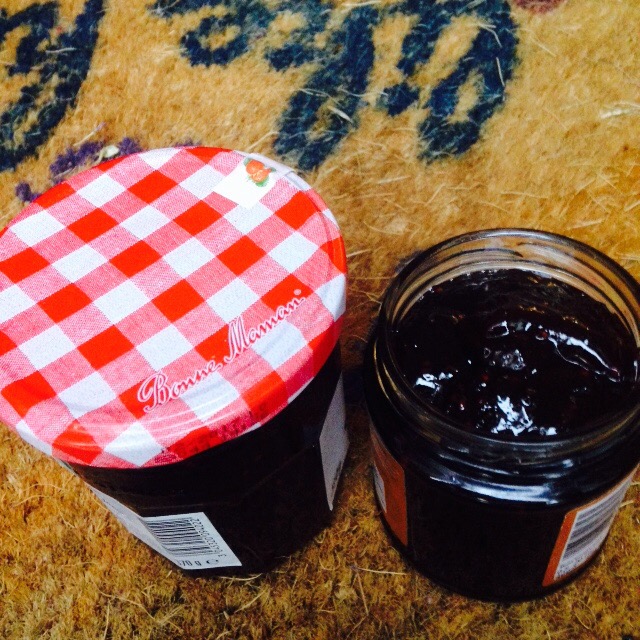
Here are two jars filled with my home-made jam.

Two pots of home made blackberry jam

Slightly smug rating = 10/10.

Making chicken soup from scratch

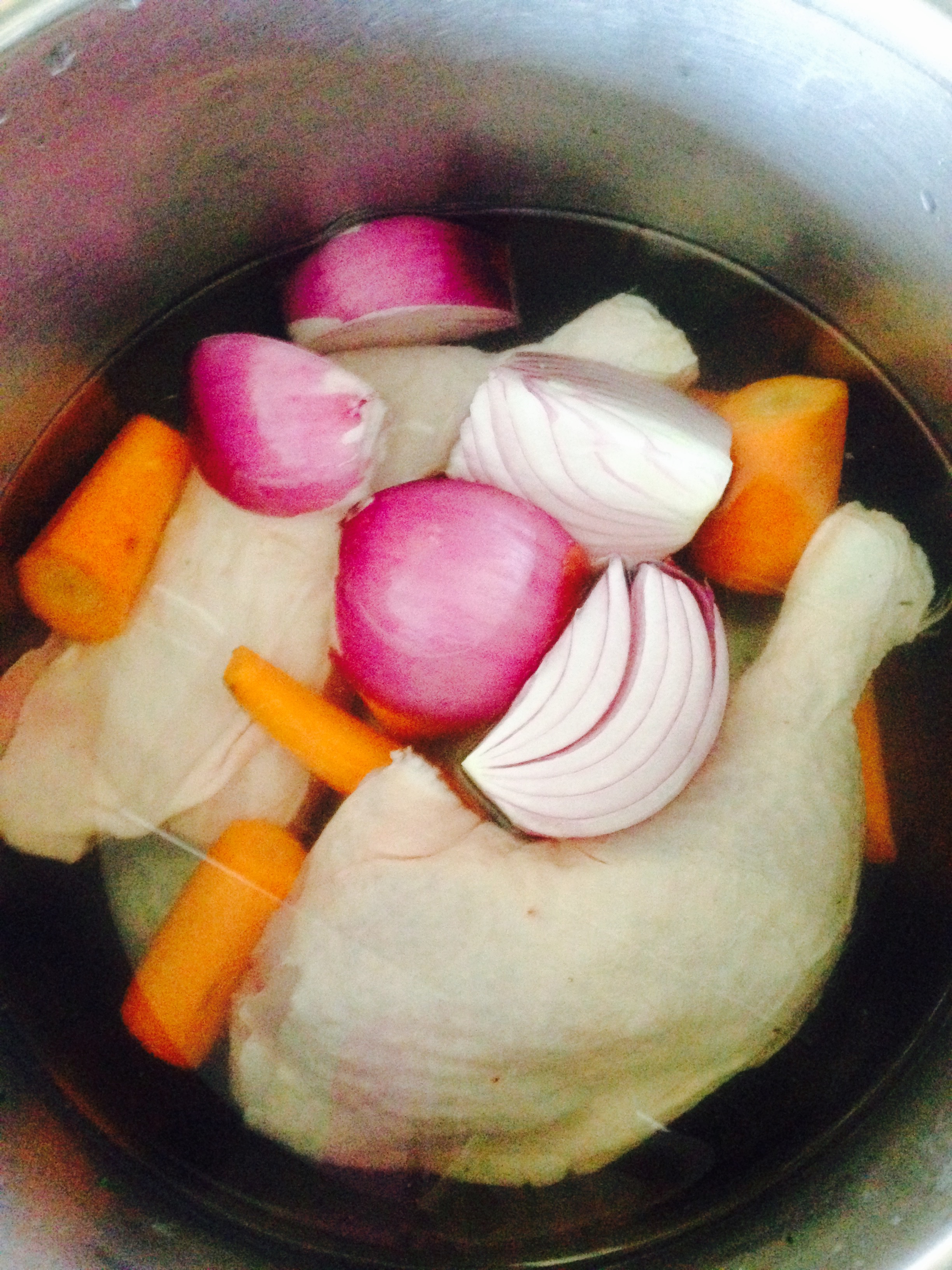
Raw high-welfare chicken and cut-up carrots and red onion covered with water in a panThe secret of chicken soup is to use raw chicken.

By all means, use a cooked chicken carcass to make stock but if you want to make healing chicken soup, start from scratch with raw chicken.

I used two legs from Abel and Cole high-welfare chickens.

Add a cut-up onion and carrots. Cover with water. If you use loads of water, it will dilute the soup. But just covering the chicken and veg with water will create the right concentrated amount.

Bring to the boil and simmer for about one and a half hours to two hours until the chicken is tender and falls away from the bone.

The next secret – imparted by my mother – is not to let the precious liquid boil away. So keep a lid on the pan. Season with salt and pepper to taste.

Strain to drink the healing soup – this article explains why chicken soup has healing properties.

The beautifully-tender chicken and vegetables will make another meal.

It is simple to make, and will bring strength.

My grandmother’s beetroot soup

Cup of purple coloured soup pictured from above against big pink flowers

Image: Michael Caplan

I ring my mother. She is 92.

“Do you use beef stock to make beetroot soup?” I ask.

“No,” Fay says, “we never used beef stock. This is how we did it,” said my mother. “This is my mother’s recipe.”

Sarah’s beetroot soup

Slice the beetroots.

Cover with water. Simmer for about half an hour until tender. 

Drain the sliced beetroot and keep the beetroot stock. 

(You don’t use the sliced beetroot for the soup. My mum says: use them in a salad with sour cream with sliced onions). 

Crack and Beat 2 whole eggs with the juice of one lemon.

Add eggs carefully – or they will curdle – to some of the warmed beetroot stock.  

Once the beaten eggs are incorporated into this small amount, tip it into the main soup.

Reheat carefully – very carefully – so the eggs don’t curdle. 

Add sour cream if desired.  

Thanks, mum.

The ingredients were organic (what my grandparents called “food“) for improved quality and taste.

The purple soup enabled nourishment to slip-in unsuspected via beetroot-sweet, lemony lightness.

My grandmother Sarah died when I was 16. She was warm, earthy and wise, with fierce opinions I did not always agree with. Born in 1899 in London, her parents were migrants from anti-semitic Tsarist Belarus and Lithuania. I think of her so much in my heart.

My mother says the older she gets, the more she thinks of her grandmother, Jesse, (Sarah’s mother). Jesse died when my mother was ten years old.  My mother says: “I talk to her every day. I call to her by her Yiddish name, Yeshki. She used to read the Yiddish translation of Shakespeare’s plays.”

I am showing my mum this blog on my phone

(I only learned that bit yesterday when reading out this blog to my mum – see pic above).

My mother repeats stories endlessly so we remember them. My mother’s recollection of her grandmother are imprinted on my DNA since childhood so I have absorbed Jess’s “live each day as if it were your last” philosophy as if it were my own.

My mum again:  “Jesse used to say: ‘I am not frightened of death.’ She would point to the window and say: ‘It’s as if I’m passing to the other side of that net curtain.'” 

So, eat beetroot soup, and enjoy this precious life!

Try organic food… or as your grandparents called it, food ...


Gut gastronomy beef broth

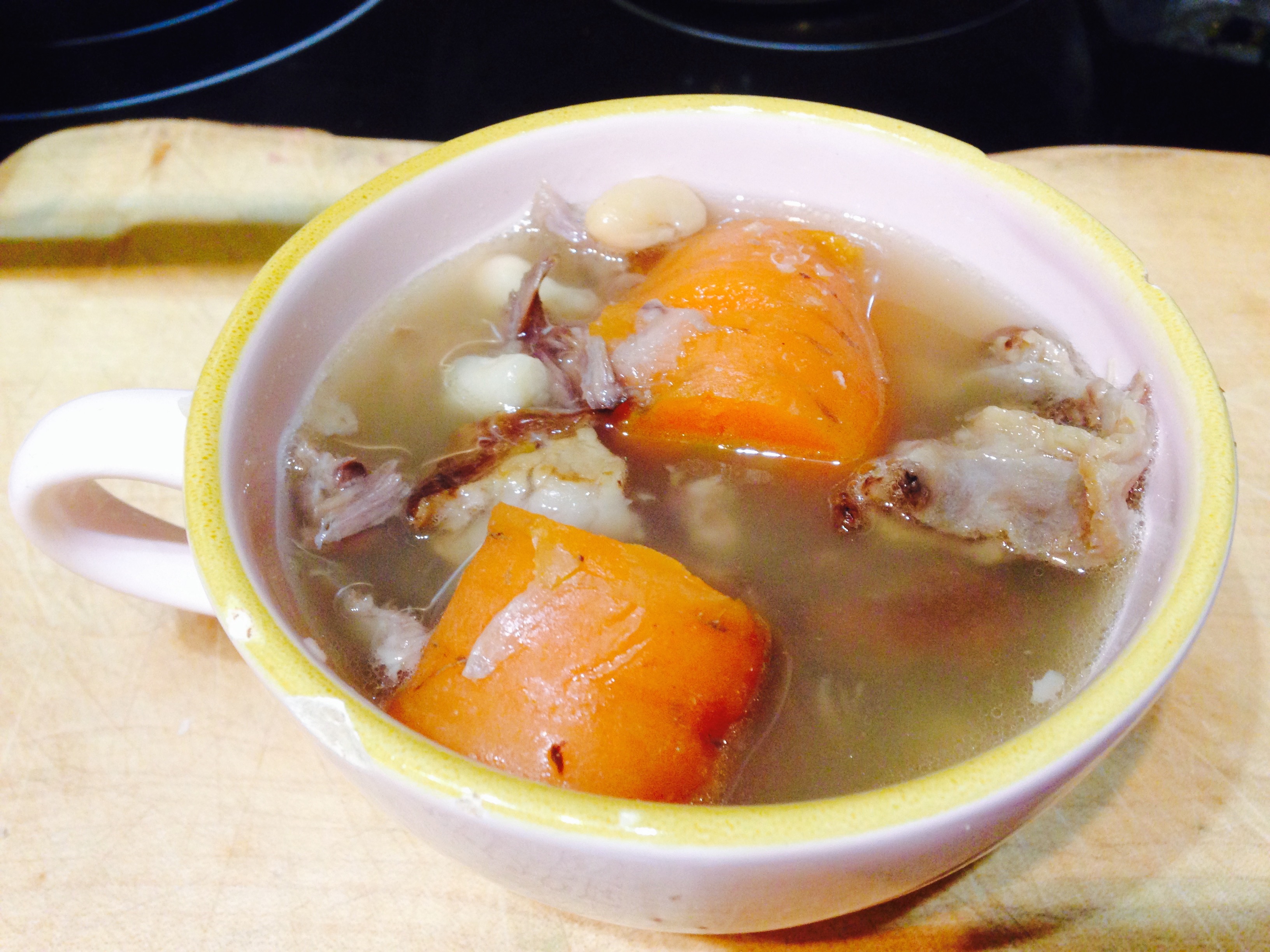
A bowl of beef broth

Beef broth soothes the digestion and produces easy-to-absorb minerals including calcium. Made with bones, it is a low-cost way of sustaining your health. Bones cost a few pounds.

(Apologies to vegetarians and vegans and please let us know your best tonics.)

“A good broth will resurrect the dead,”

– South American proverb. 

Read more about broth’s healing powers at the Weston Price Foundation and the way broth also delivers easy-to-absorb broken-down material from cartilage and tendons that might help arthritis and joint pain.

I bought the beef rib bones from Sheepdrove Organic Farm for £2.50 per kg. 

Why organic? Because I want to eat meat from an animal which has not been given routine antibiotics, which has chewed fresh grass in the fields as nature intended (not convenience-food grain that gives the beast a belly-ache), and can follow its natural animal behaviour. 

I used a recipe from Gut Gastronomy by nutritional therapist Vicky Edgson and Grayshott spa chef Adam Palmer based on the spa’s health regime. Published by Jacqui Small, this fine book with beautiful images by Lisa Linder is filled with highly nutritious recipes to help increase digestive health, and repair and nourish the body.  

The Gut Gastronomy recipe uses beef marrow bones. 

Here is the recipe (for four) slightly adapted.

Ingredients

3 kg (6lb 10 oz) beef marrow bones – ask the butcher to chop them into manageable chunks, about 3-5 cms (1-2 inches) pieces 

4 carrots, 3 large onions, 4 celery sticks (optional), roughly chopped

5 litres (8 3/4 pints/20 cups) of cold water
(I used my biggest pan, about 5 pints, and this made a lovely, concentrated broth)

2 bay leaves, 10 whole peppercorns

If you have some, add half bunch of thyme. 

I also added dried chilli for extra hotness. 

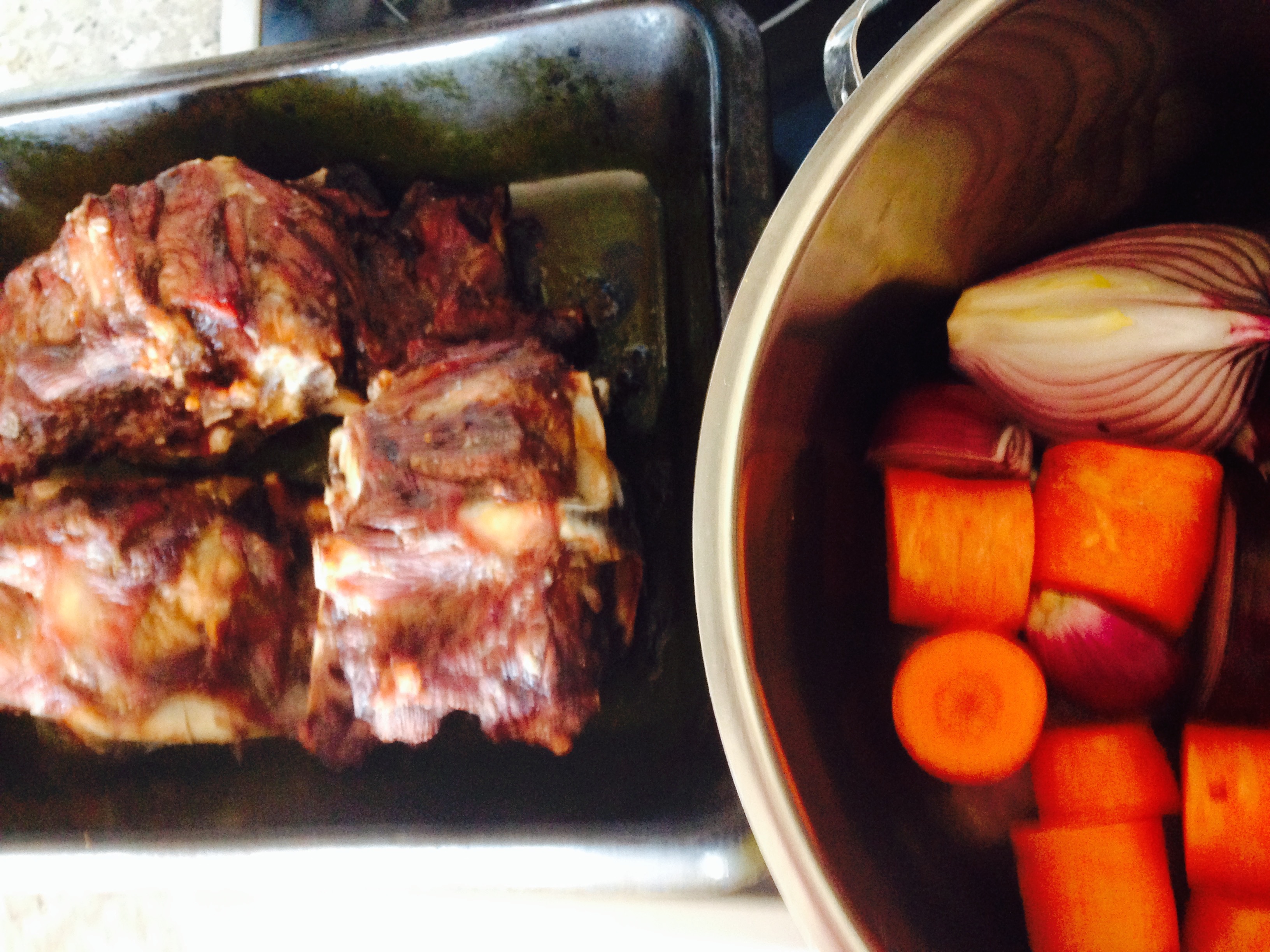
roasted bones and pan with carrots and onions

Method
Roast the cut bones in a large roasting dish for 30 – 40 minutes at Gas Mark 7. 

Drain 2 teaspoons of the fat from the bones into a large saucepan and sauté the veg.

(There was no fat from my rib bones so I omitted this stage and added the carrots and onions at the next stage, without frying them.)

Add the bay leaves, peppercorns (and dried chilli), sprigs of thyme and roasted bones and cover with 5 litres (8 3/4 pints/ 20 cups) of cold water. Skim any fat as you bring it to a simmer. Gently cook for 5 – 6 hours. 

Broth is served clear, strained of meat and vegetables. Strain to make consommé, and cool before freezing. I shredded the plentiful meat from the bones and made several servings of delicious broth with meat (see top pic). 

I swear I cured my poor inflamed gums thanks to this healing soup.

Fellow blogger, Annie Levy at Kitchen Counter Culture, suggested I used some of the broth for borscht, which I did, using my grandmother’s recipe.

And that is for the next blog post.

Update (January 2016): This recipe cured another bout of gum infection after two days of drinking 5 pints of the above broth (this time made with non-organic bones). It worked its magic.

Rhubarb Kimchi

I never know what to do with rhubarb (don’t like all the sweetness needed to make it palatable) so this is a welcome recipe from Annie Levy’s Kitchen Counter Culture blog.

Rhubarb grows plentifully now in the ‘hungry gap’ when the UK’s productivity of fresh produce is at its lowest.

Since Annie Levy introduced me to kimchi via a jar of plum kimchi sent by post, I make it regularly . This Korean condiment combines two fine attributes: zingy-taste and digestion-soother. Now with rhubarb, a third quality can be added: super-seasonal.

Rhubarb kimchi is the answer!

Kitchen-Counter-Culture's avatarKitchen Counter Culture

IMG_5619

La la la la la la la LA LAAAAAAAAAH.  La la la la la la la.  LA.  LA.  LAAAAAAHHHHHHH.

Sing along with me, the Rhubarb Kimchi Song.  As Plum Kimchi heralded autumn, Rhubarb Kimchi will greet the spring. La La lalalalalalahhhh.

I pulled some stalks from a perennial bed I’d made last year.  Everything’s come up again, which is satisfying for a not-great gardener like me.

IMG_5612

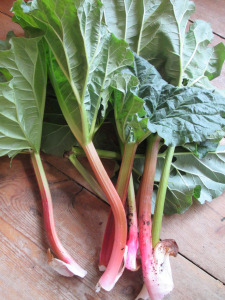
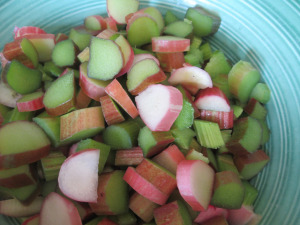
Removed the poisonous leaves, and sliced them.

IMG_5615 (1)

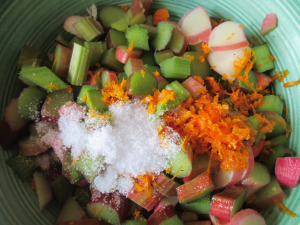
And added some sea salt, some orange zest, and juice of that orange.  And some spring onions.

IMG_5616

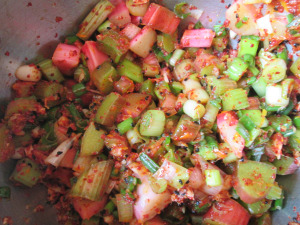
And massaged the mix with a paste of chilli powder, garlic, ginger, onion seeds (kalonji/ nigella), and a little sugar.

IMG_5618 (1)

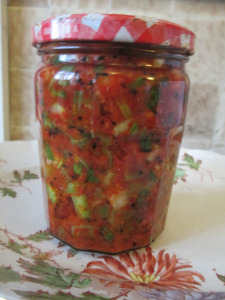
And smushed it down in a jar.  (The jar doesn’t need to be covered with a lid actually.  And I’ll keep it on a plate, because in the next few days the fluid is going to rise and fall.)

IMG_5626

Rhubarb Kimchi Recipe

Mix together:
12 oz/…

View original post 169 more words

Bristol Metrobus protest protecting trees and soil

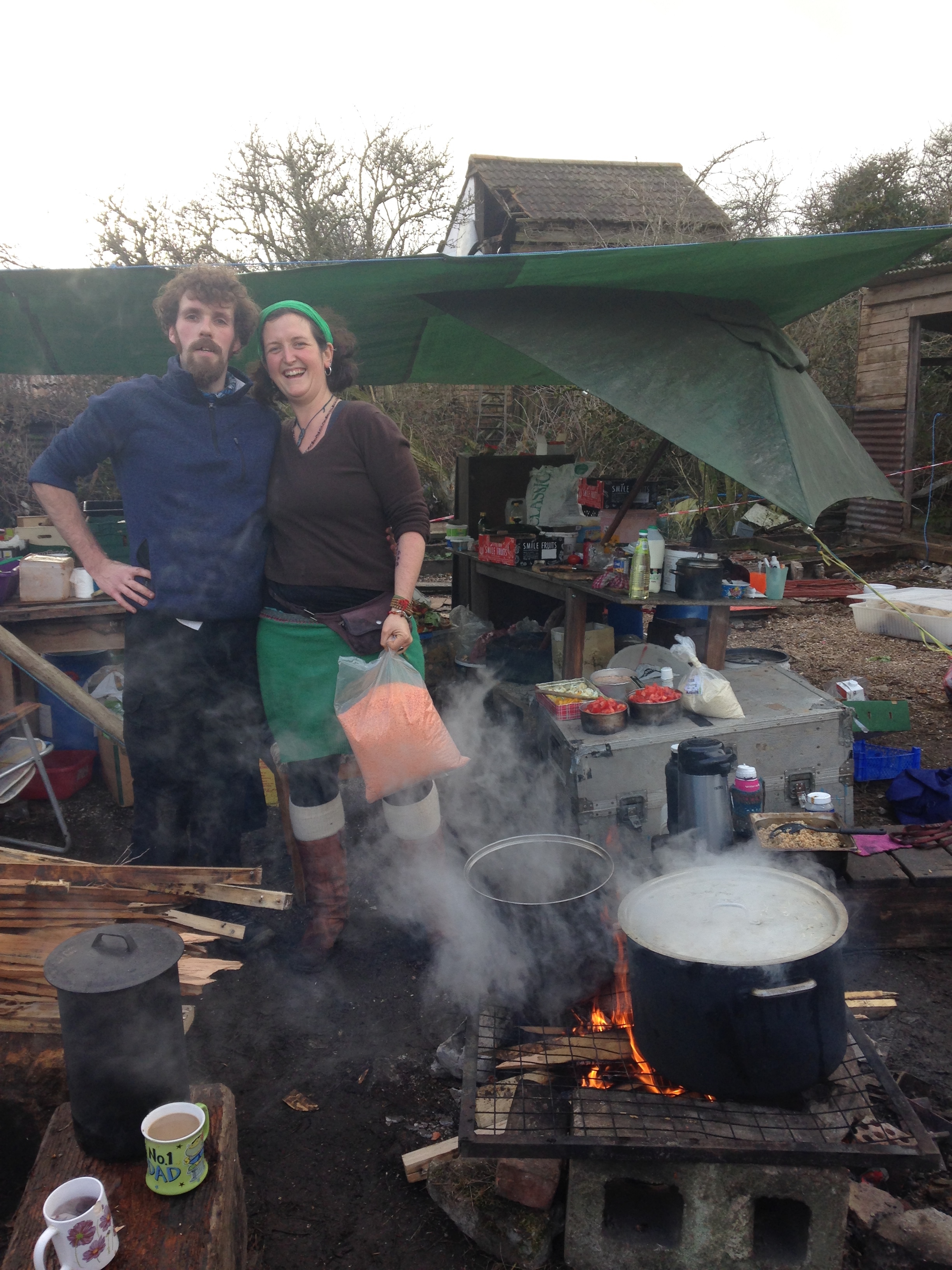
Makeshift field kitchen with two smiling cooks      

Instead of running away to join the circus, I would join a protest camp: outdoor places of learning and purpose, infused with community spirit and love of the land, they give me hope. 

I visited the Rising Up camp on Friday 13 February 2015.

The camp is protecting land and trees from a destructive and unnecessary road-and-bridge building scheme to create a bus route (Bristol needs more buses but not new roads).  

The soil at stake is part of the Blue Finger with prime agricultural soil. It is irreplaceable. Soil takes centuries to form yet can be lost in no time. 

Look at the timing: the destruction of these Bristol soils takes place in the year the United Nations has launched the International Year of Soils 2015 to alert the world to the destruction of a resource on which we depend for over 95% of our food. 

Look at the timing: The University of Sheffield has found UK’s soils are so degraded, there may only be enough for 100 more harvests, it warned last autumn.

Look at the timing: the destruction of Bristol’s soils takes place in the year that Bristol is European Green Capital 2015. 

In other words, one part of the system is aware of the importance of protecting our planet, while the other part of the system is intent on destroying it.

It is not only the trees and land of the allotments at Stapleton allotments and Feed Bristol that will suffer.

Here is the Metrobust 2015 calendar of city-wide destruction: metrobust-calendar-4

The Metrobus scheme received final planning approval on the 27 August 2014 from Bristol City Council planning committee, despite two years of protest. 

The following are worth reading: 

Court order for immediate possession

On Thursday 12 February 2015, Bristol City Council went to the High Court to evict the protesters and, surprise surprise, with the aid of top lawyers, Burges Salmon, (and supporters of Bristol Green Capital) won a court order. Above and below is a copy of the council’s possession order.

Court order for immediate possession

Court order for immediate possession delivered

A man (who gave me permission to take his photo but would not say where he was from) handed over the order on Friday 13 December 2015.  

Tree top camps Bristol

The tree top protestors hope to halt the felling of these irreplaceable trees.

Tree top camps Bristol Metrobus protest

Treetop protest Metrobus Bristol

Protected trees sign

The trees are protected – read the notice!

Bailliffs' steel fence and spotlights protest camp Metrobus Bristol

 At the edge of the protest camp, bailiffs set up flood lights last week which are kept on ALL NIGHT. 

Bailiffs' spotlight Metrobus Bristol

Which side of this steel fence would you rather be on?

Compost toilet Metrobus Bristol

Back in the protest camp, a beautiful village has sprung up including with a compost loo (above).

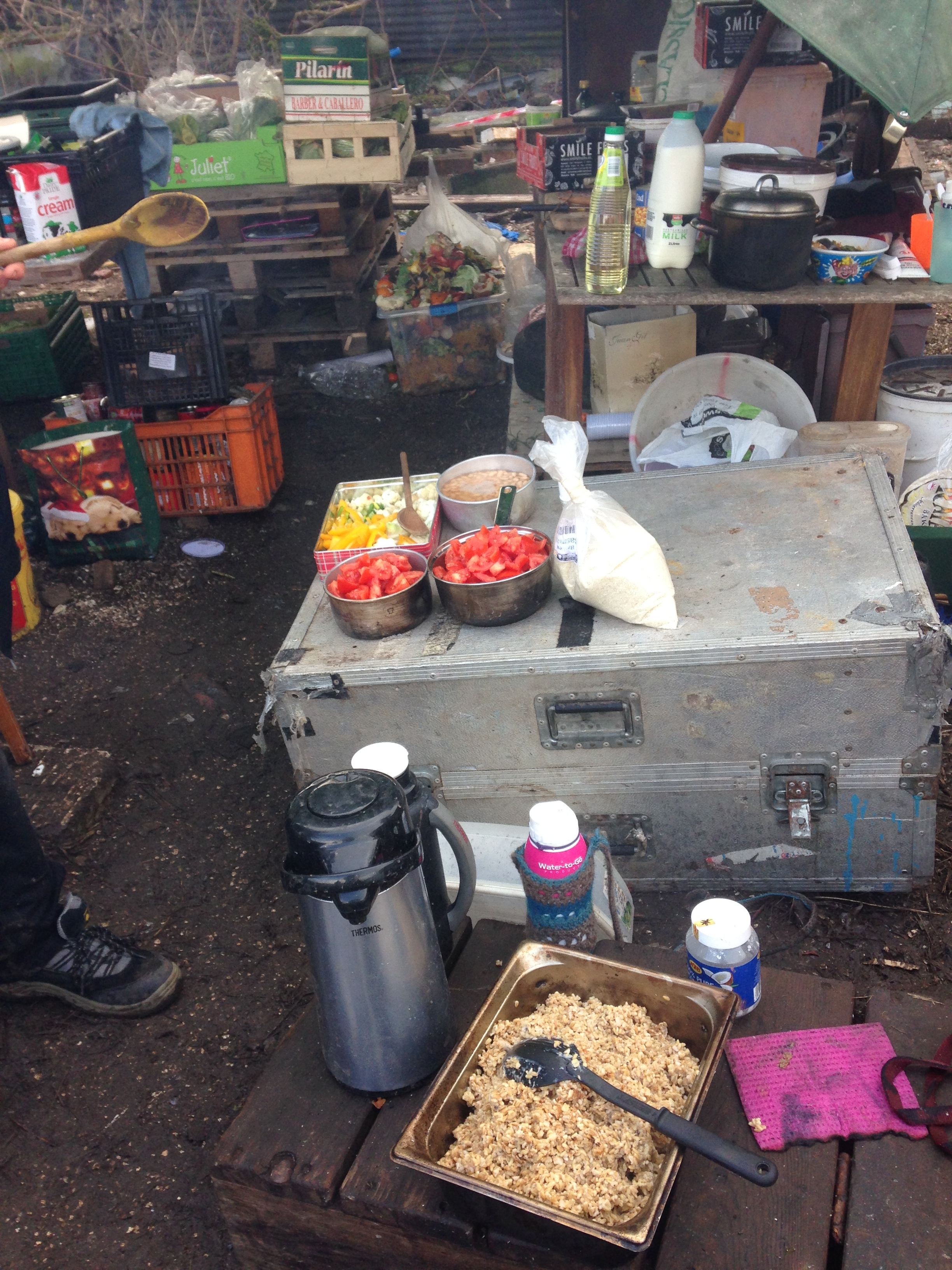
Field kitchen Rising Up camp

The field kitchen under canvas cooks healthy meals.

Lentils for the pot Rising Up protest camp

Leanna wields a packet of nutrition-laden red lentils.

Mishappen parsnip Metrobus Bristol

Leanna shows me a cosmetically-imperfect but perfectly-healthy parsnip – the kind of produce that would be rejected by a supermarket.

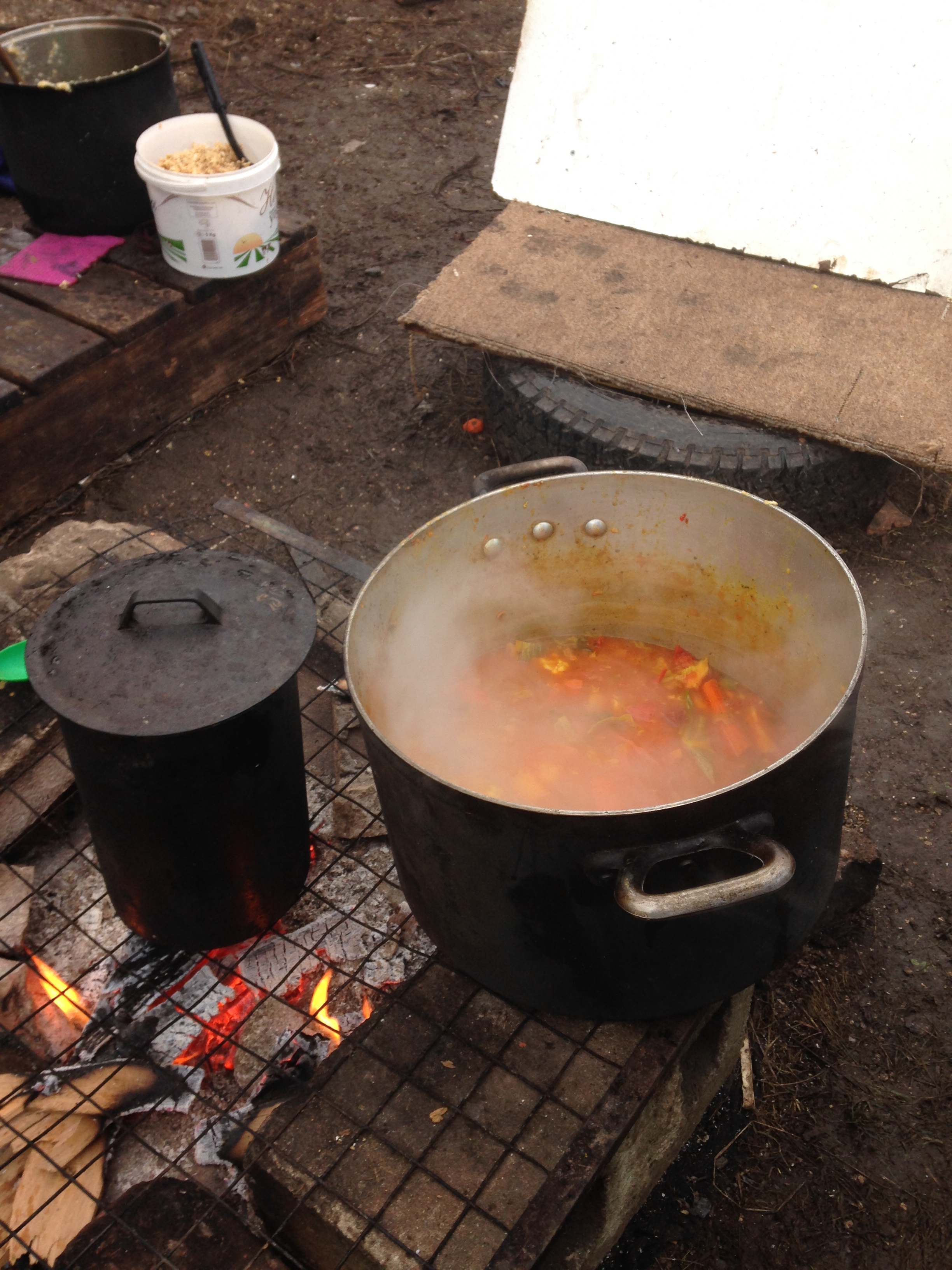
Cooking pot field kitchen Metrobus Bristol

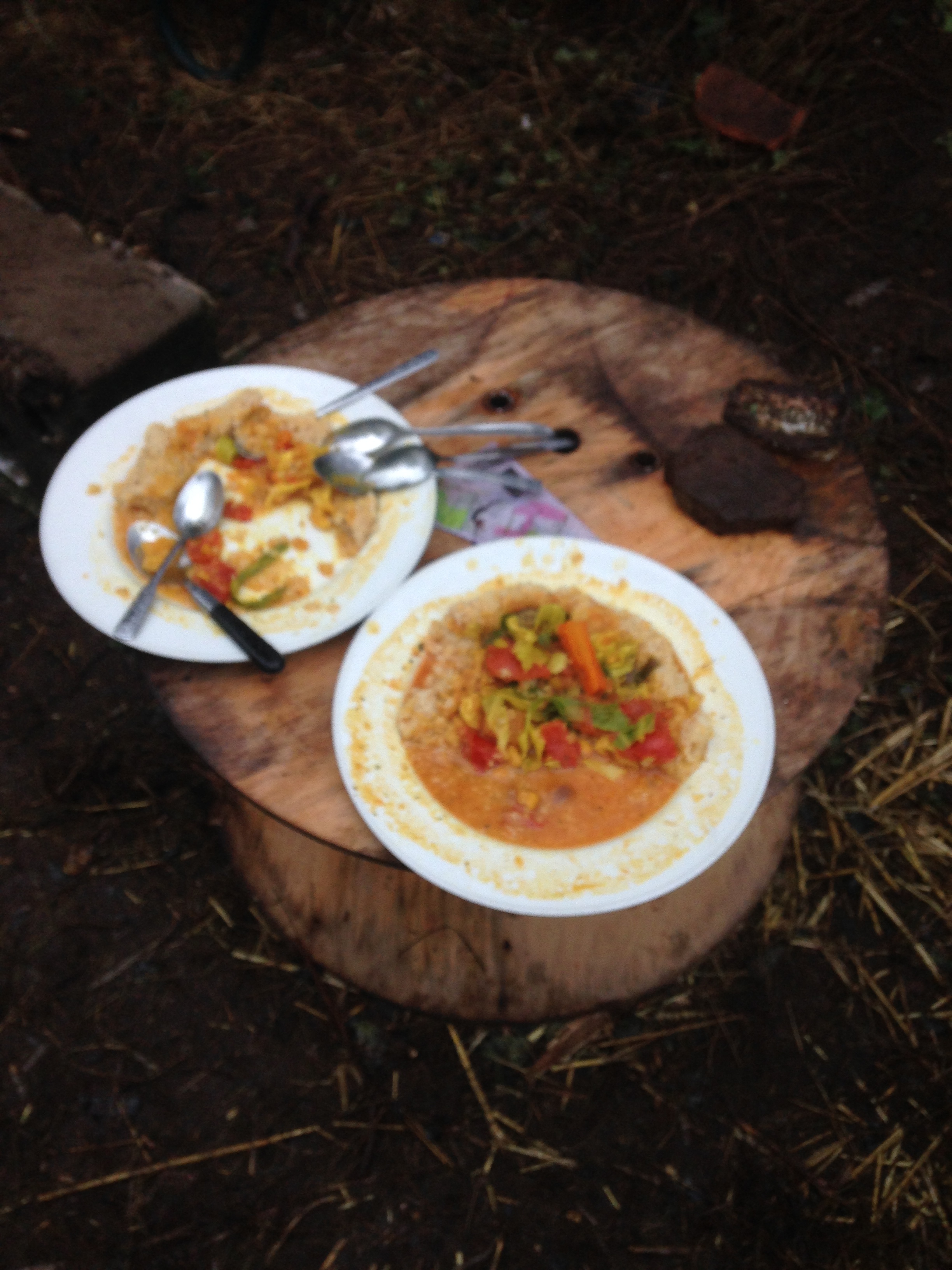
Leanna who is studying nutrition tells me how she and Jack made the communal stew: Chopped onions and chilli coated in coconut oil and fried with spices to hand including turmeric and coriander spices, with water added to stew to cook the lentils and rice (providing all 8 essential amino acids) and parsnips and carrots (once muddy now scrubbed and cut), with fresh tomatoes and cauliflower and cabbage and fresh garlic added at the end.

Stew served at log table Metrobus protest Bristol

Stew is served on a log table.

Rising Up poster

The Rising Up notice (above) says, this situation:

“reveals the crisis of our systems and our leadership. If our Mayor cannot call for the design to be altered, to stop the destruction (and he says he cannot) who has the power to bring the beast to heel?

Perhaps it is only us“.

This Rising up camp shows people of spirit and principle proclaim a stand against the might of a mindless system that turns a blind eye to its own destructiveness. 

The brave protestors await the bailiffs to descend at any moment to remove them from the land and trees they are trying to protect.

Please sign this petition to show your support

– currently only 1,500 signatures away from 5,000! 

Coconut benefits banana bread

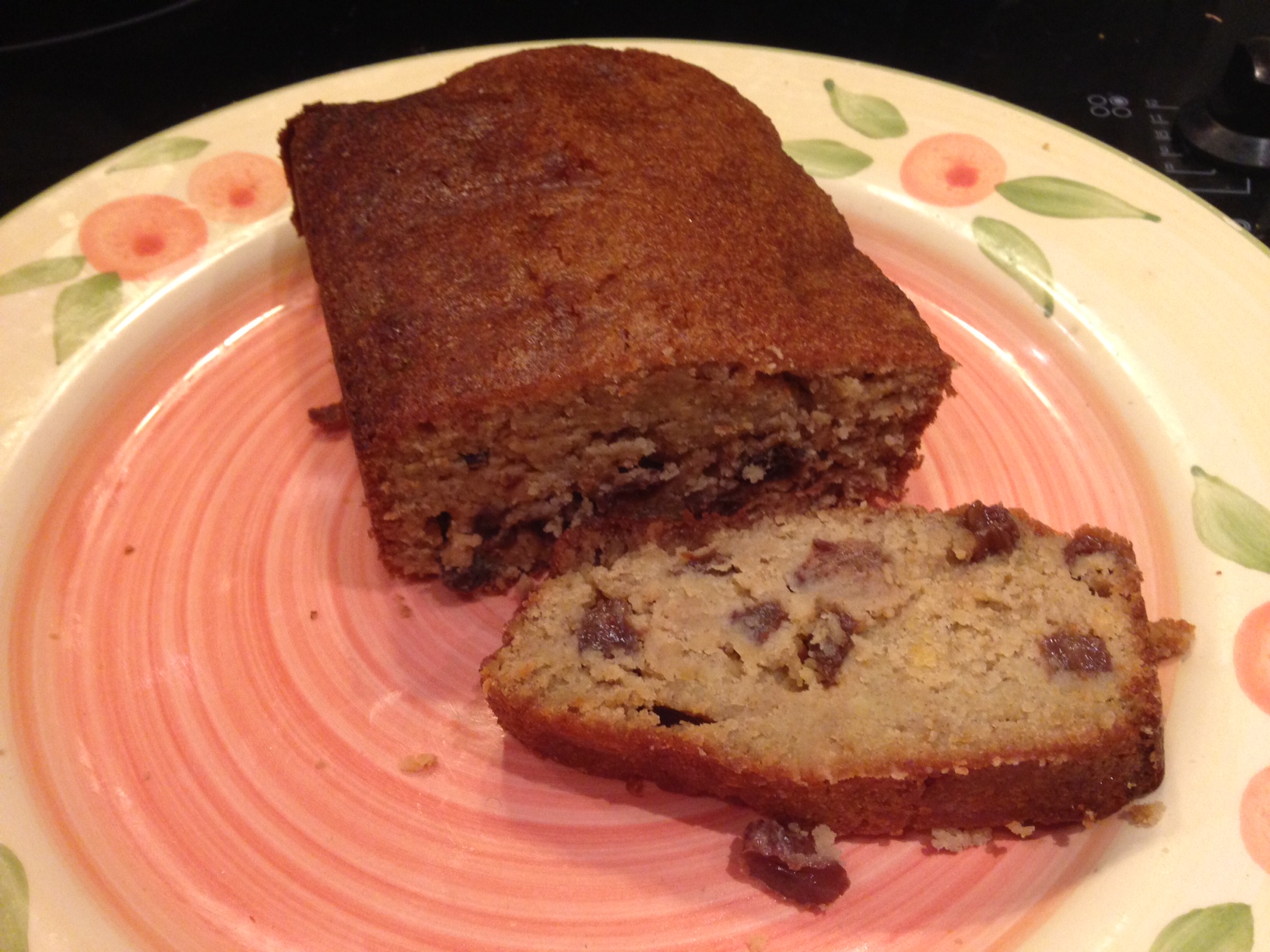
Banana bread

Funny to think that, as a child, I thought of coconuts as fairground shies, or Bounty chocolate bars. Yet coconuts are far more versatile than that. 

Coconuts produce coconut oil, coconut flesh, coconut milk, and coconut water, naturally and healthily.

Like hemp, coconut is nourishing, health-giving, and practical too. Think coir matting. 

Coconuts act as body moisturiser, teeth-cleaner, digestion-soother, rehydrater. And more. 

Coconut even sorts out head lice, according to Dr Mercola’s wondrous list of coconut’s varied uses.

If you love scientific facts and opinion with lots of swear words, check out Shannon’s Kitchen on coconut’s versatility and health reputation.

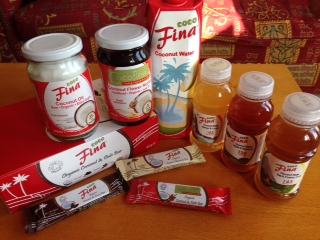
My coconut musing is prompted by a hamper full of coconut joy sent by Cocofina.

Cocofina coconut products

Cocofina have been cracking coconuts since 2005. The name says it all: Cocofina is made from fine young coconuts picked at their peak when its water is at its most plentiful.

To add to my joy, Cocofina is certified organic (by the Soil Association), which is shorthand for healthily-grown food, with no chemical fertilisers/pesticides to pollute soil, air, crops, wildlife and farm workers.

Cocofina’s big triumph is to produce delicious on-the-go nutrition energy bars. I sampled them with various energy-snack (and coconut) lovers, and their praise was unstinting.

And I love its coconut nectar – low-GI slow-release sweetness without that crazy thing that happens to my eyes (as if they are being squeezed) when I eat sugar.

(Pause to reflect on sugar – how it drove slavery, and now makes mental slaves of us all via obesity and the money markets).

To celebrate coconut happiness, I made banana cake, substituting sugar with coconut nectar, and coconut oil instead of butter.

Along with pre-soaked sultanas, this recipe produced a light, healthy cake, its bananariness lifted by nectar and complimented by coconut.

Banana bread

If you don’t have self-raising flour, add an extra egg. Keep the baking powder/bicarbonate of soda to a scant teaspoon – just enough to lighten the flour but not too much to impart its strange fizzy taste. Or even (boldly) omit and rely on beaten eggs instead.

2/3 large mashed ripe or over-ripe bananas (up to 500g/1lb)

125g (4oz) butter/coconut oil, softened

125g (4oz) caster sugar/4 Tablespoons coconut flower nectar or honey

2 large eggs, lightly beaten with a fork until frothy with air

250g (8oz) self-raising flour (or ordinary flour with extra egg) I used gram flour made from chickpeas because wheat (argumentative fellow) does not agree with me.

1 scant tsp baking powder/bicarbonate of soda

Optional extras: sultanas soaked in water and drained, walnut pieces, cocoa nibs/lemon rind.

Oil 2lb loaf tin and line its base and sides with baking parchment/greaseproof paper.

Rub in the oil/butter/fat into the flour (+ lightening agent if used) until the mixture resembles breadcrumbs. Stir in the sweetener and mashed bananas and lightly beaten eggs beating it well.

Heat oven to 180C/160C fan/gas 4.

Turn into the tin and bake for about 1 hour until a skewer comes out clean, covering if necessary so the top does not burn. 

This recipe is a great way to use up over-ripe bananas. 

Happy eating! 

Diana Henry’s salt beef

Salt beef is a perfect meat for taking to a feast because it can be be prepared in advance and travels well.

It is ideal for a stress-free Christmas – no sweating over a hot stove all day.

Tender and aromatic, it can be served hot or cold with vegetables or salads. Or, traditionally, as a sandwich with mustard and pickles.

It is called salt beef because it is preserved (pickled) in salt a week before cooking. The brine is washed off so the meat is not salty. The joint is pressed, refrigerated, packs down neatly and should ideally travel in a cool box.

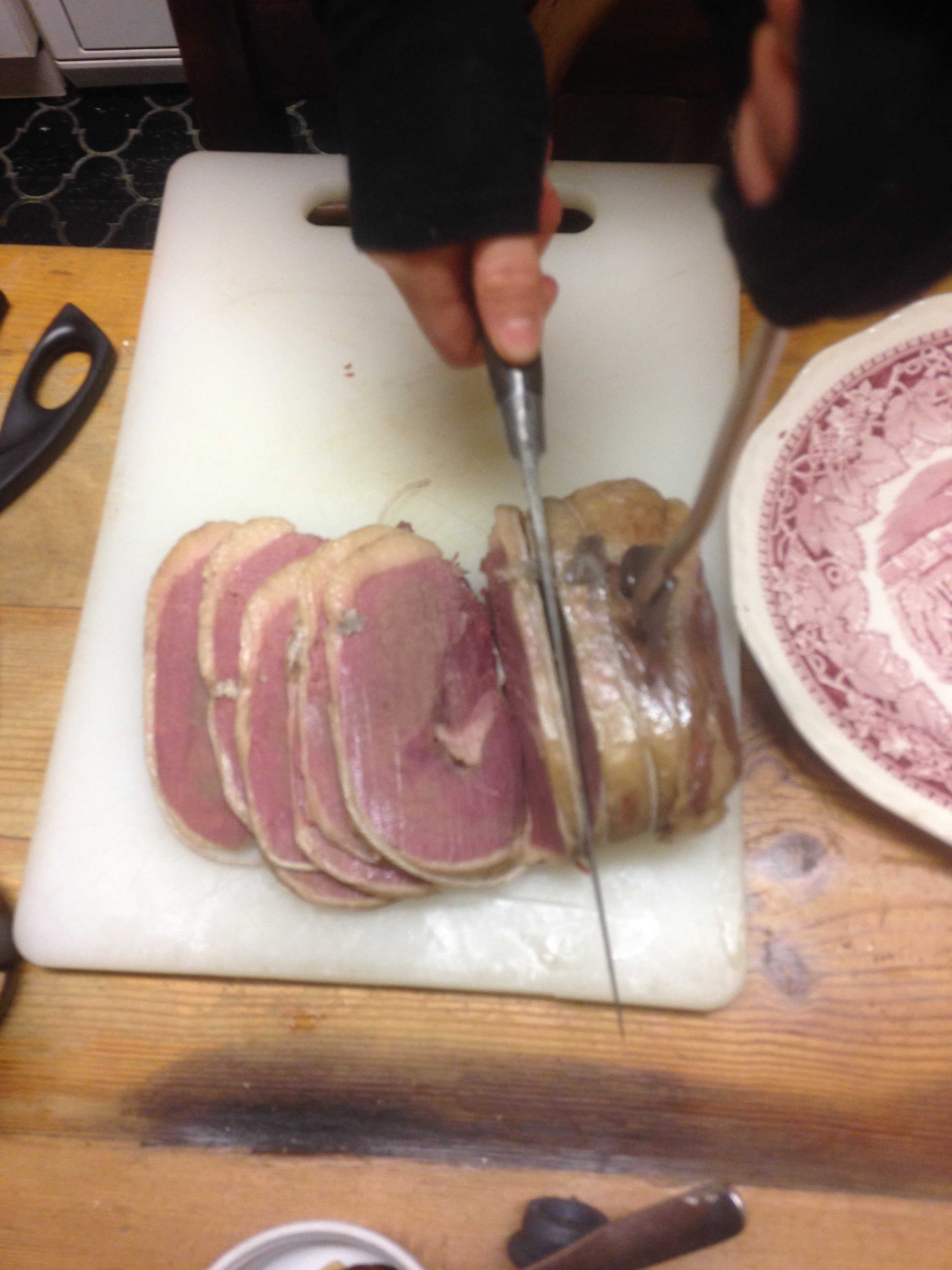
Carving the (pink-coloured) salt beef

Carving the salt beef

An animal lost its life to feed us so the least I can do is make sure it was well-looked after while it was alive – so the meat had to be organic.

I bought tied and rolled organic brisket from Sheepdrove Organic Farm where the animals graze on herb-rich pastures, live in family herds and express their natural behaviour.


I bought two briskets totalling 4 kilos (9lbs) in weight, and cut one in half so it would fit in my pans. This fed ten people for three meals.

I have never preserved meat before and, I won’t lie, it was nerve-wracking: would the meat go mouldy and thus ruin Christmas festivities? In the end I trusted my sense of smell to assure me nothing was amiss.

Reader, I nailed it. My 91-year-old mum said it reminded her of salt beef from her childhood, and my sister praised its subtle flavours.

Salt beef is not exclusively Jewish but “it is the Jewish community that has kept up the tradition,” says cookery writer, Xanthe Clay.

There are two main stages to salt beef: preserving in brine, then simmering in fresh water and vegetables.

The challenges to preserving:

  • Time: the raw meat is soaked for seven days in a salty solution
  • Maths: working out the right salt/sugar solution for the weight of the meat
  • Receptacles: they have to be non-metallic and deep enough to take the joint covered with water
  • Ingenuity: You have to keep the joint under water. I used bottles of oil etc (see pic below) to weigh down the meat.
Meat in brine weighed down by bottles lying sideways

Preserving the meat in brine

Salt is an ancient way of preserving food. (I have been using it to make gut-friendly sauerkraut and plum kimchi.)

The salty water (in which the food is soaked) is called brine. Salt beef traditionally uses saltpetre, too, to preserves the meat’s red/pinkness (otherwise it would be grey) and also to kill the bacteria that causes botulism.

Luckily, my sis’s boyfriend, Paul of 80s Rock Pics, had some saltpetre – nowadays hard to find – but available online.

There are health issues with nitrates but as I hardly eat bacon and other cured meat, I figure a little bit of what you fancy does you good.

Once the meat is preserved for seven days, the salty brine is washed off the meat.

The meat is then simmered in fresh water, carrots and onions for several hours. This produces a flavoursome broth. Keep the broth to heat-up the meat (if you want to serve it hot), use it as a stock or serve as a soup – it has the most amazing taste.

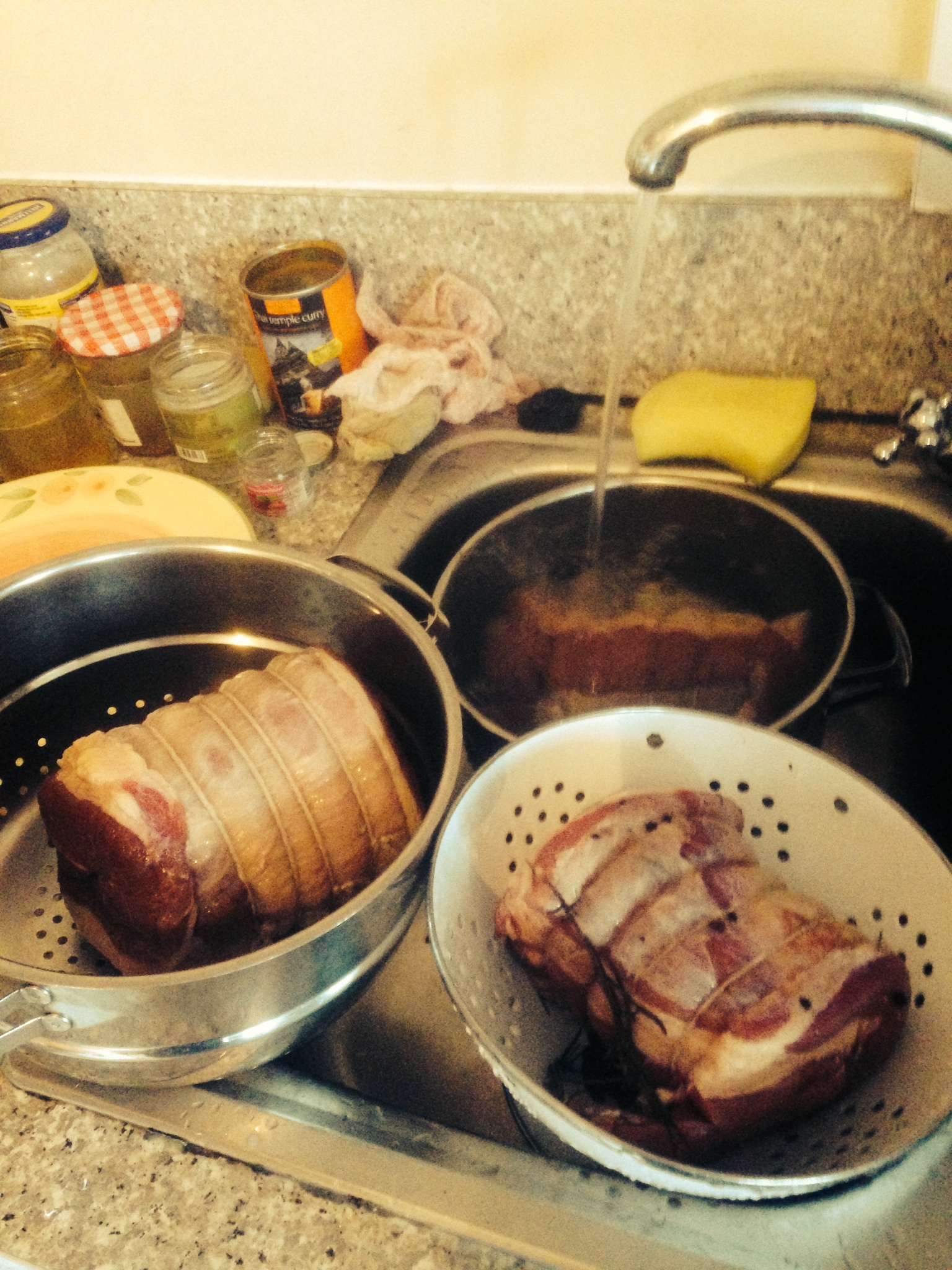
Meat in colanders under kitchen tap

Washing off the salt/sugar brine solution

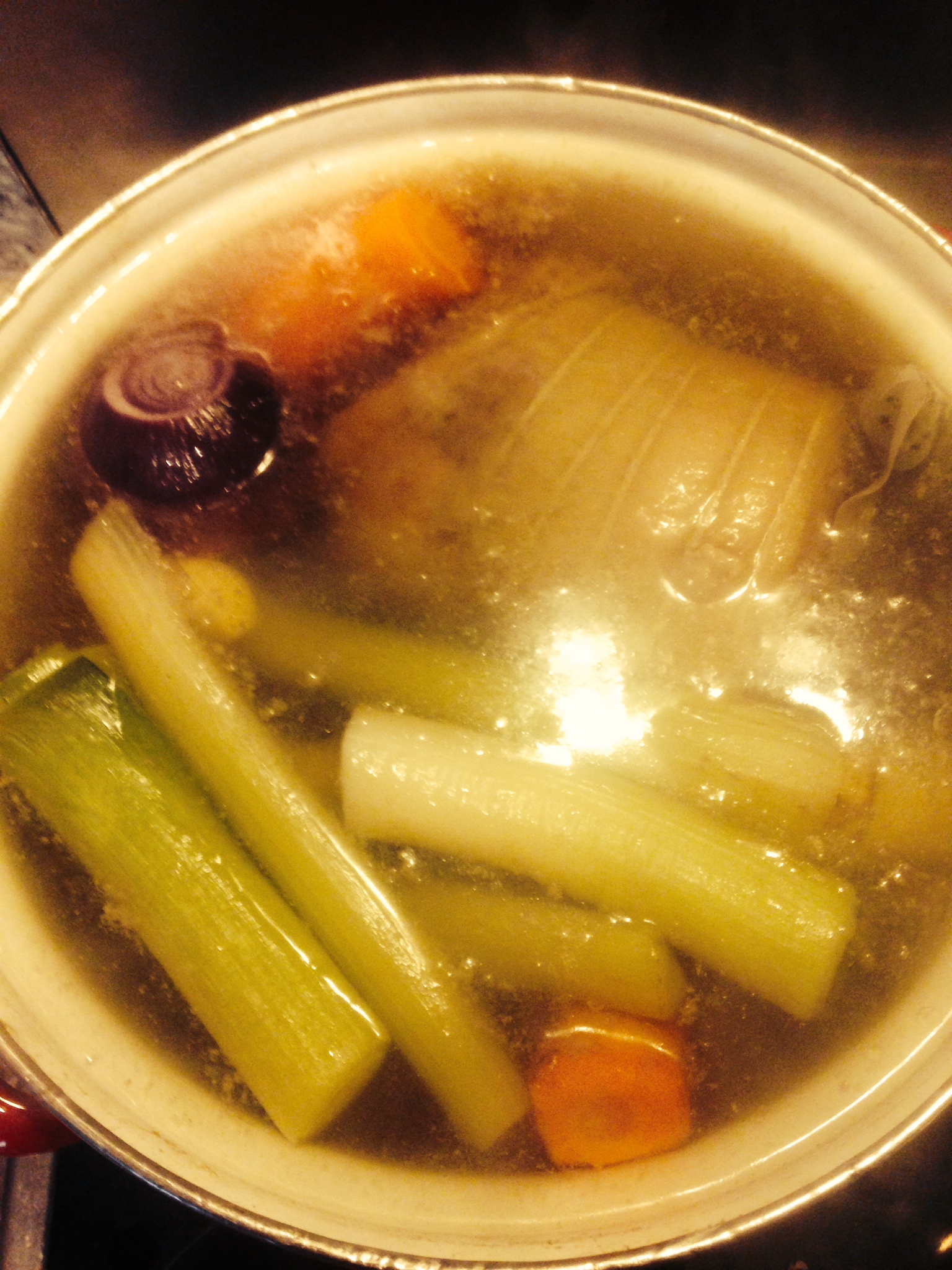
Brisket in broth

Brisket simmering in fresh water and vegetables


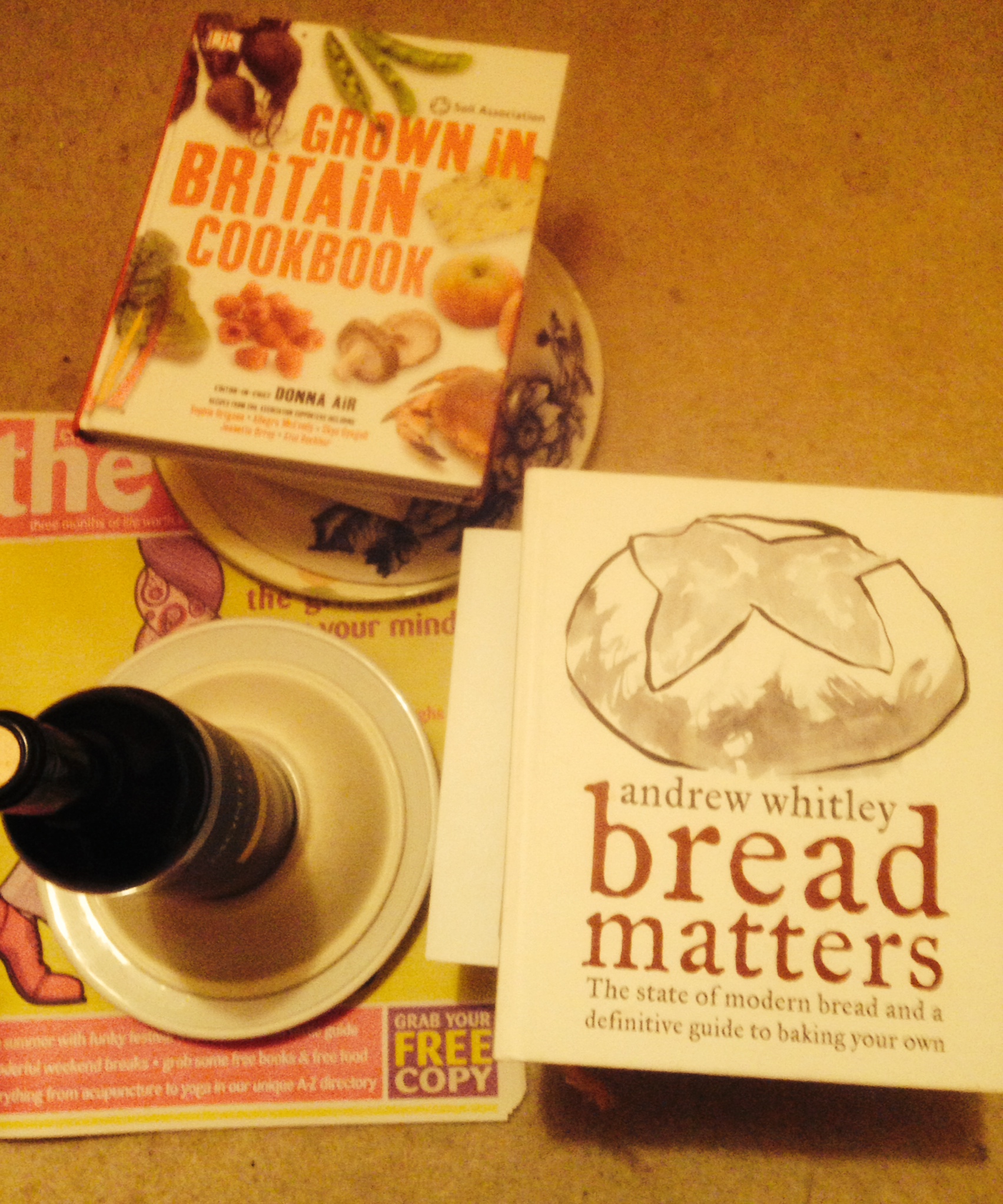
After being drained, press the meat again (we used large plates with smaller bowls on top weighed down with heavy books to provide an air-tight press).

Wrap the meat well, and refrigerate. I used parchment lined-foil from Lakeland and secured it with gaffer tape.

My oracles were Evelyn Rose’s The Complete International Jewish Cookbook, that my mother gave me decades ago. Reliable and practical, it is much-used and loved.

My other main text was a recipe from Diana Henry, another favourite cookery writer.

I now hand you over to Diana Henry for her salt beef recipe.

Here is the ratio of salt/sugar to meat for the brine solution (in the preserving stage) to save you any brain-numbing calculations.

Dear reader, please also note a comment posted 3 March 2018 below with ensuing discussion:  A 2.5 kg joint of brisket only needs about 6g of saltpetre, and not the unnecessarily high 55g quoted. If in doubt use about 6g of saltpetre to 2.5kg of beef.

Ratios for brine

For each kilo/lb of beef

110g (1¾oz) of sugar

140g (2 1/4 oz) of salt

22g (1/3 oz) of saltpetre (optional).

Diana Henry’s salt beef

For the brine
275g (9¾oz) soft light-brown sugar
350g (12oz) coarse sea salt
2 tsp black peppercorns
½ tbsp juniper berries
4 cloves
4 bay leaves
4 sprigs of thyme
55g (2oz) saltpetre (optional).

For the beef
2.5kg (5lb 8oz) piece of beef brisket
1 large carrot, roughly chopped
1 onion, roughly chopped
1 celery stick, roughly chopped
1 leek, cut into large chunks
1 bouquet garni
½ head of garlic

Put all the ingredients for the brine into a very large saucepan, pour in 2.5 litres (4½ pints) of water and gradually bring to the boil, stirring to help the sugar and salt dissolve. Once it comes to the boil, let it bubble away for two minutes. Take off the heat and leave to cool completely.

Pierce the meat all over with a skewer. Put it in a large, sterilised plastic box or bucket (something non-reactive) and cover the meat with the brine; it must be totally immersed. The best thing I’ve found for weighing it down is two massive bottles of vodka. Put them in on top of the meat and it will stay below the level of the brine. Leave in a very cool place (a cellar or a room that is always freezing cold – most houses have one). Leave it for seven days.

Take the beef out of the brine and rinse it. Roll and tie the meat and put it in a pan with the vegetables, bouquet garni and garlic, adding enough cold water to cover. Bring the water to simmering point, then leave to poach gently – I mean gently – for two and a half to three hours. Cook until the meat is completely tender (check with a skewer).

Season’s greetings and a happy shiny new 2015!

Brisket being pressed

Cooked brisket being pressed by weighty tomes