Category Archives: health

Food waste? Bless compost

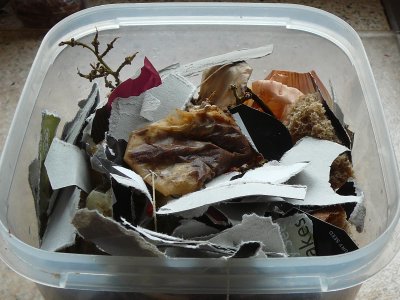
Food waste becoming compost

I admit the contents of the plastic box (above) – with its stalks, stale bread, peelings, torn-up cardboard (more later) and discarded tea bag – is not a pretty sight.

But don’t be deceived by its appearance. The present detritus of our kitchens is the future fertiliser of our food.

Sensitive souls often feel guilty about wasting food. Guys, your instinct is correct – those scraps are meant to be put to good use.

When my eco-friend Chris showed me how to compost, my life changed. Instead of throwing old food in the landfill, I became a guilt-free fertiliser queen.

Compost is a basic principle of organic farming, and hence a friend of real food. It replenishes the soil with an amazing array of nutrients – for free.

(Chemical fertiliser is not a patch on the real thing. Plus its production is oil-guzzling, polluting and greenhouse-gas causing).

You start the composting process by collecting kitchen scraps (including cooked food). Then you need to find a covered bin (preferably outdoors) where the waste can compost down in peace.

Anything which lived can be composted. The smaller it is, the quicker it breaks down so it can go from waste to ‘black-gold’ in nine months.

I added cardboard (which used to be a tree) for dryness, and tore it up, making it easier for the worms and bugs to munch it down in the garden compost bin.

What if you have no garden? Check out the Bokashi system for indoor or balcony composting (see mine below). Brave people keep wormeries in their kitchen. The waste-turned-to-crumbly-soil or fertiliser juice (yum) can be added to plant pots or a friend’s garden.

If indoor composting does not appeal, scour your vicinity – any outdoor space to be pressed into service?

What stands in your way to happy composting? Let’s break it down…

Bokashi compost bin

Tamarind and green tea noodles

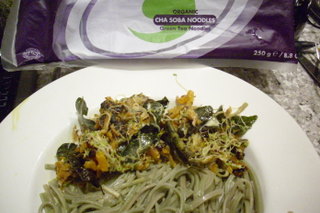
Green tea noodles and tamarind stir fry

Cooking is like dancing – to keep it fresh you need to learn new steps.

Thanks to Mallika’s Quick Indian Cooking, I have added curry leaves and tamarind to my repertoire.

I had to improvise with the other ingredients.

Tonight was cold and misty so instead of eating grated organic carrots as a salad, I fried them in olive oil. In this bold mood, I also fried organic alfafa sprouts, the first time ever.

At the carrot stage, I also fried ten dried curry leaves, which wilted aromatically – not scary at all. Then mustard seeds and a teaspoon of tamarind paste.

I could not resist adding a quarter of a tin of coconut milk and snippets of dried chilli for spicy creaminess.

I finished off a packet of organic cha sob green tea noodles that had been lurking in my store cupboard – they only took three minutes to cook.

It was a quick supper to make and delightful to eat, while the tamarind emparted a tart lemony-lusciousness – my new exciting dance step, definitely.

Brown rice, chives – and chewing

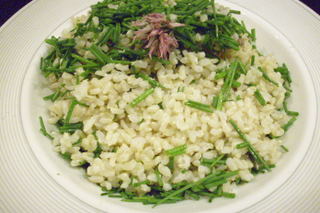
Brown rice and chives

When all else fails nothing beats a bowl of brown rice. It is a soothing superfood. With its husk still intact, brown rice brings strength – more vitamins and fibre than its denuded sister, white rice.

My brown rice is organic – what’s the point of eating a superfood if sprayed with chemicals?

I added chopped chives (and its mauve flower), olive oil and a tiny smattering of Atlantic salt to the cooked rice.

Organic brown rice a store cupboard-must because it’s nutritious, economical and sits there Buddha-like till needed.

It requires little attention while cooking. One mug of rice does for two, generously. Add to a pan with twice the amount of water (2 mugs of water for one of brown rice) and bring to the boil. Simmer for 30-40 minutes with the lid on. Brown rice is soft and chewy when cooked.

The macrobiotics swear by brown rice and so do I. It’s so yang, it relaxes the digestion and detoxifies.

If you really want to be macrobiotic, you stay in the moment while eating it. Spiritual warriors aim for 50 chews a mouthful to calm their mind and their digestion.

I can manage about four mouthfuls of conscious chewing before my natural impatience takes over.

How many chews do you give a mouthful?