Category Archives: food

Baked apples

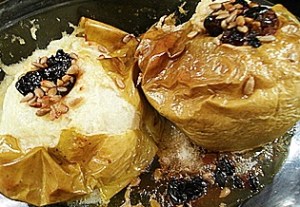
I searched my trusty cookery books but in the end only Mrs Beeton’s yielded a recipe for baked apples. I customised it, omitting sugar, and used chopped-up organic dates and prunes plus sultanas and sunflower seeds to stuff the de-cored apples. I dotted butter on top, and placed the stuffed unpeeled apples in an ovenproof dish with a thumbnail of water and baked it for an hour at Gas mark 4 (180 degrees).

They emerged from the oven, fluffed-up apple-flesh bursting from their heat-withered skin. Hmmmm, worthy contenders for a competition, methinks…

My apples were organic, natch, because I didn’t fancy the cocktail of factory-made pesticides sprayed on most apples.

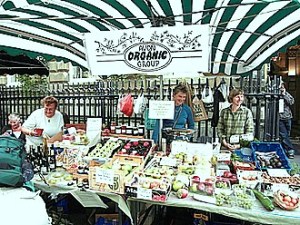
I had bought my big fat organic cooking apples at Bristol Farmers’ Market from the stall of the wondrous Avon Organic Group (below). I say wondrous because it is a voluntary group that helps maintain a local organic orchard and allotments in the city. Where would we be without such dedication?
It’s Apple day on October 21. I keep noticing the little darlings ripening on trees in the stillness of autumn.

If you love baked apples, and you ever come across an apple-corer, do not hesitate. Just buy it. A corer costs a few pounds and will be your lifelong-kitchen friend even if you only use it once a year.

I value mine so much, I photographed it on a velvet cushion (see below).
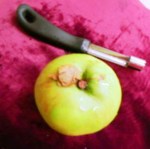
PS Emboldened by Antonia’s invite (see comments), I hereby enter the humble apples into their second competition at Food Glorious Food, organised in aid of British Food Fortnight.
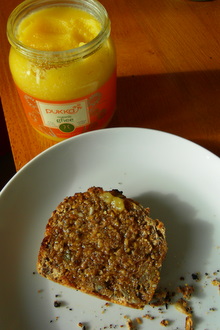
Bread and organic ghee

This morning’s breakfast: toast from Hobbs House Bakery and organic ghee from Pukka, both bought at the Soil Association’s Organic Food Festival this weekend.

I have wanted to buy ghee for months – it’s a healthy fat that can be used at high temperatures without burning. But I have been deterred by the ingredients list. This ghee, however, has nothing in it but clarified butter from organic milk.

I have pledged to eat unpackaged local and organic during Organic Fortnight. As this is impossible, I Ask Questions instead.

“Why is the organic ghee from Austria ?” I sternly ask Pukka’s Helena Kowalski. Turns out Pukka works with an Austrian farmer who specialises in making ghee on his small farm. Perhaps this is a new way for west country organic farmers to add value to their milk?

My breakfast toast is from Hobbs House Bakery in Bath – local points there. The Hobbs people (see their colourful stall below) were jubilant about their win at the Soil Association organic food awards on Friday. So they should be – their bread is so damn delicious, I was heartbroken when I ate my last slice an hour ago.

The whole mood of the Organic Food Festival was buzzy and warm. It’s a wonderful feeling to be involved in something which does the planet good. And is successful.

At the festival’s launch, Barny Haughton from sustainable gastro-paradise restaurant, Bordeaux Quay, said business had never been so good.

The recent food price rises are linked to the price of oil. The lynchpin of industrial farming is factory-made fertiliser, a process that relies entirely on burning oil.

In contrast organic farmers fertilise their fields naturally, courtesy of the sun, by using crop rotations, nitrogen-fixing clover and composting. As oil prices rise, organic farming becomes more profitable.

In an oil-depleted world, local organic is the future. Common sense, don’t you agree?

Our Daily Bread blog competition

Bread is one of the most messed-up foods on the planet. Made from hybridised wheat, grown for quick-machinability (forget taste, nutrition and digestion), modern bread is subjected to chemical processes you know nothing about.

If you want to freak yourself out, read the list of gunk in an ordinary loaf of sliced bread in Bread Matters by baker Andrew Whitley. Classified as non-nutritive processing aids, their job is not to feed you but to add texture, quickly. Hence the additives (including animal or GM-derived enzymes) do not legally need to be listed on the label.

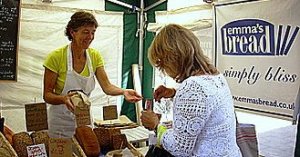
In real food-world, you need four ingredients:  flour, water, a raising agent. The fourth is time. And the result, such as Emma’s bread (see above at Exeter’s farmers’ market), is tasty and sustaining.

Emma is teaching these skills at a breadmaking day at Occombe farm in Devon. If you join the Soil Association the day is free.

Or use a book to learn – I like Warren Lee Cohen’s Baking bread with children. And check the coming campaign for real bread.

Now for the competition. Food bloggers, what’s your favourite real food? Its tastes are enticing but not from a laboratory and it nourishes as nature intended.

The winning blogger (more details below) gets a copy of the new DVD, Our Daily Bread. Released on the 8 September 2008, this award-winning documentary observes without judgement and with an eye for beauty the world of intensive food production. Do we really know how food is made? Our Daily Bread shows what is usually hidden.

Here are the competition guidelines, and good luck, fellow food bloggers.

1. Write a blog on real food (it does not have to be about bread). One ingredient or a dish. Usually factory-made, but you eat the real thing. Baked beans, mashed potato, fresh fish and chicken Kiev come to mind. What’s yours? And extra points for local and organic ingredients.

2. Link it to this blog.

3. Post a comment on this (Our Daily Bread) blog displaying a link to your blog entry.

4. The deadline is October 8 2008 at midnight.

I look forward to hearing from you.

Shambala festival 2008

“Camping is like having a baby – you forget the pain and do it again,” said a woman at Shambala festival.

As the rain dripped, we wondered why we had left our warm dry homes to live in a field. Not even a quiet one because this was Festival Land where sounds pound night-and-day from eight different music tents. The chaos was offset by the healing area with its chimes dinging in the wind, and therapists offering massage or reiki or any manner of soothing restoration in calm tents.

I was helping the family crew welcome parents and children to the family yurt, a wondrous place of sanctuary. It was a pleasure seeing the children run free. And when dark descended, you could promenade in the anarchic carnival atmosphere.

Circus-huge tents were  themed from The Kamikaze tent and Geisha Palace to The Aloha beach with sand and pretend palm trees. My favourite was the Bollocks tent, a surreal lounge with sofas serving vodka shots and  impromptu jazz from top musicians dropping by.

There was always somewhere to have a cup of tea even at two in the morning such as Granny’s Gaff (granny looked manly and used tea-cosies).

Back at the family site, its boundaries not the usual walls but canvas, we took turns cooking the evening supper. On Sunday it was mine.

Two gas rings in a busy field kitchen and 18 adults and 12 children to feed. Mike was graceful about being my commis.

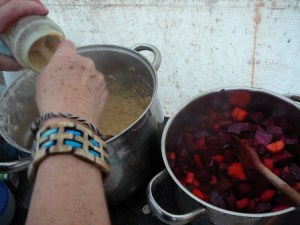
We served 500g split peas (soaked overnight and simmered for an hour) with juice squeezed from 10 fresh lemons, tahini and ground almonds; 400g of aduki beans (soaked overnight and simmered for an hour) with yogurt; mashed sweet potato; and pan-fried beetroot and carrot. I wanted to roast the beetroot and carrots but – no oven – so I experimented by cooking them for an hour in oil. They retained more sweetness than mere boiling.

We camped until the festival had truly ended. It was a privilege seeing the illusion dismantled like being backstage.

I watched the Posh Wash showers being loaded on to a truck and the mobile solar-powered cinema drive off. The circus was leaving town.

We slept the last night in an empty field where an owl hooted above the faraway sounds of the festival crew’s last party.

Celebrity to market

celebrity-to-market-this-one

I had to set an organic challenge for Hardeep Singh Kohli of Celebrity Masterchef fame: become 100% organic in two weeks. See how the comedian fared in olive, on sale now. It was a tall order because, in truth, going organic happens gradually.

I was mad-keen for Hardeep to visit a farmers’ market but he stuck to supermarkets. Farmers’ markets only set up stall once a week (or less), so I can see why they are not convenient. But the difference in quality between local organic food grown, made – or reared – within 50 miles, and the much-travelled organic food in supermarkets, is beyond compare.

Buying organic food from the person who grew it (from farmers’ markets or veg box delivery) adds a new dimension to shopping – you know where your food is from. Price-wise, buying direct is cheaper than supermarkets – no middleman to add costs.

Last Thursday at noon, catching a lift with Mike to Exeter train station, we unexpectedly passed Exeter’s farmers’ market.

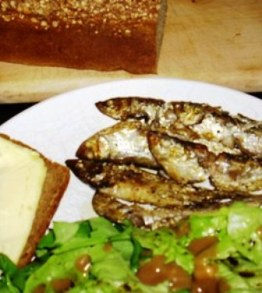
“Stop the car,” I said. I had ten minutes to gather dinner (see above). Everything was organic apart from the fish, which was wild. With only a short season, the sprats, caught in Dorset , are special. And cheap. I got six portions-worth for £5. Sprats are sustainable to fish and healthy to eat. Grill without oil – they are naturally rich in must-have omega-3.

I fried the above darlings, eating them with Rod and Ben’s salad and Emma’s homemade bread, fresh from Exeter’s Farmer’s Market.

As well as shallow-frying the fish, I slathered oil on the salad and butter on my bread – what am I like?

The next day my pal and child came round. We ate the fried sprats whole, crunchy heads and all. I was surprised a four-year old would enjoy them but he did.

This time I served them with organic mash potatoes grown at Radford Mill Farm 30 miles away, and sold at its inner-city organic farm shop luckily on my flight-path.

How do you access local organic produce? Do you find it hard like Hardeep?

Mackerel, summer fish

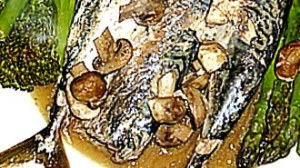
I went for a walk with Mike and his friend Alan on the coast of north Cornwall, down a farmland path to the secluded beach of Tregardock where the sea is wild against the looming rocks. The nearest town is Port Isaac where this Cornish mackerel came from, landed that day.

Alan baked it for 20 minutes in the oven with butter and served it with steamed broccoli and asparagus. Opportunistically, it dawns on me that Alan was serving up a dish fit for a blog competition on seasonal eating.

Mackerel, said Alan, is a summer fish, while broccoli is also in season. But asparagus? Feeling like the Seasonal Police, I quizz Alan about its provenance. Oh dear, has seasonal-awareness turned me into an officious and impolite guest? He assures me Cornwall’s warm climate allows asparagus a longer season, and is not offended. Nevertheless this moment sums up the fine balance I tread between being a real food lover – and a prig.

Alan serves the dish with a leek-and-cheese sauce which adds a luxuriousness to everything and soon all thoughts of seasonal-criteria fade as I give myself to the pleasure of eating. It was delicious, tasty and went down a treat. What more do I want?

Macrobiotic Bologna

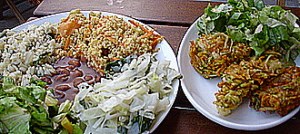
This was the macrobiotic meal I ate in Bologna before catching the overnight couchette to Paris. A classic balance of grains (brown rice and millet) with pulses (pinto bean stew) and a medley of fresh local vegetables, steamed and raw, it came with a dish of deep-fried vegetable tempura.

Un Punto Macrobiotico offers only one choice. I like that. It’s like eating at home, “you’ll get what you are given”, and no endless agonising choice and “I wish I’d had that”.

(Macrobiotic note: the restaurant and shop is inspired by visionaries, George Ohsawa and Mario Pianesi).

Any austerity was softened by the home-made peach ice-cream, sweetened with rice malt, which releases its sugar slowly so is better for the body.

I strode off for the ten-minute walk back across the bridge to the station, feeling quite the international traveller. I like trains. Slower than planes but far more civilised, it’s no sacrifice taking the green option.

(Foodie warning: Trenitalia and Eurostar serve rubbish and pricey food, so take your own. The waiter kindly parcelled up my tempura to take-away).

Bologna station was the scene of a horrifying terrorist attack in 1980. We witnessed a moving memorial (see flag below) on the day we travelled to the Adriatic coast, August 2nd. This is the date now designated in Italy as a memorial day for all terrorist massacres.

In the sauna-like heat on the Adriatic, we arrived at our stunningly stylish apartment, with its high ceilings, wooden shutters, IKEA furniture, Virago books, essential oils. So, I am sitting there glancing idly through the welcome file when I realise: crikey, it belongs to a friend of mine!

Ingrid Rose had booked it on the web (“I chose it because it was the only one saying you could walk – not drive – to the beach” she said). And then I find out I know the co-owner! A journalist who, 30 years ago, had given me encouraging and enduring advice – to “break up long sentences into short ones” – and whom I had recently met up with again because (another crazy coincidence) she is a dear friend of a dear friend.

Six degrees of separation, indeed!

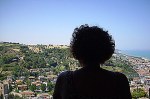
Below is a picture of my sister gazing down from the apartment at the spectacular view below. Real food lover that she is, she patiently answered all my questions about Italian food.

Italy, land of real food

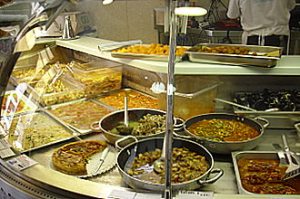
I nearly sobbed when we stepped inside this treasure trove of a delicatessen in Cupra Marittima, a small seaside town on the Adriatic coast. Italy is the land of real food so it is hard not to feel deprived when back in Blighty. This delicatessen was no self-conscious foodie experience for the cognoscenti, but the real thing.

Britain’s dismal food situation is linked with its early adoption of the industrial revolution. As poor people flocked to cities two centuries ago for work, they left behind the land, and home-grown food, signing up instead for a diet of mass-produced cheap fillers, such as adulterated white bread and jam.

Industrialisation came later to the Continent whose food is all the better for it.

Listen, this delicatessen served nothing but fish. Ready-cooked dishes such as spicy fish stews with calamari, potatoes and chick peas; the regional speciality of olive ascolana (fish balls cradled in an olive and fried); fish carpaccio, paper-thin slivers of marinated raw swordfish and tuna with parings of orange peel; and minced fish balls (like gefilte fish) but served in a delicate tomato sauce.

Talking of tomatoes, the local food store stocked many varieties, all different shapes, sweet and tasty (not watery and sad). And talking of gefilte fish, a Jewish speciality from eastern Europe, Italians, like Jews, like talking about food: they want to know what you ate, what you are eating and what you will eat.

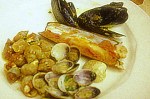
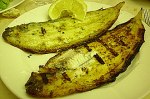
Last Monday, we went to Anita’s, where the locals dine. We had hot and cold antipasti, razor clams in tomato sauce, cockles in garlic, mussels in wine, followed by tagliatelle and seafood, and a main dish of fried sole. Can you believe it?

Oh, beam me up to the land of real food!

Starhawk and pot luck

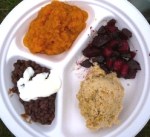
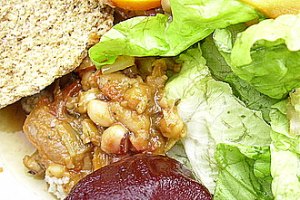
It’s not every day you meet a witch. The American pagan peace activist and writer Starhawk was giving a workshop on a nearby farm. We all bought a vegetarian offering for the shared lunch (see above).

Food brings people together and if everyone brings a dish, it’s not hard work to feed 30. The tastes may be pot luck but they miraculously get on well.

Starhawk shared with us some magical methods for keeping our spirits up while saving the world. She said, try to be in nature every day for fifteen minutes. Take time to wonder at how that leaf falls or green shoots burst out of a cracked pavement, and use your physical senses to ground you.

Radford Mill Farm was the perfect setting. We closed our eyes and heard the wind in the trees and the birds, calling. We opened them and walked barefoot on the wet grass. We felt the sun on our backs and saw the sky. I felt like a cooped-up chicken allowed to go free range.

Green activists live with the doom-reality of an impending environmental crisis but they are remarkably upbeat, probably because they are doing something to make the world a better place.

Starhawk’s talk was organised by Sarah Pugh, the Transition Bristol maven. Transition Culture is about getting self-sufficient so when supermarket shelves are empty and petrol pumps are dry, we have by this time learnt to grow our own veg (and guard our allotments from the marauding hordes?).

Our vegetables will have to be organic when oil is scarce. Non-organic farming relies on oil to make chemical fertiliser in factories. As oil prices rise, so does the cost of food. Organic farming has no need for gallons of oil. It makes its fertiliser on the farm, courtesy of the sun.

Radford Mill Farm is converting to organic and is set on making it a community affair. The official term is Community Supported Agriculture (CSA for those in the know). Originally from the US, it’s about sharing a farm’s responsibilities – and rewards. You commit in advance, with cash or in kind, and in return get a share of the harvest.

When the going gets tough, we will need our family farms more than ever. Adopt one now!

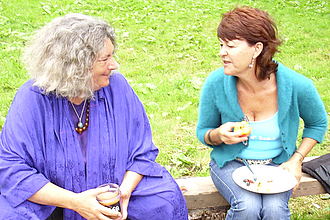
Below is a picture of Starhawk listening to Siobhan, a co-founder of Tribe of Doris, the UK’s most prestigious cultural festival. Here’s a tip for keeping cheerful: if you want to learn to dance or play music and can live under canvas for a convivial few days over the Bank Holiday weekend, then that’s the festival for you. (And don’t forget Climate Camp next week).

Food for free in Bristol

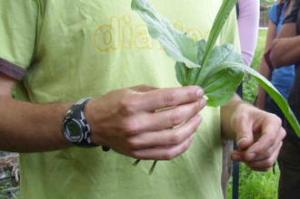
Dave Hamilton holding greater plantain

There is wild food for free in the city but you have to know what to look for. About 45 of us walked around Bristol’s inner-city St. Werburgh’s with Andy and Dave Hamilton, local eco-authors of The self-sufficientish bible. The “ish” is for people like me who don’t live on a farm.

Someone joked she thought the Food for Free talk would be about shoplifting. “Or stealing produce from someone’s allotment” bantered another.

Random weeds were revealed as herbs with stories, such as the greater plantain, held by Dave (above) and used by suffering soldiers in their shoes for trench foot.

Someone said he used its medicinal juice to help his hay fever. Must try this.

Dave said he has used the plantain’s leaves like spinach in saag aloo. Must try this too. (But crikey, would I be able to identify it from photo above? Supposing I picked a Poisonous Plant by mistake?)

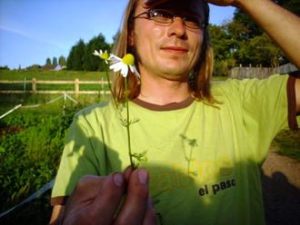
Dave Hamilton and chamomile

Phew, on safer ground – this looks like a daisy. But it is not. It’s chamomile, famous for soothing jangled nerves. I use it in tea bags so it was like spotting an off-duty celebrity.

A propos, the talk was organised by Mark Boyle, founder of freeconomy. When he turned back from walking to India, it was international news. My media-self was impressed.

Mark Boyle

Mark (above) organised this Bristol walk as part of a reskilling programme, so we can learn forgotten traditional crafts, like baking bread or knowing what wild plants to pick without poisoning ourselves.

Watch out for a future Mark (and Claire) project in the autumn – Local Food Week when you pledge to eat local and see how easy – or hard – it is. They will add details in the comments section…

Horsetail

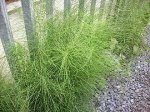
I picked some horsetail (above) and used it to clean the frying pan. A natural scourer, it broke up a bit but seemed to work – could be useful when camping.

Borage growing in inner-city Bristol

Borage, also pictured on our inner-city walk, is another free food to try. You cook it like spinach or use its tiny blue flowers in a salad. Or a Pimms.

Known as borage for courage, it is an anti-depressant (so don’t use if you are on anti-depressants). Fifteen of its leaves make you cheerful. Sounds like my kind of free food.

Thank you Andy, Dave and Mark for an amazing walk-the-talk walk.

And everyone else, such as Eric with fat hen (below) who walked to France with Mark.

Eric with fat hen