Category Archives: eating well on a budget

I love hummus

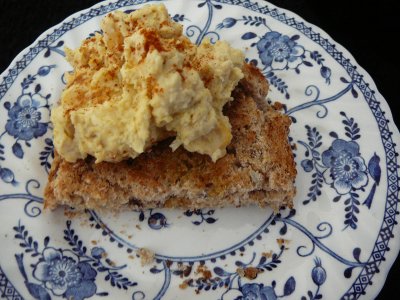
A blog of hummous on toast made with spelt on a plate

One of the best things about not being in the office this week was having time to make hummus. I ended up making several batches, each as subtly different as the last.

I kicked off with 200g dried organic chickpeas (from some supermarkets and all wholefood shops). Hard as bullets, I soaked them overnight in water and then cooked them (in the same water) for an hour until soft enough to eat. Of course, you can use tins for speed and this is a fab recipe.

(Mind you, the comments in above website were also instructive. I learnt I could use roasted sesame seeds instead of tahini. I had panicked because no exotic tahini could be found in this English seaside town. Luckily my saviour, Marshford, had a jar or two of the wondrous middle-eastern sesame seed paste.)

Using the hand-held blender, I noisily blended one clove of garlic (use more if no one objects) in the juice of one lemon, water from the cooked chickpeas (2 Tbs – that’s table not teaspoons!), olive oil (2 Tbs) and the yummy, runny, organic sesame seed paste (2 Tbs).  I added rock salt to taste (being careful not to oversalt – so easy to do), and a teaspoon each of ground cumin and coriander.

Once all the easy bits were blended, I added the fibrous chickpeas and mashed through them with my trusted electric tool.

I have written about hummus before but it is a food that bears repetition. And experimentation. When I ran out of lemon juice, I used lime and no one noticed.

Served with toast (in my case, spelt from the wondrous Common Loaf), I produced a nutrient-rich and high-fibre protein-filled snack.

The vegetarians and the world’s wise peasants know that combining pulses with grains (and subsituting, if you wish, pulses/grains for seeds) makes a protein equal to that delivered by the dear animals.

Beetroot and lentils supreme

dark beetroot and lentils topped with yogurt on a bed of cooked millet

I peeled two beetroots from Marshford. After cutting the slithery vivid purple ones (careful not to stain my clothes) into chunks, I added them to a pan of green lentils, just covered with water. I’d soaked the dried green lentils for a couple of hours beforehand but for speed, use a can. Or red split lentils which don’t need soaking.

Within 40 minutes of simmering, the lentils and beetroot were tender. I added a teaspoon of salt for flavouring (I love salt. It makes what is bland tasty. But I must be careful not to be cavalier because over-salty is horrid not to mention unhealthy.).

To make this dish go further, I simmered some organic millet for 30 minutes in twice its volume of water. What a fine grain millet is! Gluten-free and nutrient-filled. Try it sometimes instead of rice to vary the minerals in your diet. Here are some more cooking instructions.

Then we topped the dark beetroot/lentil mixture with Greek yogurt. I also added capers because I love the vinegar they reside in.

For its photo-shoot, I placed the bowl on a book (picked up secondhand in an Oxfam shop) by one of my top-favourite cartoonists, Posy Simmonds.

How appropriate the book had fallen open at jealousy! (An emotion to which I confess I am prone.)

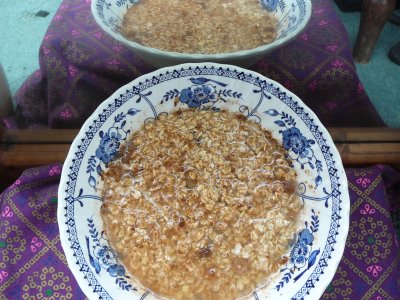
Raw oats soaking

Oats with sultanas soaking in a cereal bowl in fron of a mirror


If you find it hard to eat first thing in the morning (as I often do) try this for breakfast. Cover a cupful of oats with water (preferably overnight but an hour is better than none).

Soaking in water makes oats extra-smooth and digestible because the proteins get broken down. You will hardly notice the soaked oats slide down your gullet yet they pack a nutritional punch.

Oats are full of fibre so good for a regular system. Fibre (as the name suggests) is the steady and reliable sort which also slows down the release of sugars into your bloodstream. No drama with oats. In fact they are a mood-soother. We all need loved ones like that.

To the soaking oats, I add sultanas. The water well-plumps them up. I sprinkle cinammon for its immune-boosting properties and sweet taste.

Make all the ingredients organic or biodynamic and you will be laughing all the way to the vitamin bank.

Nettle soup

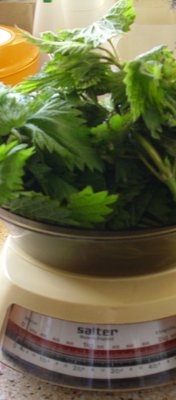
Nettles piled on scales

On the first day of spring I resolved to pick wild nettles for soup. I’d read about it often enough.

Luckily I was with Chloë who pointed out we had just passed a clump of nettles. I can understand why I have never made made soup from them before. They were indistinguishable from the rest of the greenery – until I felt the familiar sting from pinching their fresh tops.

Wearing gloves, I filled a small plastic bag. Back home (see pic) I weighed the young nettles. My yield? Four ounces. Not bad for a first wild harvest

I melted organic butter (2oz) in a pan, and gently fried an organically-grown onion, sliced thinly.

Most recipes use boiled potatoes to thicken the soup, or flour. I chose protein-rich ground almonds (2oz). And why not some cooked chickpeas too?

I took the nettle tops I had washed (discarding any brown ones) to the onions softening in butter. I turned the mass of nettles over in the pan with a wooden spoon. As the green leaves touched the bottom of the pan, they felt the heat and wilted.

I added this nettle mixture to a bigger pan holding half a pint of salted water (for stock) with aforementioned almonds and chick peas, crushed .

I simmered the nettle soup for a few minutes (most of the other recipes said 10 – too long). Then, using the noisy hand-held liquidiser, I vroomed my way through the chickpeas and nettles, so they became more creamy.

The soup needed contrast so I fried sunflower seeds in a little oil, and they crisped up nicely. (Seeds whack-up a dish’s nutritional value. The next best thing to fresh, because, given the right condition (water/light), seeds can sprout new life.)

The nettles tasted amazing as if they had captured water in their strong cells and were bursting with lushness. This was wild food. It tasted different. Enlivening.

Goat’s cheese salad with grapes and goji berries

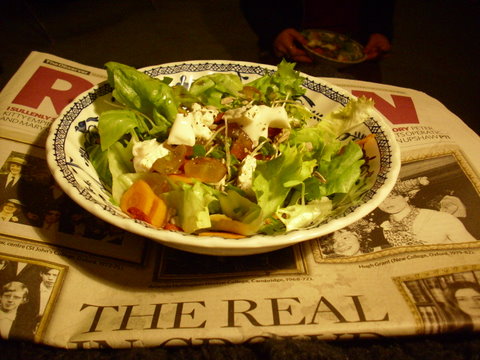
Bowl with salad and goat’s cheese and grapes

I was feeling a bit under the weather but this salad revived me.

Chloe (who by now knows I won’t touch a raw tomato, nor am enamoured of radish or spring onion) made me a Winkler-friendly version.

Extending her repertoire to cater for my fussiness, she found new ways to palate-please by adding sliced grapes and goji berries to Marshford‘s organic salad leaves and carrots.

The salty creaminess of the (organic) goat’s cheese with the sweet wetness of the grape with the earthy-tartness (oi, earth tart!) of the goji was indeed a felicitous mixture.

Maude (above) also approved (and is not a salad-lover like me).

I had consciously let go of kitchen-control, sat instead while others cooked (steamed turnips and baked fish followed the restorative salad).

My attempts at zen-like submission were rewarded.

Haricot beans and pumpkin

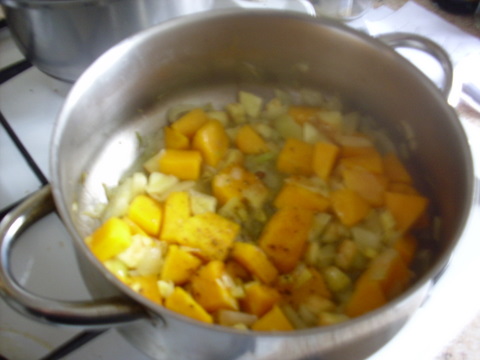
A pan on stove with beans and cut up pumpkin and sweet potato

As a cook, I’d say my forte is ‘gunge’. OK, it’s never going to win a beauty contest but the concoction is reliable and balanced. What more do you want from a lifetime companion?

I had covered the dried organic haricots beans with water, soaking them overnight. The next day, I struck a light under their pan’s bottom and let the beans simmer away in bubbling hot water for a good hour and a half.

I fried a whole onion (sliced) in olive oil and added a dried chili, finely sliced. Wait. Chili is important. I did not discover it until mid-life. If it passed me by, could it have passed you by too? If so, I beg you to experiment with the fiery creature. Let me know how you get on.

I then attacked the half of a butternut pumpkin loitering in a forgotten corner of the fridge and after peeling and de-seeding it, then cutting it in cubes, I hurled it into the frying onions. After that, I felt calmer. After adding more olive oil, I let it slowly braise with the onions (with Neil Basilo’s tips for unctuousness ringing in my ears), stirring it occasionally to stop the mixture sticking.

Typically, I then lost my focus and did something else. Not good for a dish. It feels neglected and doesn’t give its all. Realising the pumpkin had gone too soft, I quickly peeled, cubed and boiled a sweet potato in another pan. This flirtation with another veg produced fresh bright orangeness (although I felt a bit disloyal to the overcooked pumpkin). Then I assembled them all with the drained beans (see above).

When the time came to serve, I heated it all up again extremely hot with brown rice from the night before (always blast cooked-again food with bug-obliterating heat).

Having morphed into a kind of risotto and topped with some fresh organic leaves, the dish didn’t look half bad (see below) and tasted even better.

Voilà – a classic gunge. Everyday fare. Might not get a fanfare. But treats you fair.

Rice with pumkins and beans in a bowl topped with green leaves

Fish soup with mussels and chilli prawns

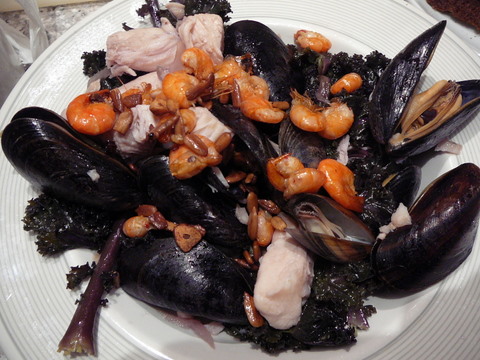
Fish soup in a bowl with mussels sticking out and tiny prawns

I am an ungrateful girlfriend. Here was Mike slaving at the stove and here was me finding fault: the kale was too big, and (listen to this bitterness) he never praised my cooking as much as he did his own.

He was raving about this dish (above) and I was jealous. He reassured me that a) he saw it as ‘our’ dish (especially as I had sourced the ingredients) and b) he was particularly chuffed because in the past this would have taken him all day to cook, what with making a fish stock from the bones.

And we (I feel I can say ‘we’ now) had rustled it up in half-an-hour.

Let me recap. One onion fried in olive oil, plus half a mug of water. Added snippets of smoked haddock for salty taste, and monkfish cheeks, in chunks. Then the purple kale.

I was detailed to remove the shells from the shrimps (but not obsessively – I was amazed by what Mike said I could leave on, and the remaining shells cooked up well-crispy). I fried the little creatures in a pan (see below) with sliced dried chili and two sliced cloves of garlic in olive oil.

I reflected how cooking makes the raw and free fall under our dominion. What power.

Mike added the scrubbed mussels (shells tightly closed) to the fish soup and kale.

Nigel Slater, who inspired this dish, says the mussels add more flavour at this point than the rest of the fish put together. I agree.

The shrimps fried with chili and garlic added another layer of gutsiness with the shells’ crispy crunchiness adding a spicy ‘wow’ to the final bowl (See top pic – the broth must have lingered at the bottom of the bowl because not visible in pic but most definitely there).

To Mike, Nigel, the mussels, shrimps, haddock and monkfish, a big thank you for one of the tastiest finger-slurping fish soup experiences of my existence.

Shrimps frying in pan

Sausage and soup

Bowl of beetroot-red soup beside half-eaten sausage

Lunchtime in Corn Street. Unusual sight. It was Wednesday, Bristol’s farmers’ market day and – was I dreaming? – the street was empty. Where were my familiar local real food stalls?

Turned out a gale threatened and officials had sent the street traders to shelter in Saint Nicholas’ market. I found spelt loaves in its medieval stone portico, wet fish under its Victorian glass roof.

Time for lunch at the (covered) Rolls Royce cafe, smack-bang in the middle of Saint Nick’s daily bustle.

So I ordered smooth parsnip and beetroot soup, inventively seasoned with horseradish and ginger and respectably seasonal. It was so good I thought it was home-made (now that’s an accolade). The soup in fact hails from the Yorkshire Provender (soon to offer organic ones).

The Rolls Royce café is so community-minded, it lets you eat food you have bought elsewhere in this food kaleidoscope of a market.

I never eat pork, right, for atavistic reasons. But for some unaccountable reason, I let myself be persuaded by “Try the maple and pork, you won’t regret it,” from the man who left his office job to set up on his own selling organic, local and incredibly tasty sausages.

Did I regret eating the pork? No. Its sweet taste and yielding softness left little room for guilt, and combined with the seasonal soup, seemed delectable.

However, I confess: I didn’t want to tell you.

Substance over style soup

Soup in a bowl wrapped in pink furry skarf

The wind still blows – no time for foraging in the wild. Another raid on the kitchen produced this comforting soup.

Presentation never being my strongest point (I am a substance-over-style gal myself), this soup looks distinctly sludgy. Hence I wrapped it in my best charity shop scarf to emphasise its comfort value.

I soaked a handful of this and that – dried green peas, red lentils, buckwheat, the wondrous quinoa – omigod, what did not get chucked in? Let me see, there was also sliced fennel, parsnip and carrots. (All organic, of course). I simmered the soup for half an hour with a mild fresh chilli and a fierce dried one and a bit of salt to taste. And once served, added tamari.

It was easy to make and went down a treat but even I must admit would not win a beauty concert. (‘Twas the health-giving quinoa which lent it a porridge-like appearance). Maybe this is the point. It may look like slop but it still tastes top.

Chloe’s pudding (the fantastically dark Green & Black’s cooking chocolate lightly grated over yogurt spooned over a slice of Co-op date and walnut cake) provided the luxury item.

Bowl with yogurt with grated chocolate

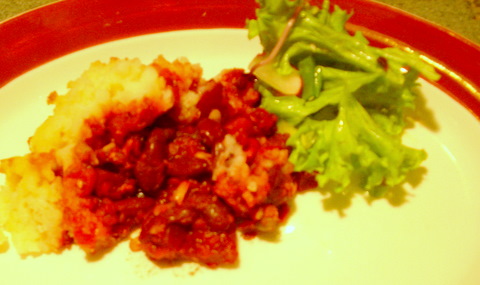
Bean and beetroot comfort pie

Bean and beetroot topped with mashed potato on a plate

With a gale blowing outside, it was time to cook up some comfort food. No ingredient was safe as I ransacked the kitchen.

I boiled some potatoes, and mashed ’em with butter. Then I drained and tipped tinned kidney beans into a pan with a raw beetroot, cubed, and mushrooms, sliced. Plus a palmful of dried roasted buckwheat for earthiness (thanks, Chloe) and sliced fresh chilli, some salt and ground cinnamon for perkiness.

Once cooked (beetroot cubes still crunchy, or al dente), I poured the kidney bean mush into a greased casserole dish and forked the mashed potato on top, dotting it with butter. Then baked it in the oven for 40 minutes at a medium heat.

The dish looks dramatically red but there’s nary a tomato in sight – the colour is all down to the beautiful beetroot (and those kidney beans). And the minimalist amount I put on the plate for the dish’s photo shoot bears absolutely no relation to the amount I wolfed down.

UK food prices are soaring, and meat and dairy most of all. So if I had slowed on the butter, this would have been a topical economy dish.

But saving money on food should not be about depriving oneself, I think, but making good ingredients go further. So a bit of butter makes things better – especially when the winds are howling.